.jpg)
THE NUCLEAR FAMILY 1969
THE NUCLEAFAMILY 1970


11 |
THE ADVENT |
- |
- |
- |
|
THE |
33 |
15 |
|
|
ADVENT |
66 |
21 |
|
9 |
THE ADVENT |
99 |
36 |
9 |
- |
- |
9+9 |
3+6 |
- |
9 |
THE ADVENT |
9 |
9 |
9 |
..........



THE
MAGICALALPHABET
 .........
 .........
|
|
|
|
|
THE RAINBOW LIGHT |
|
|
|
|
|
|
|
3 |
THE |
33 |
15 |
|
|
|
|
|
7 |
RAINBOW |
82 |
37 |
|
|
|
|
|
5 |
LIGHT |
56 |
29 |
|
|
|
|
|
|
|
171 |
81 |
9 |
|
|
1+4 |
|
1+5 |
|
1+7+1 |
8+1 |
|
|
|
|
|
|
|
|
|
|
.gif)
Wikipedia
https://en.wikipedia.org
History of ancient numeral systems - Wikipedia
Number systems have progressed from the use of fingers and tally marks, perhaps more than 40,000 years ago, to the use of sets of glyphs able to represent any conceivable number efficiently. The earliest known unambiguous notations for numbers emerged in Mesopotamia about 5000 or 6000 years ago.
An alphabetic numeral system is a type of numeral system. Developed in classical antiquity, it flourished during the early Middle Ages.[1] In alphabetic numeral systems, numbers are written using the characters of an alphabet, syllabary, or another writing system. Unlike acrophonic numeral systems, where a numeral is represented by the first letter of the lexical name of the numeral, alphabetic numeral systems can arbitrarily assign letters to numerical values. Some systems, including the Arabic, Georgian and Hebrew systems, use an already established alphabetical order.[1] Alphabetic numeral systems originated with Greek numerals around 600 BC and became largely extinct by the 16th century.[1] After the development of positional numeral systems like Hindu–Arabic numerals, the use of alphabetic numeral systems dwindled to predominantly ordered lists, pagination, religious functions, and divinatory magic.[1]
An alphabetic numeral system is a type of numeral system. Developed in classical antiquity, it flourished during the early Middle Ages.[1] In alphabetic numeral systems, numbers are written using the characters of an alphabet, syllabary, or another writing system. Unlike acrophonic numeral systems, where a numeral is represented by the first letter of the lexical name of the numeral, alphabetic numeral systems can arbitrarily assign letters to numerical values. Some systems, including the Arabic, Georgian and Hebrew systems, use an already established alphabetical order.[1] Alphabetic numeral systems originated with Greek numerals around 600 BC and became largely extinct by the 16th century.[1] After the development of positional numeral systems like Hindu–Arabic numerals, the use of alphabetic numeral systems dwindled to predominantly ordered lists, pagination, religious functions, and divinatory magic.[1]

sun
energy
energy
energy
energy
energy
energy
energy
energy
energy
energy
rrrraaaaaaaahhhhhhhhhhhhhhhh!
OBJECTIVE REALITY
poems and essays by
lloyd c.daniel1985
ENERGY 55597+7 = 5 = 7+79555 YGRENE
|
= |
5 |
|
|
|
|
|
|
- |
- |
- |
- |
1 |
|
5 |
5 |
5 |
- |
- |
- |
- |
1 |
|
14 |
5 |
5 |
- |
- |
- |
- |
1 |
|
5 |
5 |
5 |
- |
- |
- |
- |
1 |
|
18 |
9 |
9 |
- |
- |
- |
- |
2 |
|
32 |
14 |
5 |
|
= |
5 |
- |
6 |
|
|
|
|
- |
|
- |
- |
|
|
7+4 |
3+8 |
2+9 |
|
= |
5 |
|
|
|
|
|
|
- |
|
|
|
|
|
1+1 |
1+1 |
1+1 |
|
= |
5 |
|
|
|
|
|
|
|
|
|
|
|
|
|
|
|
|
|
|
|
|
|
- |
- |
|
- |
- |
|
5 |
|
|
|
|
|
|
|
|
|
|
|
|
|
|
- |
- |
|
14 |
|
|
|
|
|
|
|
1+4 |
|
|
|
|
|
|
|
|
|
|
|
|
|
|
|
|
|
- |
|
|
|
- |
|
|
- |
- |
5 |
|
5 |
9 |
7 |
7 |
|
|
|
3+3 |
|
|
|
|
|
|
- |
- |
5 |
|
5 |
18 |
7 |
25 |
|
|
|
6+0 |
|
|
|
|
|
|
|
|
|
|
|
|
|
|
|
|
|
|
|
|
|
- |
|
|
- |
- |
5 |
14 |
5 |
18 |
7 |
25 |
|
|
|
7+4 |
|
|
1+1 |
|
|
|
- |
- |
5 |
5 |
5 |
9 |
7 |
7 |
|
|
|
3+8 |
|
|
1+1 |
|
|
|
|
6 |
|
|
|
|
|
|
|
|
|
|
|
|
|
- |
- |
|
|
|
|
|
|
|
|
|
|
|
|
|
|
|
|
|
|
|
|
|
|
|
|
|
|
|
|
|
|
|
|
|
|
|
|
|
|
|
|
|
|
|
|
|
|
|
|
|
|
|
|
|
|
|
|
|
|
|
|
|
|
|
|
|
|
|
|
|
|
|
|
|
|
|
|
|
|
|
|
|
|
|
|
occurs |
x |
|
= |
15 |
1+5 |
|
|
|
|
|
|
|
|
|
|
|
|
|
|
|
|
|
|
|
|
|
|
|
|
|
|
|
|
|
|
occurs |
x |
|
= |
|
1+4 |
|
|
|
|
|
|
|
|
|
|
|
|
|
|
|
|
|
|
|
|
|
|
|
|
|
|
|
|
|
|
occurs |
x |
|
= |
9 |
= |
|
|
|
|
|
|
|
|
|
|
|
|
|
|
|
|
|
|
|
2+4 |
|
|
|
|
|
|
|
|
|
2+1 |
|
|
|
|
3+8 |
|
2+0 |
|
|
|
|
|
|
|
|
|
|
|
|
|
|
|
|
|
|
- |
- |
5 |
5 |
5 |
9 |
7 |
7 |
|
- |
|
|
|
|
|
1+1 |
|
|
|
|
|
|
|
|
|
|
|
|
|
|
|
|
|
|
|
|
|
CIRCLE |
- |
- |
- |
|
|
3 |
3 |
3 |
|
|
9 |
9 |
9 |
|
|
18 |
9 |
9 |
|
|
3 |
3 |
3 |
|
|
12 |
3 |
3 |
|
|
5 |
5 |
5 |
|
CIRCLE |
50 |
|
32 |
- |
- |
5+0 |
3+2 |
3+2 |
|
CIRCLE |
5 |
5 |
5 |
|
CIRCLE |
- |
- |
- |
|
|
45 |
27 |
9 |
|
|
5 |
5 |
5 |
|
CIRCLE |
50 |
|
32 |
- |
- |
5+0 |
3+2 |
3+2 |
|
CIRCLE |
5 |
5 |
5 |
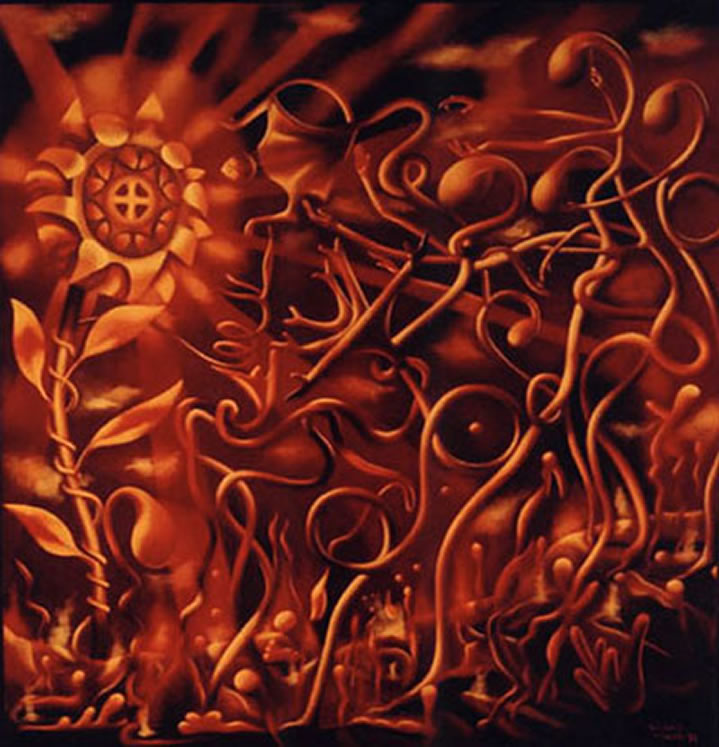
THE SCULPTURE OF VIBRATIONS 1977

EHT NAMUH 1977
THE SACRED MUSHROOM AND THE CROSS
John M, Allegro 1970
Introduction
"No one religion in the ancient Near East can be studied in isolation. All stem from man's first questioning about the origin of life and how to ensure his own survival. He has always been acutely conscious of his insufficiency. However much he progressed technically, making clothes,
shelter, conserving food and water supplies, and so on, the forces of
nature were always greater than he. The winds would blow away his shelter, the sun parch his crops, wild beasts prey on his animals: he was always on the defensive in a losing battle. Out of this sense of dependency and frustration, religion was born.
Somehow man had to establish communications with the source of
the world's fertility, and thereafter maintain a right relationship with it. Over the course of time he built up a body of experiential knowledge of rituals that he or his representatives could perform, or words to recite, which were reckoned to have the greatest influence on this fertility deity. At first they were largely imitative. If rain in the desert lands was the source of life, then the moisture from heaven must be only a more abundant kind of spermatozoa. rf the male organ ejaculated this precious
fluid and made life in the woman, then above the skies the source of nature's semen must be a mighty penis, as the earth which bore its offspring was the womb. It followed therefore that to induce the heavenly
phallus to complete its orgasm, man must stimulate it by sexual means, by singing, dancing, orgiastic displays and, above all, by the performance of the copulatory act itself.
However far man progressed in his control of the world about him there remained a large gap between what he wanted at anyone time and what he could achieve on his own account. There was always some unscalable mountain, some branch of knowledge which remained unpenetrable, some disease with no known cure. It seemed to him that if he had managed painstakingly to grope his way to a knowledge and dexterity so far above the animals, then in some mysterious way his / Page xii / thinkers and artisans must have been tapping a source of wisdom no less real than the rain that fructified the ground. The heavenly penis, then,
was not only the source of life-giving semen, it was the origin of knowledge. The seed of God was the Word of God.
The dream of man is to become God. Then he would be omnipotent; no longer fearful of the snows in winter or the sun in summer, or the drought that killed his cattle and made his children's bellies swell grotesquely. The penis in the skies would rise and spurt its vital juice when man commanded, and the earth below would open its vulva and gestate its young as man required. Above all, man would learn the secrets of the universe not piecemeal, painfully by trial and fatal error, but by a sudden, wonderful illumination from within.
But God is jealous of his power and his knowledge. He brooks no rivals in heavenly places. If, in his mercy, he will allow just a very few of his chosen mortals to share his divinity, it is but for a fleeting moment. Under very special circumstances he will permit men to rise to the throne of heaven and glimpse the beauty and the glory of omniscience and omnipotence. For those who are so privileged there has seemed no greater or more worthwhile experience. The colours are brighter, the sounds more penetrating, every sensation is magnified, every natural force exaggerated.
For such a glimpse of heaven men have died. In the pursuit of this goal great religions have been born, shone as a beacon to men struggling still in their unequal battle with nature, and then too have died, stifled by their own attempts to perpetuate, codify, and evangelize the mystic vison.
Our present concern is to show that Judaism and Christianity are such cultic expressions of this endless pursuit by man to discover instant power and knowledge. Granted the first proposition that the vital forces of nature are controlled by an extra-terrestrial intelligence, these religions are logical developments from the older, cruder fertility cults. With the advance of technical proficiency the aims of religious ritual became less to influence the weather and the crops than to attain wisdom and the knowledge of the future. The Word that seeped through the labia of the earth's womb became to the mystic of less importance than the Logos which he believed his religion enabled him to apprehend and enthuse him with divine omniscience. But the source was the same vital power of the universe and the cultic practice differed little.
To raise the crops the farmer copulated with his wife in the fields. To seek the drug that would send his soul winging to the seventh heaven and back, the initiates into the religious mysteries had their priestesses seduce the god and draw him into their grasp as a woman fascinates her partner's penis to erection.
For the way to God and the fleeting view of heaven was through plants more plentifully endued with the sperm of God than any other. These were the drug-herbs, the science of whose cultivation and use had been accumulated over centuries of observation and dangerous experiment. Those who had this secret wisdom of the plants were the chosen of their god; to them alone had he vouchsafed the privilege of access to the heavenly throne. And if he was jealous of his power, no less were those who served him in the cultic mysteries. Theirs was no gospel to be shouted from the roof tops : Paradise was for none but the favoured few. The incantations and rites by which they conjured forth their drug plants, and the details of the bodily and mental preparations undergone before they could ingest their god, were the secrets of the cult to which none but the initiate bound by fearful oaths, had access.
Very rarely, and then only for urgent practical purposes, were those secrets ever committed to writing. Normally they would be passed from the priest to the initiate by word of mouth; dependent for their accurate transmission on the trained memories of men dedicated to the learning and recitation of their "scriptures". But if, for some drastic reason like the disruption of their cultic centres by war or persecution, it became necessary to write down the precious names of the herbs and the manner of their use and accompanying incantations, it would be in some esoteric form comprehensible only to those within their dispersed communities.
Such an occasion, we believe, was the Jewish Revolt of AD 66. Instigated probably by members of the cult, swayed by their drug-induced madness to believe God had called them to master the world in his name, they provoked the mighty power of Rome to swift and terrible action. Jerusalem was ravaged, her temple destroyed. Judaism was disrupted, and her people driven to seek refuge with communities already established around the Mediterranean coastlands. The mystery cults found themselves without their central fount of authority, with many of their priests killed in the abortive rebellion or driven into the desert. The secrets, if they were not to be lost for ever, had to be committed to / Page xiv / writing, and yet, if found, the documents must give nothing away or betray those who still dared defy the Roman authorities and continue their religious practices.
The means of conveying the information were at hand, and had been for thousands of years. The folk-tales of the ancients had from the earliest times contained myths based upon the personification of plants and trees. They were invested with human faculties and qualities and their names and physical characteristics were applied to the heroes and heroines of the stories. Some of these were just tales spun for entertainment, others were political parables like Jotham's fable about the trees in the Old Testament, while others were means of remembering and transmitting therapeutic folk-lore. The names of the plants were
spun out to make the basis of the stories, whereby the creatures of
fantasy were identified, dressed, and made to enact their parts. Here, then, was the literary device to spread occult knowledge to the faithful. To tell the story of a rabbi called Jesus, and invest him with the power and names of the magic drug. To have him live before the terrible events that had disrupted their lives, to preach a love between men, extending even to the hated Romans. Thus, reading such a tale, should it fall into Roman hands, even their mortal enemies might be deceived and not probe farther into the activities of the cells of the mystery cults within their territories.
The ruse failed. Christians, hated and despised, were hauled forth and slain in their thousands. The cult well nigh perished. What eventually took its place was a travesty of the real thing, a mockery of the power that could raise men to heaven and give them the glimpse of God for which they gladly died. The story of the rabbi crucified at the instigation of the Jews became an historical peg upon which the new cult's authority was founded. What began as a hoax, became a trap even to those who believed themselves to be the spiritual heirs of the mystery religion and took to themselves the nalne of "Christian" . Above all they forgot, or purged from the cult and their memories, the one supreme secret on which their whole religious and ecstatic experience depended: the names and identity of the source of the drug, the key to heaven - the sacred mushroom.
The fungus recognized today as the Amanita muscaria, or Fly-Agaric, had been known from the beginning of history. Beneath the skin of its characteristic red- and white-spotted cap, there is concealed a powerful / Page xv /
hallucinatory poison. Its religious use among certain Siberian peoples and others has been the subject of study in recent years, and its exhilarating and depressive effects have been clinically examined. These include the stimulation of the perceptive faculties so that the subject sees objects much greater or much slnaller than they really are, colours and sounds are much enhanced, and there is a general sense of power, both physical and mental quite outside the normal range of human experience.
The mushroom has always been a thing of mystery. The ancients were puzzled by its manner of growth without seed, the speed with which it made its appearance after rain, and its as rapid disappearance.
Born from a volva or "egg" it appears like a small penis, raising itself
like the human organ sexually aroused, and when it spread wide its canopy the old botanists saw it as a phallus bearing the "burden" of a woman's groin. Every aspect of the mushroom's existence was fraught
with sexual allusions, and in its phallic form the ancients saw a replica of the fertility god himself. It was the "son of God", its drug was a purer
form of the god's own spermatozoa than that discoverable in any other form of living matter. It was, in fact, God himself, manifest on earth. To the mystic it was the divinely given means of entering heaven; God had come down in the flesh to show the way to himself, by himself.
To pluck such a precious herb was attended at every point with peril. The time - before sunrise, the words to be uttered - the name of the guardian angel, were vital to the operation, but more was needed. Some form of substitution was necessary, to make an atonement to the earth robbed of her offspring. Yet such was the divine nature of the Holy Plant, as it was called, only the god could make the necessary sacrifice.
To redeem the Son, the Father had to supply even the "price of redemption". These are all phrases used of the sacred mushroom, as they are of the Jesus of Christian theology.
Our present study has much to do with names and titles. Only when we can discover the nomenclature of the sacred fungus within and without the cult, can we begin to understand its function and theology. The main factor that has made these new discoveries possible has been the realization that many of the most secret names of the mushroom go back to ancient Smnerian, the oldest written language known to us, witnessed by cuneiform texts dating from the fourth millennium BC. Furthermore, it now appears that this ancient tongue provides a bridge between the Indo-European languages (which include Greek, Latin, and / Page xvi /
our own tongue) and the Semitic group, which includes the languages of the Old Testament, Hebrew and Aramaic. For the first time, it becomes possible to decipher the names of gods, mythological characters, classical and biblical, and plant names. Thus their place in the cultic systems and their functions in the old fertility religions can be determined.
The great barriers that have hitherto seemed to divide the ancient world, classical and biblical, have at last been crossed and at a more significant level than has previously been possible by merely comparing their respective mythologies. Stories and characters which seem quite different in the way they are presented in various locations and at widely separated points in history can now be shown often to have the same central theme. Even gods as different as Zeus and Yahweh embody the same fundamental conception of the fertility deity, for their names in origin are precisely the same. A common tongue overrides physical and racial boundaries. Even languages so apparently different as Greek and Hebrew, when they can be shown to derive from a common fount, point to a communality of culture at some early stage. Comparisons can therefore be made on a scientific, philological level which might have appeared unthinkable before now. Suddenly, almost overnight, the ancient world has shrunk. All roads in the Near East lead back to the Mesopotamian basin, to ancient Sumer. Similarly, the most important of the religions and mythologies of that area, and probably far beyond, are reaching back to the mushroom cult of Sumer and her successors.
In biblical studies, the old divisions between Old and New Testament areas of research, never very meaningful except to the Christian theologian, become even less valid. As far as the origins of Christianity are concerned, we must look not just to intertestamentalliterature, the Apocrypha and Pseudepigrapha, and the newly discovered writings from the Dead Sea, nor even merely to the Old Testament and other Semitic works, but we have to bring into consideration Sumerian religious and mythological texts and the classical writings of Asia Minor, Greece, and Rome. The Christian Easter is as firmly linked to the Bacchic Anthesteria as the Jewish Passover. Above all, it is the philologian who must be the spearhead of the new enquiry. It is primarily a study in words.
A written word is more than a symbol: it is an expression of an idea. To penetrate to its inner meaning is to look into the mind of the man who wrote it. Later generations may give different meanings to that symbol, / Page xvii /
extending its range of reference far beyond the original intention, but if we can trace the original significance then it should be possible to follow the trail by which it developed. In doing so, it is sometimes possible even to outline the progress of man's mental, technical or religious development.
The earliest writing was by means of pictures, crudely incised diagrams on stone and clay. However lacking such symbols may be in grammatical or syntactical refmement, they do convey, in an instant, the one feature which seemed to the ancient scribe the most significant aspect of the object or action he is trying to represent. "Love" he shows as a flaming torch in a womb, a "foreign country" as a hill (because he lived on a plain), and so on. As the art of writing developed further, we can begin to recognize the first statements of ideas which came later to have tremendous philosophical importance, "life", "god", "priest", "temple", "grace", "sin", and so on. To seek their later meanings in religious literature like the Bible we must first discover their basic meaning and follow their development through as far as extant writings will allow.
For example, as we may now understand, "sin" for Jew and Christian had to do with the emission to waste of human sperm, a blasphemy against the god who was identified with the precious liquid. If to discover this understanding of "sin" seems today of only limited academic
interest, it is worth recalling that it is this same principle that lies at the root of modern Catholic strictures against the use of the "Pill".
As far as the main burden of our present enquiry is concerned, our new-found ability to penetrate to the beginnings of language means that we can set the later mystery cults, as those of Judaism, of the Dionysiac religion and Christianity, into their much wider context, to discover the flrst principles from which they developed, probe the
mysteries of their cultic names and invocations, and, in the case of
Christianity at least, appreciate something of the opposition they encountered among governing authorities and the measures taken to transmit their secrets under cover of ancient mythologies in modern dress.
Our study, then, begins at the beginning, with an appreciation of
religion in terms of a stimulation of the god to procreation and the provision of life. Armed with our new understanding of the language relationships of the ancient Near East, we can tackle the major problems involved in botanical nomenclature and discover those features of the / Page xviii /
more god-endued plants which attracted the attention of the old medicine men and prophets. The isolation of the names and epithets of the sacred mushroom opens the door into the secret chambers of the mystery cults which depended for their mystic hallucinatory experiences on the drugs found in the fungus. At long last identification of the main characters of many of the old classical and biblical mythologies is possible, since we can now decipher their names. Above all, those mushroom epithets and holy invocations that the Christian cryptographers wove into their stories of the man Jesus and his companions can now be recognized, and the main features of the Christian cult laid bare.
The isolation of the mushroom cult and the real, hidden meaning of the New Testament writings drives a wedge between the moral teachings of the Gospels and their quite amoral religious setting. The new discoveries must thus raise more acutely the question of the validity of Christian "ethics" for the present time. If the Jewish rabbi to whom they have hitherto been attributed turns out to have been no more substantial than the mushroom, the authority of his homilies must stand or fall on the assent they can command on their own merit.
What follows in this book is, as has been said, primarily a study in words. To a reader brought up to believe in the essential historicity of
the Bible narratives some of the attitudes displayed in our approach to the texts may seem at first strange. We appear to be more interested with the words than with the events they seem to record; more concerned, say, in the meaning of Moses' name than his supposed role as Israel's first great political leader. Similarly, a century or so ago, it must have seemed strange to the average Bible student to understand the approach of a "modernist" of the day who was more interested in the ideas underlying the Creation story of Genesis and their sources, than to date, locate, and identify the real Garden of Eden, and to solve the problem of whence came Cain's wife. Then, it took a revolution in man's appreciation of his development from lower forms of life and a clearer understanding of the age of this planet to force the theologian to abandon the historicity of Genesis.
Now we face a new revolution in thought which must make us reconsider the validity of the New Testament story. The break-through here is not in the field of history but in philology. Our fresh doubts about the historicity of Jesus and his friends stem not from new discoveries about the land and people of Palestine of the first century, but / Page xix
/ about the nature and origin of the languages they spoke and the origins
of their religious cults. What the student of Christian origins is primarily
concerned with is, what manner of writing is this book we call the
New Testament, and in particular just what are the narratives called the Gospels trying to convey? Is it history? This is certainly a possibility, but only one of many. The fact that for nearly two thousand years one religious body has pinned its faith upon not only the existence of the
man Jesus but even upon his spiritual nature and the historicity of certain unnatural events called miracles, is not really relevant to the enquiry. A hundred years ago this same body of opinion was equally adamant that the whole of the human race could trace its origin to two peop1e living in the middle of Mesopotamia, and that the earth had come into existence in the year 4004 BC.
The enquirer has to begin with his only real source of knowledge,
the written word. As far as Judaism and Christianity are concerned, this means the Bible. There is precious little else that can give us details about what the Israelite believed about his god and the world about him, or about the real nature of Christianity. The sparse references to one "Christus" or "Chrestus" in the works of contemporary non-Christian historians, tell us nothing about the nature of the man, and only very dubiously, despite the claims often made for them, do they support his historicity. They simply bear witness to the fact, never in dispute, that the stories of the Gospels wee in circulation soon after AD 70. If we want to know more about early Christianity we must look to our only real source, the written words of the New Testament. Thus, as we have said, the enquiry is primarily philological.
The New Testament is full of problems. They confront the critical enquirer on every side: chronological, topographical, historical, religious, and philological. It is not until the language problems have been resolved that the rest can be realistically appraised. When, in the last century, a mass of papyrological material became available( from the ancient world and cast new light upon the nature of the Greek used in the New Testament, scholars felt that most of the major obstacles to a complete understanding of the texts would be removed. But, in fact, to the philologian the thorny questions remain firmly embedded in the stories, and they have nothing to do with the plot of the narratives, or the day-to-day details which add colour to the action. The most intransigent concern the foreign, presumed Aramaic transliterations in the / Page xx / text, coupled often with a "translation" which does not seem to offer a rendering of the original, like the nickname "Boanerges", supposed to mean, "Sons of Thunder", or the name "Barnabas", said to represent "Son of Consolation". Try as they will, the commentators cannot see how the "translations" fit the "names".
To the general reader, and particularly to the Christian seeking moral or spiritual enlightenment from the New Testament, such trivia have meant little. To many scholars, too, details like these are of less importance than the theological import of Jesus' teaching. It has been assumed that somewhere along the line of transmission some textual corruption occurred in the "names", or that the "translations" were added by later hands unfamiliar with the original language used by the Master and his companions.
As we can now appreciate, these aberrations of the proper names and their pseudo-translations are of crucial importance. They provide us with a clue to the nature of original Christianity. Concealed within are secret names for the sacred fungus, the sect's "Christ". The deliberately deceptive nature of their mistranslations put the lie to the whole of the
"cover-story" of the man Jesus and his activities. Once the ruse is penetrated, then research can go ahead fast with fitting the Christian phenomenon more firmly into the cultic patterns of the ancient Near East. Many apparently quite unrelated facts about the ubiquitous mystery cults of the area and their related mythologies suddenly begin to come together into an intellectually satisfying whole.
In any study of the sources and development of a particular religion, ideas are the vital factor. History takes second place. Even time is rela
tively unimportant. This is not to underestimate the importance of
political and sociological influences in the fashioning of a cult and its ideology; but the prime materials of the philosophy stem from a fundamental conception of the universe and the source of life. Certain highly imaginative or "inspired" men may appear from time to time in a people's history and affect the beliefs and manner of life of their contemporaries and successors. They adapt or develop what they fmd and give it a new impetus or direction. But the clay they are freshly
modelling was there already and forms the main object of enquiry for the student of the cult's development.
We are, throughout this book, mainly interested in this" clay" and the very strange shapes it assumed in the mystery religions of which we / Page xxi /
may now recognize Christianity as an important example. Of course, history now and again forces itself on our attention. Did Abraham, Isaac, and Jacob ever exist as real people? Was there ever a sojourn in Egypt of the Chosen People, or a political leader called Moses ? Was the theologically powerful conception of the Exodus ever historical fact? These and many other such questions are raised afresh by our studies, but it is our contention that they are not of prime importance. Far more urgent is the main import of the myths in which these names are found. If we are right in fmding their real relevance in the age-old cult of the sacred mushroom, then the nature of the oldest Israelite religion has to be reassessed, and it matters comparatively little whether these characters are historical or not.
In the case of Christianity, the historical questions are perhaps more acute. If the New Testament story is not what it seems, then when and how did the Christian Church come to take it at its face value and make the worship of a single man Jesus, crucified and miraculously brought back to life, the central theme of its religious philosophy? The question is bound up with the nature of the "heresies" that the Church drove out into the desert. Unfortunately we just have not sufficient material to en4ble us to identify all these sects and know their secrets. The Church destroyed everything it considered heretical, and what we know of such movements derives largely from the refutations of the early Fathers of their beliefs. But at least we no longer have to squeeze such "aberrations" into a century or two after AD 30. "Christianity" under its various names had been thriving for centuries before that. As we may now appreciate, it was the more original cult that was driven underground by the combined efforts of the Roman, Jewish, and ecclesiastical authorities; it was the supreme "heresy" which came on, made terms with the secular powers, and became the Church of today.
We are, then, dealing with ideas rather than people. We cannot name the chief characters of our story. Doubtless there were real leaders exercising considerable power over their fellows, but in the mystery cults they were never named to the outsider . We cannot, like the Christian pietist, conjure for ourselves a picture of a young man working at his father's carpentry bench, taking little children in his arms, or talking earnestly with a Mary while her sister did the housework. In this respect, our study is not an easy one. There is no one simple answer to the problems of the New Testament discoverable to anyone just reshuffling the / Page xxi /
Gospel narratives to produce yet another picture of the man Jesus. Ours is a study of words, and through them of ideas. At the end we have to test the validity of our conclusions not against comparative history, least of all against the beliefs of the Church, past or present, but against the overall pattern of religious thought as it can now be traced through the ancient Near East from the earliest times. The question we have to ask is, does the Christianity as now revealed for the first time fit adequately into what went before the first century, not what came after in its name?"
THE COMPLETE BOOK OF FORTUNE 1988
THE SCIENCE OF NUMBERS
Page 269 "We know that all things in the universe are subjected to rule. The movements of the planets, the sequence of the seasons, and the structure of physical bodies are not deter-mined by chance or by coincidence but by mathematical laws. A knowledge of these enables the scientist to foretell certain occurrences, Thus the astronomer can predict when a comet will be seen, when the sun will be eclipsed, or when the full moon will shine.
In effect, it may be said that the whole universe is governed by numbers, and, since this is so, we may naturally conclude that human beings are no exception to Nature's laws. It is the science of numerology which applies the laws of mathematics to mankind, and teaches the art of interpreting those numbers by which the character of an individual is influenced.
The ancient Egyptians attached great importance to the significance of numbers and employed them as a means of fore-telling the future; but it is chiefly to the Greeks and the Hebrews that we owe the foundation of modern numerology. Pythagoras, the Greek mathematician and philosopher, stated that "Numbers are the first things of all of Nature," and believed that all natural phenomena could be reduced to terms of geometry and arithmetic. He founded a school of philosophy on this doctrine, his followers being known as the Pythagoreans. The Hebrews, from a set of beliefs called the "Cabbala "-those tenets "received by tradition" -associated certain numbers with letters of their alphabet, and thus formed the basis of the interpretation of names.
In numerology, the art of which can be very quickly mastered, we are concerned with the reduction of everything under considera- tion to the form of an arithmetical figure. The figure can then be interpreted by reference to the traditional meanings of numbers. These interpretations are older than history; they date back to the time when the dawning intelligence of primitive man first visualized the meaning of number and associated it with a spiritual significance.
Page 270
The revelations of character which can be obtained by means of numerology are not infallible, for what science can claim to account for all the wonders and vagaries of Nature? Yet general indications can nearly always be obtained from the interpretation of numbers, which will give us a clear indication of the part we play in the harmonious arrangement of the wonderful universe.
PRIMARY NUMBERS AND THEIR MEANINGS
Before we proceed farther with this study, it should be under-stood that figures themselves are merely signs which represent an idea of number. Numerology is not concerned with the outward appearance of these signs, but with the meanings of the numbers which they represent.
An Egyptian sage, an Ancient Hebrew, a philosopher of classic Greece, each made a different sign when he wanted to convey the idea of the number 3. But each one thought of the same number. Because of this we have been able to apply various interpretations from ancient writings in the Egyptian, Hebrew and Greek to our own numbers, which are Arabic in origin. Numbers are, in fact, a universal language, for they are understood by all rational persons of every race on earth.
Many systems of numerology are in existence, but the one which is considered here, and which springs from the most ancient and reliable source, is based chiefly on the nine primary numbers. These are represented by the figures 1 to 9 inclusive. The cipher, or 0, such as is contained in the number 10, has no tangible significance and, therefore, is not considered. The figure 10 is a form of 1, with certain modifications of which we shall learn later.
All numbers which are greater than 9 can be reduced to one of the primary numbers. Consider the number 26; to reduce it to a primary number we must add together the digits of which it is ~omposed. thus 2+6 = 8. We see, therefore, that 26 reduces to the primary number 8. In the same way 44 = 4 + 4 = 8; 21= 2 + 1 = 3; 63 = 6 +3 = 9; 98 = 9 +8 = 17 = 1 + 7 = 8; and 789 = 7 +8 +9 = 24 = 2 +4 = 6. This is the method we must use throughout for reducing large numbers to primary ones.
There are three main points to be considered in order to discover / Page 271 / which number exerts its influence over our lives; they are as follows :-
1. The date of our birth.
2. The primary number of the letters in our surname.
3. The primary number of letters in the Christian name which we commonly use.
First of all, however, it is necessary to learn the traditional significance of the primary numbers, together with the effects which these produce on the human character.
1 Unity, or the Monad, expressed by the figure I, symbolizes the. Omnipotent Deity, the " oneness " of Divine Purpose, the begin-
ning of all things, the singleness yet boundlessness of the Godhead. It represents the pinnacle or highest point, the focus of the circum- ference, the hub of the universe, and the single Parent of the whole world. The universal symbol which conveys this idea is a point enclosed by a circle. Because the Deity is generally conceived of as being masculine and the male species is believed to have been created first, the Monad is generally associated with the male rather than the female sex..."
Page 272
"... 2 Duality, the number 2, or the Duad as it was called by the Pythagoreans, represents both diversity and equality or justice. The idea of diversity originates from the conception of two opposites, such as night and day, good and evil, riches and poverty, joy and pain, love and hate. Yet, at the same time, for the sake of justice and equality, two sides of a question must always be heard, while the existence of such things as brotherhood and love must necessarily be dependent upon the presence of two persons. Thus the Duad also stands for balance, harmony, concord, sympathy, response. Two points when joined together form the extremities of a line, which, therefore, is the symbol of duality. The number 2, as directly following the Monad, is traditionally associated with women rather than men..."
"...3 The Ternary, the number 13, or the Triad, was esteemed by . many ancient philosophers as the perfect number. The Pytha-goreans believed in three worlds-the Inferior, the Superior, and the Supreme-while followers of Socrates and Plato acknowledged three / Page 273 / great principles-Matter, Idea and God. The three great virtues necessary for married bliss were considered to be justice, fortitude and prudence. In the Christian religion we have the Trinity as an outstanding example of the Triad, while our Scriptures tell of three wise men of the East with their offering of three gifts, of three archangels and three godly virtues. Pagan religions abound in threes; victims were led three times round the altar before sacrifice, prayers were repeated three times to ensure their being answered, the priestess of Apollo sat upon a tripod called the "tripod of truth."
There are three dimensions of space-height, length and breadth; three stages of time-past, present and future; three states of matter -solid, liquid and gaseous; and three kingdoms of Nature-animal, vegetable and mineral. The Triad may be said to represent compre- hensiveness and fulfilment, and it is symbolized by the triangle- the figure formed by joining three points. Like number 1, it is regarded as being essentially a male number..."
Page 274
"...4 The Quaternary, the number 4, or the Tetrad was regarded . by many of the ancients as symbolic of truth, while the old Greeks considered it to be the root of all things, as representing what were believed to be the four elements-fire, air, earth and water. It is interesting to note that Pythagoras sometimes referred to the Deity as the Tetrad, or the "four sacred letters," owing to the fact that the name of God was Zeus in Greek. We find the word God represented by four letters in many other languages-Dieu in French; Gott in German; Godt in Dutch; Godh in Danish; Goth in Swedish; Deva in Sanskrit; Dios in Spanish; Deus in Latin; Idio in Italian; and we have our own name, Lord.
The four liberal sciences were considered to be astronomy, geometry, music and arithmetic; man was declared to possess the four properties of mind, science, opinion and sense; and there were the four accepted states of death, judgment, heaven and hell. We have the four winds, four points of the compass and the four seasons. The square symbolizes the Tetrad, and it may be said to stand for solidity and reality..."
Page 275
"...5 The Quincunx, the number 5, or the Pentad was regarded by the followers of Pythagoras, as well as by Jewish and Arabic philosophers, as the symbol of health. The Egyptians saw in it a mark of prosperity, but on the whole the Pentad seems universally to have symbolized marriage, fecundity and propagation. This belief probably had its origin in the idea of 5 being the union of 3 and 2, or a male and female number. In ancient Rome, its signifi-cance was emphasized by the burning of five tapers during the marriage ceremony. Many heathen religions included prayers asking help from five gods to instil five virtues into the hearts of prospective wives.
Mohammedanism preaches five religious duties-prayer, fasting, purification, alms and pilgrimage to Mecca. Our own Scriptures contain many indications that the number 5 seems to have been regarded with a particular significance. Benjamin was given five changes of raiment by Joseph; the latter brought five only of his brothers to Pharaoh; and David chose five smooth stones with which to slay the giant Goliath. Moreover, man possesses five senses-sight, hearing, smell, touch and taste; also five digits on each of his hands and feet.
The Pentad is represented geometrically by a regular, five-sided plane figure or else by a pyramid. It also takes the shape of a five-pointed star, which is one form of the ancient Seal of Solomon "
Page 276
"...6 The Hexagon, the number 6, or the Hexad is represented geometrically by a six-sided, balanced figure. It is also symbo-lized by two intersecting triangles known as the Seal of Solomon. By the Jews, six was considered a sacred number, for the world was created in six days. Heathen peoples used the double triangle as a charm to ward off evil spirits; it was also employed to denote the two natures of Jesus Christ, and as such was frequently carved in stone or painted on windows in old monasteries and churches. In Nature we find numerous examples of the hexagonal in the form of crystals, which are a complete and very comprehensive class in themselves. On the whole, the Hexad has always been con-sidered one of the happiest of numbers, since it represents perfect harmony and completion..."
Page 277
". . . 7 The Septenary, the number 7, or the Heptad is the most interesting and mysterious of the primary numbers. The Pythagoreans held it in particular veneration as being the highest primary number which was complete in itself and incapable of division by any other except 1. To the Greeks and Romans it was the symbol of good fortune, being connected with periodical changes of the moon; while ancient philosophers saw in it the sign of custody, or world government, through the influence of the seven planets. The seven notes in music gave rise to the philosophy of the "harmony of the spheres" and the depiction of the universe as one vast musical scale.
In numerous religions the 7 attained great significance. There were seven Gothic gods; the seven worlds believed in by the Chaldeans; the seven heavens and seven hells of the Mohammedans; and seven degrees of initiation in various Eastern orders. Our own Scriptures abound in sevens. The seventh day is holy, for on it God rested; the word "Jehovah" itself contains seven letters; there were seven sorrows of the Virgin; seven cardinal sins and virtues; the army of Joshua encircled Jericho seven times on the / Page 278 / seventh day, headed by seven priests bearing seven trumpets; and on the seventh occasion the walls of the city fell.
There were seven plagues of Egypt; seven fat kine and seven lean; and "a just man falleth seven times and riseth up again" we learn in Proverbs. Peter asked of Jesus Christ if he should forgive his brother seven times, and the answer was "until seventy times seven." In Revelation we read of seven spirits before the Throne, and the seven stars which are angels of seven Churches. The reader may find innumerable other examples.
The Heptad may be said to be imbued with the qualities of wisdom, endurance, evolution, balance and completion. As a number in everyday life, it is usually considered to be lucky..."
Page 279
"...8 The Octaedron, the number 8, or the Ogdoad was greatly . esteemed in ancient Egypt, where it was customary to have eight people in each boat taking part in sacred processions on the Nile. This custom seems to have originated in the belief that there were eight souls saved from the Flood in Noah's ark. By the mathematical philosophers, the Ogdoad was regarded as the first cube, having six sides and eight angles; and as such signified reality and strength. Being the highest of the even primary numbers, it is the ultimate symbol of balance:
Page 280
"...9 The Nonagon, the number 9, or the Ennead was known to . many of the ancients as Perfection and Concord, and as being unbounded. The latter quality was attributed to it from certain peculiarities manifested by the figure 9 when treated mathematically. If 9 is multiplied by itself, or any single figure, the two figures in the product when added together always equal 9. For example:
9 x 8 = 27 = 2 +7 = 9; 9 X 9 = 81 = 8 + 1 = 9; 9 x 5 = 45 = 4 + 5
= 9; and so on. Similarly, if the numbers from 1 to 9 inclusive are added together, totalling 45, the result of adding 4 to 5 = 9; if 9, 18, 27, 86, 45, 54, 68, 72, 81 are added the sum is 405 or 4 + 0 + 5 = 9.
Again, if any row of figures is taken, their order reversed, and the smaller number subtracted from the larger, the sum of the numerals in the answer will always be 9. For example:-
74868215
51286847
23081868
and 2+8+0+8+1+8+6+8 = 86 = 8+6 = 9.
There are numerous other examples portraying this peculiar property of 9, but those given above will be sufficient to demonstrate why the ancients considered the Ennead to be unbounded. It is called Concord because it unites into one all the other primary numbers, and Perfection because nine months is the pre-natal life of a child.
In ancient Rome the market days were called novendinae, for they were held every ninth day; we remember that Lars Porsena "By the nine gods he swore"; the Hydra, a monster of mythology, had nine heads; the Styx was supposed to encircle the infernal regions nine times; the fallen angels in "Paradise Lost" fell for nine days; the Jews held the belief that Jehovah came down to the earth nine times; initiation into many secret societies of the East consisted of nine degrees; and magicians of former times would draw a magic circle nine feet in diameter and therein raise departed spirits.
ANCIENT WISDOM
Cassandra Eason 1999
Page 158
Consecrating your Circle
"When your circle is complete, circle it nine times sunwise (clock- wise), beginning in the North or 12 o'clock position, then nine times moonwise (anti-dockwise), just before the sun rises, touching each stone with a living branch...."
"...As the Moon rises, return to your circle and light a purple candle in the centre. Circle it nine times moonwise or anti-clockwise, then nine times sunwise or clockwise..."
CITY OF REVELATION
John Michell 1972
Gnostic Numbers
Page 115
"The names of the gods vary with languages; but it was formerly possible for an adept to recognise the corresponding principles in each system by arithmomancy, the science of theological interpreta-tion by number. Every ancient god had a number which determined the value of the letters in his name and also, according to Hocart, decided the number of syllables in the verses addressed to him. No doubt the priests of Stonehenge had their own names for the deities known to the Greeks as Zeus 612, Hermes 353, .." "...1080 etc., whose numbers appear in the dimensions of the temple, but these are long forgotten. The numbers however may still be discovered as the values by gematria of the names given in the Greek .language to the sacred principles of Christianity. Obvious examples include Jesus 888, Christos 1480, The Holy Spirit 1080, Lord Jesus Christ 3168, Son of God 1164, Saviour 1408 etc.; and related to these are the symbolic phrases 'of the New Testament, as a grain of mustard seed 1746 (666 + 1080), a grain of wheat 2220, one pearl of great price and the Ark of the Covenant, both 2I78, and many others.
How it comes about that the holy names of Christianity are formed on the same numerical system as the ancient cosmic temple is the deepest of mysteries, and the established Church has always been concerned that it should remain so. It is known that several early Christian teachers, including the great gnostic masters Marcus and Valentinus, demonstrated the eternal values behind the new religion by means of arithmomancy, comparing the names and numbers of Christian cosmology with those recognised by initiates of the traditional schools. Their followers were called gnostics because they claimed to have the gnosis or knowledge through direct experience and considered it idle and superstitious to accept the unsupported word of others in matters which could be explored through personal investigation in the light of revelation. The name is generally applied to the scholars of Alexandria at the beginning of the Christian era who) with the benefit of the great library with its vast collection of / Page 116 / manuscripts drawn from every part of the ancient world, reconciled the tradition of Greek philosophy with the Hebrew cabala and the hermetic doctrines of Egypt and the East to produce the logos of the new age. It was not until the second century, when the hard party men took control of the newly organised church, that gnosticism became a heresy, but so thoroughly were their proscribed works and memorials destroyed, that information about the beliefs and practices of the Christian gnostics has been virtually limited to the evidence of the Church Fathers such as Irenaeus, Tertullian and Hippolytus, who set out to discredit them.
The most informative of these is St Irenaeus in his five books, Against Heresies. This worthy Church Father, Bishop of Lyons in the second century, acquired a superficial knowledge of gnostic practices, and may have been rejected from one of their societies, for he writes that the gnostics call him ignorant, an accusation of which he claims to be proud. Irenaeus's books are abusive and scarcely rational, written in the manner of a Sunday newspaper journalist, who 'exposes' other people by presenting a selective version of their beliefs and activities in such a way as to make them appear ridiculous. This approach is typified in the charges which Irenaeus brings against the gnostics: that they seduce women, corrupt and swindle their pupils, and attach more importance to their own personal experience of truth than to the exhortations of authority. People like St Irenaeus have the trick of misrepresenting others by describing literally certain of their practices, while giving no indication of the meaning behind them. It was to frustrate this menace that the gnostics preferred to keep their teaching a secret, particularly that part which related to their numerical cosmology. Irenaeus therefore saw it his duty to expose the gnostics' use of number in order to show that their methods were vain and meaningless, claiming also that they were a powerful inducement to heresy and to the acquisition of forbidden knowledge. These scarcely compatible objections are revived by the witch hunters in every generation. Nevertheless, although he was obviously justified in boasting of his essential ignorance in such matters, Irenaeus gives several examples of the numerical system used by the gnostics, which, they claimed, was an inheritance from the days of Homer and the ancient philosophers.
The cosmic order, the gnostics' Pleroma, was made up of 30 aeons, representing the hierarchy of power and the stages in creation. The aeons were divided into three groups of 8, 10 and 12, of which the first, containing the 8 aeons of the primeval creation, was known as the Ogdoad. According to Irenaeus, the gnostics found in the name, / Page 117 / Jesus, a reference to the Ogdoad, for the value by gematria of..." "...Jesus, is 888. Since it contains six letters, the name Jesus was also associated with the number 6, and the number 888 may also be reduced to 6, for 8 + 8 + 8 = 24; 2 + 4 = 6. Again the number 888 was taken to correspond with the numerical values of the twenty. four letters of the Greek alphabet, of which there are 8 units, 8 tens, and 8 hundreds.
The following is a quotation from Irenaeus about the gnostics' convention of relating words to numbers:
'But the local positions of the three hundred and sixty-five heavens they distribute in the same way as the mathematicians, for they have taken their theorems and applied them to their own kind of learning. And their head, they say, is Abraxas, therefore he has in himself the three hundred and sixty-five numbers.'
The significance of this passage is that the value of the word Abraxas, written in Greek..." "... is 365, and Abraxas was god of the 365 days of the solar year, corresponding to ..." "...Mithras, whose number is also 365. From such examples it is evident that gnostic numerology was the reconstitution of a much earlier system, applied to various orders of the gods throughout the ancient world, and adopted by early Christian scholars as the canon, by which the new sacred names were constructed to represent the same eternal principles as were recognised in the past. One of the charges brought against the gnostics was that from a numerical interpretation of the scriptures, they drew certain conclusions about the Christian Saviour and his recurrent appearance in accordance with the procession of the aeons, which contradicted the new doctrine within the Church, that the coming of Jesus was the one and only appearance of the Son of God on earth, and that the true religion was first made known at the time of his birth. According to Irenaeus, they considered that Jesus had given proof of his divinity when he spoke the words, 'I am Alpha and Omega', because the sum of the Greek letters, alpha = 1 and omega = 800 is 801, and 801 is the number of ..." "...a dove. 801 is also the width of a vesica about 1385 in length, and 1385 is the number of "..."... It is the Lord (John 21.7). Thus they believed that the divine spirit, represented by the dove, entered into Jesus, the man, at his baptism, while the Church held that the spirit and the body of Jesus Christ were indivisible, and looked forward to a bodily resurrection. The seemingly unimportant differences in the positions of the two sides veiled the eternal chasm that separates the rival principles, represented by the prophet and the priest; on Page 118 / the one hand the fertilising, disruptive spirit of the scientist) magician and philosopher) and on the other, the rule of Caesar's law. The gnostics were concerned to examine the traditions of ancient cos-mology, brought to life again in the Christian revelation. Exactly how they came by their science of numbers is not certain, but they appear to have made the discovery that the numerical code of the Hebrew cabala and those of other mystical systems throughout the world were all degenerate versions of the same once universal system of knowledge that returns within the reach of human perception at certain intervals in time. As the revealed books of the Old Testament were written in a code to be interpreted by reference to number, so were the revelations of the gnostic prophets expressed in words and phrases formed on a system of proportion, which gave life and power to the Christian myth, while allowing initiates to gain a further understanding of the balance of forces that produce the world of phenomena.
Gematria, the science of relating words to numbers, must be ex-tremely old. Its origins are probably coeval with the first use of writing, its purely numerical aspect being much earlier, for numbers precede literature, the introduction of which has always been re- garded as, at the best, a mixed blessing. Plato in Phaedrus repeats the legend of Thoth, the Egyptian god, who discovered the use of letters and went to King Thamus to show off his invention, claiming that it would be an aid to memory and an incentive to wisdom. The king told him that the opposite would be the case, 'for this invention will encourage forgetfulness in the minds of those who learn it, because they will neglect to cultivate memory. You have invented an aid not to memory but to reminding. You offer your pupils the appear- ance instead of the reality of wisdom, for they will read many things without instruction, and will seem knowledgeable when they are for the most part ignorant and troublesome associates, thinking them-selve wise, instead of being so. Neither the art of language nor the use of letters is a natural human attribute, and in some ways the effect of their introduction has been to inhibit communication. Both have been invented or'received, and both may have been lost and rediscovered at various periods of history. Writing was formerly reserved for sacred and divinatory purposes. Its use in secular affairs coincided with and accelerated the decline of the ancient world.
To the objections raised by King Thamus may be added another: that our sense of history has been seriously distorted by the wide- spread use of writing, to the extent that we are now able to under-stand only the inscribed records of contemporary events to the ex- / Page 119 / clusion of that greater part of the human tradition concerned with pre-literary times. In this respect the illiterate members of primitive societies are to some extent better informed than ourselves about the true history of creation and the early adventures of the human race. Among the South Sea islanders, the natives of Australia and the tribes of Africa and North America, there are still those who preserve their own scholarly institutions of oral history, transmitted through generations of priests and shamans and continually reinvoked in myth and ritual. Thus the early traditions are not only kept alive by inheritance, but are also directly experienced in the ceremonial structure of tribal life.
There are, or have been until very recently, several primitive societies in which the creation myths and popular histories are further interpreted for the benefit of initiates by means of a secret magical alphabet, based on a divinely revealed system of numbers. In nor-thern Nigeria is a sacred grove where the Creator is said to have ordered the world according to an arrangement of letters which he laid out in a circle around him, and this type of legend recurs at many esoteric centres throughout the world. The mystic in a climatic vision penetrates into the world behind phenomena and perceives the interaction between the various forces of the cosmos. Certain rhythms, notes and geometrical forms are repeated, suggesting the idea of an alphabet in which letters or numbers represent correspond-ing symbols, sounds and creative influences. Thus the art of writing derives from a metaphysical code of symbols, the gift of revelation.
The Chinese I Ching, in which the cosmic order is represented in 64 hexagrams, each of six lines symbolising various combinations of negative and positive forces, has had an influence on Chinese civilisation similar to that of the Hebrew cabala in European history. Both systems are of great and indefinite antiquity; both originated as revelations and have been continually renewed from the same source. The fundamental diagram of the cabala is the Tree of Life, an arrangement of ten points or centres, linked by twenty-two paths, the whole figure laid out to represent the body of a man, Adam Kadmon, the universal macrocosm. The twenty-two paths corres-pond to the twenty-two letters of the Hebrew alphabet, also to the twenty-two trumps of the Tarot pack, and these letters express different aspects of cosmic energy according as they are related to the ten centres or archetypes. These ten, the sephiroth, are emana- tions from the one source, reflecting the stages of organic development in the creation of the universe from the primeval seed. The cabalistic diagram and the traditional teaching associated with it. / Page 120 / provide a most comprehensive account of the order manifest in nature, while omitting any dogmatic assertions as to the form or nature of a supreme creative principle, questions on which no one has ever known very much, nor ever will.
Of all the surviving mystical languages, the Hebrew cabala re-mains the most complete and accessible to western scholars, for the Jews have been extremely tenacious of their ancient traditions and their convention of scriptural interpretation, by the use of gematria, has never entirely lapsed. They have, however, a tendency to ex-aggerate their own claims to antiquity at the expense of other races and pretend that the Greek cabala, the instrument. of the Pythagor-eans and of the neo-Platonists at Alexandria, was simply an adapta-tion of the Hebrew. In fact, it appears that both systems had a common source in Egyptian and Babylonian cosmology, or, more likely, that these and all the other related traditions of Europe and the East were fragments of a more perfect and universal science, disintegrated through gradual decay or sudden change. The evidence of Stonehenge shows the existence of a system of knowledge among the pre-Celtic British identical with that held by the Greeks and Hebrews. The same myths, monuments and even the same standards of measurement are found allover the world; so is the institution of the cosmic temple with the solar king and his dependent hierarchy drawn up by reference to a sacred canon that is everywhere said not to have been invented, but revealed by the gods. The conclusion is obvious. Unfortunately, the academic world flourishes on the proli-feration of different categories of study, and minor variations in style are regarded as more significant than the essential similarities between the first civilised traditions of all people, however degenerate they may since have become. The prevailing faith in progress is founded on the nineteenth-century creation myth, taken from the sacred books of the Darwinians, according to which human intelli-gence has gradually evolved and grows ever brighter, each generation contributing towards the general advancement of civilisation. This idea has now been established as a religious belief and is therefore, to the faithful, proof against all the evidence of fact, reason and tradition which seems to the unconverted totally to discredit it. Theories of ancient history are debated with great fury because of their influence on current ideas, arousing the same passions as did matters of theology in previous centuries, and it is now considered best that the question of human origins should be settled by reference to a doctrine sufficiently vague to conceal the fact that this is another of those subjects on which no one really knows anything.
Page121 / Gnostic Numbers
How it was ever supposed that the Hebrew alphabet of twenty- two letters, together with various geometrical symbols might serve to represent the entire moving pattern of the universe is not now easy to understand; but, since all ancient philosophy, religion, magic, the arts and sciences were based on the concept of a correspondence between numbers and cosmic law, it is impossible to appreciate the history of the past withqut some actual experience of the fundamental truth behind this approach to cosmology. Plato gives a remarkable account in Cratylos of the origin of language and1etters. The philo-sopher is asked whether there is any particular significance in names, for surely they are simply a",matter of convention and one is more or less as good as another. After all, foreigners call things by different names and appear to manage just as well as the Greeks in this respect. The answer given is that despite appearances the matter is by no means so simple. Words are the tools of expression, and the making of these, as of any other tools, is the task of a skilled craftsman, in this case the lawgiver. Language has grown corrupt over the ages, and names have deviated from their original perfect forms, which are those used by the gods. But all names were originally formed on certain principles, through knowledge of which it is possible to dis-cover the archetypal meaning of words in current use. 'So perhaps the man who knows about names considers their value and is not confused if some letter is added, transposed or subtracted, or even if the force of the name is expressed in quite different letters.' This is Plato's clearest reference to the mystical science of the cabala, in which letters, words and whole phrases may be substituted for others of the same numerical value. The force of a name is to be found in its number, and can be expressed through any combination of letters,. provided the sum of the letters amounts to the appropriate number by gematria. The matter becomes even more intriguing when Plato indicates the principles on which names are created. Each letter of the alphabet stands for a particular state or type of motion, and thus a word, being composed of individual letters, represents a certain balance of forces. Several examples are given. The letter 'r' conveys the meaning of hurry, rushing, running rapidly; ' 'l' suggests a sliding, flowing, slipping, gliding motion, and 'g' is found in words that mean sweet and sticky such as sugary and gummy. It is certainly remarkable that the Greek words used by Plato to demonstrate this idea should have English equivalents containing the same character- istic letters, and the fact that it is so may be taken as evidence that letters do have a certain autonomous existence as archetypal symbols. From this point of view it is but a logical step to give numerical / Page 122 / ralues to the letters so that the relationship between two words can be expressed as a mathematical ratio. Even if the logic be denied, it remains a fact that this was the practice of the cabalists, the lead-ing scholars of their time. Those who are now attracted by codes, magrams, word games and crossword puzzles, the solution of which is largely a matter of intuition, are the natural cabalists deprived of their sacred role.
It is well known that the architects of the Italian Renaissance fol-lowed the example ofVitruvius and the ancients in drawing up plans and elevations in accordance with a Pythagorean canon of propor-tion, which was based on the intervals of musical harmony, on the principle that 'the numbers by means of which the agreement of sounds affects our ears with delight, are the very same which please our eyes and our minds'. Not only did they use the simple musical proportions, octaves (I : 2), fourths (I : 4) and fifths (2 : 3), but also the dynamic ratios of canonical geometry such as 1 : v/2, the re-lationship between the side of a square and its diagonal. Professor Thom found evidence of the same practice in the groundplans of British stone circles of around 2000 BC. The stones are arranged in accordance with geometrical designs, based on Pythagorean triangles, a feature which could not be appreciated other than by the initiated. These facts are inexplicable without some recognition of the magical ignificance which in ancient times was attributed to the science of proportions. According to the Egyptian book of magic, the Asclepius of Hermes Trismegistos, certain statues in the Egyptian temples were cunningly contrived to become animated by cosmic forces. The interpretation of this phenomenon by the sixteenth-century cabalist, Giulio Camillo, is quoted by Frances Yates in The Art of Memory as follows:
'I have read, I believe in Merenvius Trismegistus, that in Egypt there were such excellent makers of statues that when they had brought some statue to the perfect proportions, it was found to be animated with an angelic spirit: for such perfection could not be without a soul. Similar to such statues 1 find a composition of words, the office of which is to hold all words in a proportion grateful to the ear. . . which words, as soon as they are put into their proportion, are found when pronounced to be as it were animated with a harmony.'
From this it appears that the power of the Egyptian statues lay in the magical effect of their divine proportions. Similarly in rhetoric, an art to which the cabalists devoted a great deal of attention, the influence of a perfectly balanced sentence transcends its obvious literal meaning to such an extent that it becomes a powerful instru- / Page 123 / ment of control and communication. Just as there was a canon of ritual, of architecture, of painting and of musical harmony, taught in the mystery schools and in part revived at the Renaissance, so there was also a secret canon of rhetoric and literary composition. All the arts and sciences were based on the same cosmic truths expressed in number, and the sacred numbers were the ratios in a revealed world order, drawn from the experience of mystics and confirmed by precise measurements of the solar system.
It is impossible to exaggerate the respect in which these numbers were held by those who had knowledge and experience of their potential influence on human thought and actions. Though every master craftsman was acquainted with the canon of his particular trade, the inner mysteries of the numerical cosmology were known only to the 'initiated ministers of the temple, who were forbidden to disclose them and considered it in no one's interest that they should do so. Neither Plato nor any other ancient writer whose works sur-vive gives an explicit demonstration of the science of gematria, and the reason is obvious. It is impossible to communicate the idea of a basic law of proportion inherent in nature to anyone who has not already begun to realise this fact for himself through his own observa-tions. To attempt to do so is to provoke the resentment of those who find the idea contrary to the rationalised assumptions and prejudices in which they have been educated, and which they prefer to the evidence of their own poetic intuition. Yet those who deride the notion of the cosmic Temple as a primitive aberration, are often the very people who construct the great temple follies and the. images of their own fantasy gods on earth. A system of knowledge, which in the possession of enlightened men can produce a prosperous and well balanced society, may also be used as a diabolic instrument of tyranny. The Christian gnostics were discredited not by the works of their great masters, though these perished with the rest, but by the obscenities and absurdities of the fanatics, petty magicians and false or deluded prophets among their followers. It is easy to con-demn the repressive attitude of the Church towards the gnostics and their magical science. However, as a former Bishop of Exeter observed to a clergyman, who applied to him for a licence to exorcise a ghost, the Church has for the most part given up her spiritual prerogatives on the grounds of their abuse. The decline of the old world order removed the authority which had made it possible for the secrets of the Temple to remain in the exclusive possession of initiates who could be trusted to keep alive the spirit behind its visible forms. Like all laws, the law of geometrical proportion, if applied without / Page 124 / understanding, burdens the soul and violates the function of life. Even in Plato's time, as he records, there were many who considered all scientific enquiry to be an offence against God, who had arranged things so far beyond the comprehension of men, that it was vain to seek any further guidance than may be provided by orthodox common sense and the inspiration of the moment. On the other hand, there will always be those who believe with Plato himself that 'a man who knows of a study which he finds sublime, true, beneficial to society and perfectly acceptable to God, simply cannot refrain from calling attention to it'.
The Numbers if Stonehenge
Page 125 In the preceding chapters we have examined certain aspects of the ancient cosmic science, which had as its aim the maintenance of prosperity and harmony on earth through constant reference to the true archetype of creation, the Temple, spelt here with a capital letter to distinguish it from its image built with human hands. The Temple is the sum of all the forces which determine the geometrical structure of the universe, and which preserve among themselves'a perfect equilibrium of stress and motion. In the interaction of these forces certain patterns recur which are manifest in the types and species of the physical creation. Thus it may be supposed, as it was in the past, that the unity apparent in nature is the reflection of a cosmic symphony, endlessly repeated yet ever varied throughout the spirals of time. The ancient philosophy involved the classification of all phenomena in various groups, each corresponding to a par-ticular god or aspect of cosmic energy, and each with its own charac-teristic note and numerical value. The Temple as the complete assembly of all these creative principles was understood to comprise the body of a greater deity, an emanation of the supreme essence that is beyond any possible human conception. Partly on account of certain correspondences as they appear on earth between the gods and the influences of the stars, but chiefly for the sake of common reference, the archetypal patterns of energy were related to the various planets, but the true nature of the god was implied in the sound as well as in the number of his name. Within the Temple the perpetual choir weaves the holy names into a spell by which creation is sustained. The corresponding temple on earth was therefore made to contain the names and numbers of all the sacred principles, ar-ranged in accordance with the proportions of geometric symmetry. This is known to have been the case in the temples of Jerusalem and Babylon, and the comparative traditions of other sacred centres show it to have been so universally.
Now that we can recognise in Stonehenge the model Temple of its / Page 126 / age, it is possible by the discovery and interpretation of its numero-logical structure to understand something of the philosophy of its builders, for the names, or rather the numbers of their gods, will be contained within the ratios of its geometry.
Obviously, individual numbers have no particular significance except in relation to each other. No number can of itself be called large or small; the $100 bill that lights a millionaire's cigar is a poor man's fortune; nor are there any numbers good, bad or lucky, except as we choose to see them. There is however a hierarchy in numbers, reflecting that of the aeons, so that when used in connection with the ratios of geometry, a certain order is apparent among them which stimulates the human imagination to find correspondences in terms of the mythic events and figures of cosmogeny. On the study of numbers Plato wrote, 'Its chief advantage is that it wakes up the man who is by nature sleepy and dull-witted and makes him sharp and quick to learn, progressing beyond his natural ability by art divine.' Whether or not this is the case can only be learnt by personal trial. The matter is hard to discuss, so to avoid the tedium of inadequacy, we must be content with the examination of certain individual numbers and series, particularly those chiefly relevant to Stonehenge, in order to discover their former associations in myths and sacred literature.
Tke Number 353 at Stonehenge
Throughout the Stonehenge dimensions constant reference is made to the so-called Hermetic number, 353, and its alternative value, 352. The units in terms of which this number appears are the foot the MY and the mile, which is equal to 5280 or 352 x 15 feet.
Beginning with the lintels of the sarsen stone circle, it is evident from E. H. Stone's measurements that they were designed in units of 3.52 feet. The average length of each lintel stone is 10.56 feet or 3.52 yards; the measured width, 3 1/2 feet, is doubtless intended to be 3.52 feet, a third of the length. The average interval between the upright pillars is 3.52 feet, and the pillars themselves are each 7.04 feet (3'52 x 2) wide. The thickness of the pillars varies considerably, but the average is about 4 feet. The reason for this, as in all cases where there are irregularities or ambiguities in the Stonehenge dimensions, is to reconcile within certain limits the various systems of geometry, numerology and astronomy, which had to be included to make the perfect structure of the temple. The lintels, however, formed an accurate circle of mean circumference 316,8 feet (3'52 x 90) /
Page 127 (Figure 35 omitted)
Page 128 / which, if the width of the pillars is taken to be about 4 feet, is equal to three times the extreme outer diameter of the sarsen circle, 105.6 feet. Mr Thom's researches show that the megalith builders prac-tised geometrical methods of shortening the circumference of a circle in order that it should be three times the diameter. The same result is achieved at Stonehenge by allowing for the thickness of the stones. Moreover 1056 feet or 352 yards is one fifth of a mile, and it is also equal to 353 + 35.3 MY. The mean diameter of the sarsen circlet 100.8 feet, is the exact mean between 96 feet (35.3 MY) and 105.6 feet (35.3 + 3.53 MY).
The only reason for describing in detail the occurrence of the number 353 in the Stonehenge-dimensions is that it is obviously of no value to declare this to be an important Stonehenge number unless it can be shown to be so. The Hermetic number was very significant in cabalistic numerology, and its prominence in the Stonehenge scheme provides a useful clue to the nature of the monument.
Atkinson and Stone give the distance from the centre of the sarsen circle to the base of the Heel stone as 256 feet. From this point to below the peak of the Heel stone is about 8 feet, making the full length 264 feet. Both these measurements have obvious significance. 256 is 28, while 2560 yards is, according to Berriman's Historical Metrology, the traditional length of the old Cheshire mile. 264 feet is equal to 16 poles of 161 feet or a twentieth part of a mile, and is thus related to the number 352. If the extreme radius of the sarsen circle, 52'8 feet, is added to this length, the result is 316,8 feet, equal to the mean circumference of the lintels or a hundredth part of 6 miles. Thus the distance across the circle to the peak of the Heel stone is the same as the measure round the circle. Similarly, the distance from the centre to the peak of the Heel stone, 264 feet, is equal to the longer side of the station stone rectangle. A square of side 264 feet has ail area of 69,696 square feet, while the area of the square forming the 12 hides of Glastonbury is 6,969,600 square yards or 1440 acres. The distance from the centre to a point within the Heel stone is 258 feet which is exactly 150 cubits or 95 MY, and the square on this line is 66,600 square feet.
Wherever there appears an ambiguity in the placing or shaping of a stone, this was evidently intended in order to produce mean and extreme lengths, allowing the required numbers to appear in several, different positions. For instance, the four station stone positions do not form a perfectly accurate rectangle; Hawkins finds an astrono-mical reason for this variation. Also, two of the stones were at one time removed and replact;d by less sharply defined mounds, per- / Page 129 / mitting a greater latitude in the measurements between them. According to Atkinson, the diagonal of the rectangle measures 288 feet and the angle formed by the two diagonal~ crossing at the centre is 22 1/2°. From this the length of the longer side of the rectangle is calculated to be 264 feet,' equal to the distance from the centre of the circle to the peak of the Heel stone, five times the extreme radius of the sarsen circle and five-sixths of its mean circumference. All these distances represent simple divisions of the mile and they are also multiples of 3.52 feet, The diagonal of the station stone rectangle, 288 feet, is equivalent to 105.9 MY (35.3 x 3). In units of the remen of 1.2165 feet, this length is 236.8, 2368 being the number of Jesus Christ, and 288 is 144 x 2 lit accordance with the duo-decimal numerology of the New Jerusalem. The circle of the Aubrey holes, which contains the rectangle, is 288 feet in diameter and its circum- ference is therefore 333 MY, corresponding to the outer limit of the sarsen stones, which is defined by a circle of circumference 333 feet. If the inner diameter of the circular earthwork that surrounds the stones is taken to be 318 feet, its circumference is 333 yards.
Does that scribe, have to apologize to all and Sunday, over the continued omission of Greek words.
Brother John then continued
353, the Hermetic Number
The chief significance of the number 353, which we have found so prominent in the dimensions of Stonehenge, together with its neigh-hours 352 and 354, is that 353 is the value of " "...Hermes, the hermaphrodite messenger of the gods, who, as the inspiration of human inventiveness, acts as the link between the divine essences and our own world of phenomena, Similarly, in the language of numer-ology, 353 provides a link between the supreme solar number 666 and the lunar principle represented by 1080. Some examples follow.
666 and 353
A circle of radius 1059 (353 x 3) has a circumference of 6660. 35,200 feet is 6.666 miles, and this is the circumference of the circle that contains the square of the New Jerusalem measuring 6 miles round its perimeter.
1080 and 353
The Stonehenge sarsen circle, mean circumference 316.8 (35.2 x 9) feet, contains an area of 1080 square MY.
A circle with diameter 352 feet has an area of 10,800 square yards. A rhombus contained in a vesica of width 353 feet has an area of 108,000 square feet.
Hermes, 353, the Roman Mercurius, is the principle that may be considered as a universal magnetic field, within which the action of / Page 130 / cosmic forces becomes apparent. In this sense Hermes is the creator of all that is manifest, this being apparent in the gematria of his name. The ruler of this world is" "...1791, the cosmo-krator, and 1791 is also the number of "...thrice- greatest Hermes. This spirit is now often referred to as the life essence, the medium that binds and unifies all nature, known in the East as the kundalini or serpent current, which irrigates the nervous centres of the body, and corresponds in the macrocosm to the inter- galactic flow of cosmic energy. Mercury is behind every. type of flux or motion, in currents, lines of communication and along roads. The number of ..." "...the Way, is 352; the Greeks dedicated paths and crossroads to Hermes and, like the Romans, erected Mercury stones at the intersection of ways and in the market centres." "... goddess of the three ways, has the number 1004, and this is also the number of... " "...Dionysus the mad god, who represents the wild, ecstatic side of Mercury's character. The same spirit enters the body at baptism, for which the Greek word is ..." "...1004. The principle of Mercury has no qualities of itself, but is influenced by both positive and negative forces so that, like quicksilver, it is notoriously fickle and unstable. The alchemists recognised Mercury as the god of divine revelation and also of madness and delusion, for he will readily assume any form wished upon him by human imagination. He is thus familiar to all mystics, scholars and inventors as the purveyor of glamorous thoughts in the flash of intuition that can bridge chasms in the path of logic or lead its follower deep into the wilderness.
The many facets of Mercury are reflected in the multitude of symbols that have been invented to convey his nature. These vary between the two extremes of the solar winged disc and the worm or earth serpent, and are usually formed as a combination of both. In his positive aspect, Mercury is associated with lightning, volcanic forces, magnetic storms, cataclysms in nature. Under the opposite influence Mercury retires into the earth, activates the dark intuition of the female and may become the valuable but two-faced friend of the philosopher. These categories are merely relative and will not stand a rigorous examination by the intellect, which, being a char- acteristically solar or positive quality, is unable to comprehend its opposite, and must therefore always remain blind to an essential aspect of the mercurial nature. Better than words, a study of the geometry and numerology in the ancient Temple can provide an understanding of the god, Hermes, and his place within the cosmic hierarchy.
Page 131 / The Stonehenge sarsen circle consists of thirty lintels set on thirty pillars, and its extreme diameter is some 105.9 feet. The number of aeons in the gnostic Pleroma was 30 and the number by gematria
of..." " ...Pleroma, is 1059, so the numerical symbolism in this part of the temple is evident. The number 1059 (353 x 3) rep-resents the triple Hermes, keeper of the mysteries, and the word ..." "... mysteries, has the same value, 1059. There are gnostic references to the secret of initiation as the treasure, and..." "... the treasure, has the number 1058. 105.8 is the diameter of a circle with area 8880, ten times the number of ..." "... the Comforter, and a circle with radius 105.9 has a circumference of 666;
By the gnostics the Hermetic "aspect of Christ was emphasised in the revived institution of the Mysteries. The Christian initiate spoke in the manner of Jesus on the eve of, his Passion as in John 17.3.
'And this is life eternal, that they might know thee the only true God, and Jesus Christ, whom thou hast sent,
'I have glorified thee on the earth: I have finished the work which thou gavest me to do.'
The value of ..." "...the only true God, is 1 162; Jesus Christ is 2368, so the sum of the two phrases is 3530, a reference to the god of the Mysteries. Another type of Hermetic Christ is Prometheus, who stole from the gods the fire for which the Greek phrase is..." "... 2080. 2080 is the sum of all the numbers 1-64 and is thus the number of the figure of numerology known as the magic square of Mercury. An epithet of Christ in the Gospels is the first born, Lord of all (Galatians 4.1) numbers 2081.
The numbers attributed to Christ and Hermes link these divinities with various stages in the process of initiation. The unquenchable fire experienced within his own body by the initiate is ..." "...1778, which number is also the sum of ..." "...963 and ..." "...815,resurrection and life, a name of Christ (John 11.25). 1778 is twice 889, one more than the number of Jesus. Without the article,..." "...is 1408, the gnostic number mentioned by Irenaeus as the value of ..." "...Saviour. 1408 is the perimeter of a square with side 352.
The chief symbol of the Pythagorean mystical teaching was the tetractys, the pyramid of ten points representing the numbers 1-4, whose sum is 10. With this figure is associated the tetrahedron, the first geometric solid, made up of four equilateral triangles. 14 + 24 + 34 + 44 = 354, and 354, the number of days in the lunar year, may represent the lunar Hermes mentioned by Plutarch in The Face Page 132 / in the Moon. The tetraktys,..." "...has the value 1626, identifying it by the cabalistic convention with the tree of life, the symbol of Jewish mysticism, which occurs in the last chapter of Revelation; for the number of ..." "...tree of life, is 1625.
The Greek Hermes may be compared with the British Emrys, whose name is preserved at Stonehenge in that of its legendary builder, Ambrosius, and of the neighbouring town, Amesbury. Hermes is ..." " ...and Emrys transcribed in Greek letters is ..." "... so the two words have the same letters and consequently the same value, 353. That the Druids possessed the Greek letters we know from the record of Diodorus, and it is evident from analysis of their monuments that the magicians of pre-Cel tic Britain also practised the system of numerology common to the entire ancient world.
The creed of Stonehenge
In his book, published in 1846, The Druidical TemPles of Wiltshire, which supposes Stonehenge and the other prehistoric monuments on Salisbury Plain to comprise one single geographical scheme, astrolo. gically arranged, Rev. E. Duke was the first to observe that a line drawn from the centre of Stonehenge to the Heel stone divides naturally into five parts, as shown in Fig. 35, each division being 30 cubits long. 30 cubits is 51.6 feet, so the full length is 150 cubits or 258 feet, which is virtually the same as the published measure of 256 feet. 516 is the number of Hestia, goddess of the hearth, and the square of 51.61 is 2664, a number we have already noticed in con-nection with Glastonbury Abbey, where the area of the rectangular groundplan 296 x 666 feet is 26,640 square MY, equal to 66,600 square cubits. According to one reckoning, the great year contains 26,640 lunar years, and 2664 has the numerological significance that it is both 888 x 3 and 666 x 4. It is therefore appropriate that 2664 with the addition of one unit should be the number of the first person in the Christian Trinity,..." "... God the Father Almighty.
In the architecture of Stonehenge is set out a creed, a statement of the true sacred principles, for which may be found Christian corres-pondences. Some examples follow.
Stonehenge Measurements. . . . . . . . . . . . . . . . . . . . . . . . . . . .Sacred Names
316.8 feet = circumference of sarcen circle . . . . . . . . . . . . . .3168 = ..." "...Lord Jesus Christ
116.4 MY = circumference of sarcen circle . . . . . . . . . . . . . 1164 = ..." "... Son of God
Page 133
Stonehenge Measurements. . . . . . . . . . . . . . . . . . . . . . . . . . . . .Sacred Names
1080 square MY = area of sarsen circle. . . . . . . . . . . . . . . . .1080 = ..." "...The Holy Ghost
888 square yards = area of sarsen circle . . . . . . . . . . . . . . . . .888 = .... " "... Jesus
117.6 MY = diameter of surround-earthwork(320 feet). . . . . .1176 =..." "...only begotten Son
3.52 feet = interval between sarsen pillars, etc. . . . . . . . . . . . . 352 = ..." "... of Mary
Compare the phrases from the Nicene Creed: I believe in one God the Father Almighty (2665) . . . and in one Lord Jesus Christ (3168), the Son of God (1164) . . . and in the Holy Spirit (1080). . . .'
The schisms that appeared within the early Christian Church led to various attempts at drawing up a formal declaration of faith that might be acceptable to all parties, but these merely emphasised the differences between the rival teachers. Cyril and the eastern bishop, Nestorius, excommunicated and issued anathemas against each other in the course of their dispute over the exact nature of Christ and the phrases that should be used to express his divinity. Different arrangements of the sacred names were framed as creeds, but it was never possible to find an order of words to cover the diverse philo-sophies and theologies of the churches. This naive desire for a verbal formula to set out the entire range of human thought and experience arose from a misunderstanding of the essence of the ancient canon. The same ideas occur to people of all times, but they are given differ-ent expressions, which may actually appear to contradict each other, even where the archetypal notions behind them are identical. The gods of Stonehenge represent aspects of human perception 'which are not susceptible to precise definition, and can only be known in-directly by reference to their relative values within the universal scheme. The phrase Lord Jesus Christ and its number, 3168, are equally meaningless when isolated from the systems of language to which they each belong. It occurs to none but the superstitious to attribute any particular moral value to individual numbers, and so it should be with the names we give to abstract principles. Words are the tools of the intellect and there is no logical reconciliation be-tween phrases which have an apparently contrasting meaning such as Christ and Devil. A purely verbal creed to suit all patterns of thought is therefore a chimera. Yet in the numerical structure of the Temple, all the numbers, all the names of God exist together in complete harmony, standing both in contrast and in complement to each other, alternating throughout the dimensions in accordance / Page134 / with the standard of measure that is applied to them. The creative influences of the cosmos are neither active nor passive in themselves only as they appear in different situations. Christ has many names and as many numbers, each representing some aspect of fertility, and these numbers are placed relative to others throughout the fabric of the temple, demonstrating the balance of forces that defines each particular manifestation of the god. The cosmic forces are fluid and variable and so is the pattern of numbers in the temple, but in both cases there is a law that stimulates and limits their development, which is the geometric law of proportion. This is the only stable factor in the cosmos, appreciable alike by reason and by intuition and thus capable of providing the one eternal link between different ages and dimensions. This, if any, is the language of space com-munication.
To avoid misunderstanding, it must be declared that we do not consider Stonehenge to have been built by Plato or the Christian gnostics or even to have been known to them; nor do we suppose that St John's description of the holy city was intended as an explicit reference to Stonehenge or to the 12 hides of Glastonbury. But the New Jerusalem, Stonehenge and the original Christian church at Glastonbury were each born of an identical tradition, a system of knowledge that in some remote age appears to have been universal. It was claimed by the Jews that the institution of the Temple pre-served the balance of the ancient world despite the changing in-fluences of time. The same notion is at the foundation of Chinese philosophy and appears in the earliest histories of almost all people. Essentially human nature does not vary: what was once thought will be thought again. The reason for this detailed inquiry into the dimensions of Stonehenge, which to some, and not altogether with-out reason, may seem but a token of insanity, is that in an age when changes occur violently and unpredicted, there is an obvious fascination in an instrument which was designed to extend human knowledge of all natural processes and to provide an interpretation of the current influences, so that the inevitable changes that take place in men's thoughts might be anticipated and reflected in the slow, even development of the social order, in accordance with the cyclical rhythm of the perpetual choir.
A great .many people must have devoted their lives to planning, building and maintaining the ritual at Stonehenge, and in recent times many more have contributed their obsessions to the vast literature on the monument. The impressive stones of Avebury not far away have attracted comparatively little attention, while the / Page 135 / bibliography of Stonehenge contains hundreds of titles. It is a cur-ious fact that people tend to see magnified in Stonehenge the ideas they bring to it, and to such an extent that they experience a feel-ing of revelation and the conviction of having finally penetrated its mystery. Hawkins went so far as to call his book Stonehenge Decoded and to apologise for having found a simple explanation of the whole temple in its astronomical features alone. As well might some future scholar announce that he has discovered Chartres Cathedral to be an instrument solely for the measuring of time and the seasons, which was indeed one of its original functions. A strange atmosphere surrounds the stones, stimulating in the impressionable mind a flow of thought, which is both true and delusive, and which may well reflect the envisioned ecstasy of the ancient seers who once prophesied at the temple.
We are still far from understanding the mystery of Stonehenge. Its identification as the cosmic temple raises many further questions, which we are not in a position to answer until we know more about the ancient science, particularly its physical aspect. In the study of its numerology one becomes aware that this system is far older than has yet been supposed, that it belongs to a period, of which traces remain in the earliest passages of the sacred books of India and China as well as in the Old Testament, when the social order was intimately related to the elements, and when human knowledge of the powers of nature was combined with a remarkable technology, by which the natural forces were deployed to the best advantage of all life.
Although something of a debilitated scribe, the scribe after serious deliberating , writ, quiet deliberately. Ramesses and Rameses
|
R
|
A
|
M
|
E
|
S
|
S
|
E
|
S
|
|
I
|
|
Add to deduce |
|
18
|
1
|
13
|
5
|
19
|
19
|
5
|
19
|
+ =
|
|
|
99
|
|
1+8
|
1
|
1+3
|
5
|
1+9
|
1+9
|
5
|
1 + 9
|
+ =
|
|
|
54
|
|
9
|
1
|
4
|
5
|
1+0
|
1+ 0
|
5
|
1+0 |
|
|
|
Reduce to deduce
|
|
9
|
1
|
4
|
5
|
1
|
1
|
5
|
1
|
+ = |
|
|
27 . . . 2 + 7 = Nine
|
|
R
|
A
|
M
|
E
|
S
|
E
|
S
|
|
I
|
|
Add to deduce
|
|
18
|
1
|
13
|
5
|
19
|
5
|
19
|
+ =
|
|
|
80
|
|
1+8
|
1
|
1+3
|
5
|
1+9
|
5
|
1 + 9
|
+ =
|
|
|
44
|
|
9
|
1
|
4
|
5
|
1+0
|
5
|
1+0 |
|
|
|
Reduce to deduce
|
|
9
|
1
|
4
|
5
|
1
|
5
|
1
|
+ = |
|
|
26 . . . 2 + 6 = Eight
|
ZAZAZAZAZAZAZAZAZA
THE COMPLETE BOOK OF FORTUNE 1988
THE SCIENCE OF NUMBERS
"Page 270
"Many systems of numerology are in existence, but the one which is considered here, and which springs from the most ancient and reliable source, is based chiefly on the nine primary numbers. These are represented by the figures 1 to 9 inclusive. The cipher, or 0, such as is contained in the number 10, has no tangible significance and, therefore, is not considered. The figure 10 is a form of 1, with certain modifications of which we shall learn later.
All numbers which are greater than 9 can be reduced to one of the primary numbers. Consider the number 26; to reduce it to a primary number we must add together the digits of which it is composed. thus 2+6 = 8. We see, therefore, that 26 reduces to
the primary number 8. In the same way 44 = 4 +4 = 8; 21
= 2 + 1 = 3; 63 = 6 +3 = 9; 98 = 9 +8 = 17 = 1 +7 = 8; and
789 = 7 +8 +9 = 24 = 2 +4 = 6. This is the method we must
use throughout for reducing large numbers to primary ones."
CITY OF REVELATION John Michell 1972
Gnostic Numbers
Page 115 / 6 " Their followers were called gnostics because they claimed to have the gnosis or knowledge through direct experience and considered it idle and superstitious to accept the unsupported word of others in matters which could be explored through personal investigation in the light of revelation. The name is generally applied to the scholars of Alexandria at the beginning of the Christian era who) with the benefit of the great library with its vast collection of / Page 116 / manuscripts drawn from every part of the ancient world, reconciled the tradition of Greek philosophy with the Hebrew cabala and the hermetic doctrines of Egypt and the East to produce the logos of the new age.
THE COMPLETE BOOK OF FORTUNE 1988
THE SCIENCE OF NUMBERS
Page 275 "...Mohammedanism preaches five religious duties-prayer, fasting, purification, alms and pilgrimage to Mecca. Our own Scriptures contain many indications that the number 5 seems to have been regarded with a particular significance. Benjamin was given five changes of raiment by Joseph; the latter brought five only of his brothers to Pharaoh; and David chose five smooth stones with which to slay the giant Goliath. Moreover, man possesses five senses- sight, hearing, smell, touch and taste; also five digits on each of his hands and feet...."
CITY OF REVELATION
John Michell 1972
Page 118 "...The gnostics were concerned to examine the traditions of ancient cos-mology, brought to life again in the Christian revelation. Exactly how they came by their science of numbers is not certain, but they appear to have made the discovery that the numerical code of the Hebrew cabala and those of other mystical systems throughout the world were all degenerate versions of the same once universal system of knowledge that returns within the reach of human perception at certain intervals in time. As the revealed books of the Old Testament were written in a code to be interpreted by reference to number, so were the revelations of the gnostic prophets expressed in words and phrases formed on a system of proportion, which gave life and power to the Christian myth, while allowing initiates to gain a further understanding of the balance of forces that produce the world of phenomena.
Gematria, the science of relating words to numbers, must be ex-tremely old. Its origins are probably coeval with the first use of writing, its purely numerical aspect being much earlier, for numbers precede literature, the introduction of which has always been re- garded as, at the best, a mixed blessing..."
Page 117 "...According to Irenaeus, they considered that Jesus had given proof of his divinity when he spoke the words, I am Alpha and Omega', because the sum of the Greek letters, alpha = 1 and omega = 800 is 801..."
Page 119 / "...The fundamental diagram of the cabala is the Tree of Life, an arrangement of ten points or centres, linked by twenty-two paths, the whole figure laid out to represent the body of a man, Adam Kadmon, the universal macrocosm. The twenty-two paths corres- pond to the twenty-two letters of the Hebrew alphabet, also to the twenty-two trumps of the Tarot pack..."
Page 115 "...The numbers however may still be discovered as the values by gematria of the names given in the Greek .language to the sacred principles of Christianity. Obvious examples include Jesus 888, Christos 1480, The Holy Spirit 1080, Lord Jesus Christ 3168, Son of God 1164, Saviour 1408 etc.; and related to these are the symbolic phrases 'of the New Testament, as a grain of mustard seed 1746 (666 + 1080), a grain of wheat 2220, one pearl of great price and the Ark of the Covenant, both 2I78, and many others..."
Page 115 "...How it comes about that the holy names of Christianity are formed on the same numerical system as the ancient cosmic temple is the deepest of mysteries, and the established Church has always been concerned that it should remain so. It is known that several early Christian teachers, including the great gnostic masters Marcus and Valentinus, demonstrated the eternal values behind the new religion by means of arithmomancy, comparing the names and numbers of Christian cosmology with those recognised by initiates of the traditional schools. Their followers were called gnostics because they claimed to have the gnosis or knowledge through direct experience and considered it idle and superstitious to accept the unsupported word of others in matters which could be explored through personal investigation in the light of revelation. The name is generally applied to the scholars of Alexandria at the beginning of the Christian era who) with the benefit of the great library with its vast collection of / Page 116 / manuscripts drawn from every part of the ancient world, reconciled the tradition of Greek philosophy with the Hebrew cabala and the hermetic doctrines of Egypt and the East to produce the logos of the new age.
Page 117 "...The following is a quotation from Irenaeus about the gnostics' convention of relating words to numbers:
'But the local positions of the three hundred and sixty-five heavens they distribute in the same way as the mathematicians, for they have taken their theorems and applied them to their own kind of learning. And their head, they say, is Abraxas, therefore he has in himself the three hundred and sixty-five numbers.'
The significance of this passage is that the value of the word Abraxas, written in Greek..." "... is 365, and Abraxas was god of the 365 days of the solar year, corresponding to ..." "...Mithras, whose number is also 365. From such examples it is evident that gnostic numerology was the reconstitution of a much earlier system, applied to various orders of the gods throughout the ancient world, and adopted by early Christian scholars as the canon, by which the new sacred names were constructed to represent the same eternal principles as were recognised in the past.
Page 119 "...There are, or have been until very recently, several primitive societies in which the creation myths and popular histories are further interpreted for the benefit of initiates by means of a secret magical alphabet, based on a divinely revealed system of numbers. In nor-thern Nigeria is a sacred grove where the Creator is said to have ordered the world according to an arrangement of letters which he laid out in a circle around him, and this type of legend recurs at many esoteric centres throughout the world. The mystic in a climatic vision penetrates into the world behind phenomena and perceives the interaction between the various forces of the cosmos. Certain rhythms, notes and geometrical forms are repeated, suggesting the idea of an alphabet in which letters or numbers represent correspond- ing symbols, sounds and creative influences. Thus the art of writing derives from a metaphysical code of symbols, the gift of revelation.
The Chinese I Ching, in which the cosmic order is represented in 64 hexagrams, each of six lines symbolising various combinations of " negative and positive forces, has had an influence on Chinese' civilisation similar to that of the Hebrew cabala in European history. Both systems are of great and indefinite antiquity; both originated as revelations and have been continually renewed from the same source. The fundamental diagram of the cabala is the Tree of Life, an arrangement of ten points or centres, linked by twenty-two paths, the whole figure laid out to represent the body of a man, Adam Kadmon, the universal macrocosm. The twenty-two paths corres- pond to the twenty-two letters of the Hebrew alphabet, also to the twenty-two trumps of the Tarot pack, and these letters express different aspects of cosmic energy according as they are related to the ten centres or archetypes
Page121 / Gnostic Numbers 121
"...How it was ever supposed that the Hebrew alphabet of twenty- two letters, together with various geometrical symbols might serve to represent the entire moving pattern of the universe is not now easy to understand; but, since all ancient philosophy, religion, magic, the arts and sciences were based on the concept of a correspondence between numbers and cosmic law, it is impossible to appreciate the history of the past withqut some actual experience of the fundamental truth behind this approach to cosmology..."
Page 121 "...The philo-sopher is asked whether there is any particular significance in names, for surely they are simply a matter of convention and one is more or less as good as another. After all, foreigners call things by different names and appear to manage just as well as the Greeks in this respect. The answer given is that despite appearances the matter is by no means so simple. Words are the tools of expression, and the making of these, as of any other tools, is the task of a skilled craftsman, in this case the lawgiver. Language has grown corrupt over the ages, and names have deviated from their original perfect forms, which are those used by the gods. But all names were originally formed on certain principles, through knowledge of which it is possible to dis-cover the archetypal meaning of words in current use. 'So perhaps the man who knows about names considers their value and is not confused if some letter is added, transposed or subtracted, or even if the force of the name is expressed in quite different letters.' This is Plato's clearest reference to the mystical science of the cabala, in which letters, words and whole phrases may be substituted for others of the same numerical value. The force of a name is to be found in its number, and can be expressed through any combination of letters,. provided the sum of the letters amounts to the appropriate number by gematria...."
Page 121 "...It is certainly remarkable that the Greek words used by Plato to demonstrate this idea should have English equivalents containing the same character- istic letters, and the fact that it is so may be taken as evidence that letters do have a certain autonomous existence as archetypal symbols. From this point of view it is but a logical step to give numerical / Page 122 / ralues to the letters so that the relationship between two words can be expressed as a mathematical ratio. Even if the logic be denied, it remains a fact that this was the practice of the cabalists, the lead-ing scholars of their time. Those who are now attracted by codes, magrams, word games and crossword puzzles, the solution of which is largely a matter of intuition, are the natural cabalists deprived of their sacred role.
Page 123 "...Neither Plato nor any other ancient writer whose works sur-vive gives an explicit demonstration of the science of gematria, and the reason is obvious. It is impossible to communicate the idea of a basic law of proportion inherent in nature to anyone who has not already begun to realise this fact for himself through his own observa-tions. To attempt to do so is to provoke the resentment of those who find the idea contrary to the rationalised assumptions and prejudices in which they have been educated, and which they prefer to the evidence of their own poetic intuition."
THE MAN WHO LOVED ONLY NUMBERS
Paul Hoffman 1998
"GOD MADE THE INTEGERS"
Page213 "...As late as 1660, Blaise Pascal, the father of proba-bility theory, thought it nonsense to call anything less than zero a number. Greek and Renaissannce mathematicians cer-tainly knew how to solve equations with negative numbers; "it's just. that they thought of such quantities as "fictitious" entities. The rise of capitalism helped make these entities real; ledgers of credit and debt, and red ink on the balance sheet, paved the way for Western culture to embrace neg-ative numbers finally in the seventeenth century.
Throughout the Dark Ages, Western mathematics was held back by the strange preference for unit fractions and an antiquated reliance on Roman numerals. Some Western mathematicians knew there was a better way, but their observations were shouts in the dark. Leonardo Fibonacci, despite his flirtation with unit fractions, was one who saw the light. Fibonnaci was born in the Italian city-state of Pisa late in the twelfth century, the son of a wealthy mer-chant and community leader. In Pisa, he learned Latin and studied the work of Euclid and other Greek mathemati-cians. When he was still a schoolboy, he moved to the Muslim city of Bugia, in North Africa, where his father had become a customs official, examining leather and furs before they were shipped back to Pisa. Young Leonardo got an education in Arabic culture, traveling around the Med-iterranean, to Constantinople, Egypt, and Syria. He recog-nized that the Hindu-Arabic numerals, the numerals we use today, were superior to the Roman numerals he grew up with in the West.
Roman numerals worked just fine for addition and sub- (Page number 214 z absent ) traction. For example, the sum of 10 and 3 is as easy to express with' Roman numerals:
X + I I I = X.I I I
as it is with Hindu-Arabic numerals:
10 + 3 =13
To add Roman numerals, you simply group the symbols together. The most you have to do is to replace a bunch of lower symbols with a higher symbol, say substituting one V for five I's, as happens when you add 3 and 4:
I I I + I I I I = I I I I I I I becomes VI I
But multiplication is extremely cumbersome because the Roman numeral system lacks the idea of place value, or positional notation, which is second nature to our num-ber system. When we write 23, the positions occupied by the 2 and the 3 are of crucial importance. We mean 2 tens because the 2 is in the tens' place and 3 ones because the 3 is in the ones' place. That's what makes it easy to mul-tiply, say, 23 times 4:
Page 215
4 x 23 = I 92
Think about how you actually do this. You multiply 3 ones by 4 ones to get 12 ones. The 12 ones is really 1 ten and 2 ones. So you Write 2 in the ones' place and carry the 1 to the tens' place, holding it for a moment in your mind. Now you multiply the 2 in the tens' place by the 4- in the ones' place to get 8 ,in the tens' place. Adding the 8 to the carried 1 gives you 9 in the tens' place. Voila!
Where do you even start if you're trying this with
Roman numerals? '
I V X X X I I I
The answer is that no one probably tried. In thirteenth- century Pisa, multiplication was done on an abacus, in which different rows of sliding beads in effect slid in the concept of place value through the back door. An abacus worked fine except that there was no record of the steps in the computation, no way of saving your work.
Mathematicians in India in the sixth century had devel-oped a place-value system and introduced the concept of a zero to keep their symbols in their proper places. Thus, a 1 with a 0 after it, or 10, is a very different number from a 1 alone. Erdos, who always joked that he was old and stupid, said the Indians were very clever, not just in their discovery of zero, but in their choice of similar-sounding Hindi words for stupid person (buddha) and old person (buddha).
In the seventh century, Hindu scholars introduced Is-lam to the Indian number scheme, and the ideas of zero..." ( Page number 216 absent) " and place value spread rapidly throughout the Arabic world. Six centuries later, Fibonacci was so impressed with the ease of the Hindu-Arabic numerals that he wanted to make Pisan merchants aware of them. In 1202, he wrote Liber abaci (Book of the Abacus), which, despite the title, had little to do with the abacus and a lot to do with lib-erating computations from the yoke of Roman numerals. The book seems quaint from the vantage point of the twen-tieth century, because it explains what we take for granted. "The nine Indian figures are: 9 8 l 6 5 4 3 2 1," the book begins. "With these nine figures, and with the sign zero. . . any number may be written."
To Fibonacci's chagrin, Liber abaci was ignored by the Pisan trading class, who, wallowing in prosperity, could not be bothered to adopt zero and renounce Roman numerals. The book got a better reception among Fibonacci's fellow mathematicians, and slowly, over time, it became the most influential work in getting the West to convert to Hindu- Arabic numerals. By the fifteenth century, the numerals were showing up on coins and gravestones; and by the sev-enteenth century, Western mathematics, which had fully emerged from the stagnation of the Dark Ages, was flour-ishing, thanks in no small part to zero, Hindu-Arabic nu-merals, and negative numbers.
In the seventeenth century, Western mathematicians also grappled head-on with the infinite-one of Erdos's favorite ideas-a concept that theretofore had been steeped in mysticism and largely avoided..."
THE SPLENDOUR THAT WAS EGYPT
Margaret Murray 1951
Page 11
"...See p. 330 for dates and list of kingskings
Note. The references in this section are given to the publications of the originals in hieroglyphs or hieratic. For translations of these see Breasted's Ancient Records,
EGYPTIAN dating is most conveniently expressed by reference to the dynasties. The division into numbered dynasties is due to the historian Manetho, High-priest of Sebennytus, who at the command of Ptolemy Philadelphus (c. 270 B.C.) wrote a history of Egypt from the records then remaining. The manuscript was deposited in the great Library of Alexandria and presumably perished when the building and its contents were destroyed by the Moslem conquerors in A.D. 642. Large extracts from it had, however, been copied by various ancient authors, and some of these are still extant. Manetho's method is to give the number of the dynasty, the number of kings which compose it, the name of each king, and the chief events and length of each reign, and sums up the duration of the dynasty at the end. The sequence of dynasties and of events is thus easy to follow. Herodotus and other late authors also give summaries of Egyptian history. One of the earliest historical documents is the Palermo Stone, which was engraved with the record of the kings of the first five dynasties. The record is in the form which Manetho followed, giving the name of the king with the chief event of each year of the reign recorded in a separate division.
Division into periods . . . . . . . . . . . . . . . . . . .Dynasties
Proto-dynastic c. 4777-3998 B.C.. . . . . . . . . . . . . i-iii
Old Kingdom c. 3998-3835 B.C. . . . . . . . . . . .. . .iv-vi
First Intermediate Period c. 3335-3005 B.C.. . . . . vii-x
Middle Kingdom c. 3005-2112 B.C. . . . . . . . . . . xi-xiii
Second Intermediate Period c. 2112-1738 B.C.. . .xiv-xvi
New Kingdom c. 1738-1102 B.C. . . . . . . . . . . . . xvii-xx
Late Period c. 1102-525 B.C. . . . .. . . . . . . . . . . .xxi-xxvi
Persian Period c. 525-332 B.C. . . . . . . . . . . . . . . xxvii-xxx
Ptolemaic Period c. 382-30 B.C.
Roman Occupation c. 80 B.C.-A.D. 641
Arab Conquest A.D. 64J
One of the chief difficulties in the dating is the fact that the Egyp-tians dated from the regnal year of each king, and not from a fixed / Page12 / point. The dating by regnal years only is too inexact to be of real use unless the record is complete, which is not the case in Egypt. Therefore any early dating can be only approximate. The most accurate check on the dating is by astronomy. The division of time in Egypt was by the year of 365 days, whereby the calendar lost a day every four years. Consequently two calendars were in use; the official calendar which began on the first of the month Thoth, anq took no account of leap-year, and the solar calendar which was based on the rising of the Dog-star at dawn, and therefore was accurate astrono-mically. The two calendars originally started together on the first of the month Thoth; after four years the official calendar had lost a day and the heliacal rising of Sirius then took place on the second of Thoth; in twenty-eight years the calendar had lost a week, in 120 years it had lost a month; and in 14-60 solar years or 14-61 official years the wheel came full circle and the two calendars coincided again. Such an event is known to have taken place in A.D. 189, and it is from this date that modem calculations of the Sothic cycle are made. At irregular intervals the heliacal rising of Sirius is men-tioned in Egyptian inscriptions; when the record gives the day and the month of the occurrence the date within a known Sothic cycle can be calculated. The earliest date which has been calculated with exactness is in the reign of Thothmes III of the xviii-th dynasty.- From then onwards the dates are comparatively accurate, but before the xviii-th dynasty the dates are only approximate, and are still a matter of uncertainty.
Manetho begins his history with dynasties of gods and demi-gods who reigned for a fabulous length of time. The copies of his history by Syncellus and Eusebius give 86,525 years as the duration of Egyptian history from the beginning of the first dynasty of the gods till the end of the thirtieth historic dynasty; "which number of years, resolved and divided into its constituent parts, that is to say, 25 times 14-61 years, shows that it is related to the fabled periodical revolution of the Zodiac among the Egyptians and Greeks; that is, its revolution from a particular point to the same again, which point is the first minute of the first degree of that equinoctial sign which they call the Ram, as it is explained in the Genesis of Hermes and in the Cyrannian Books ". Though the length of the reigns and the dynasties is fan-tastic, they show that there was a tradition of a long period of settled government before the historic records began. It is also possible that the division into dynasties of gods and demi-gods may record the cleavage between the Amratean and Gerzean cultures.
Page13
Ten kings of Thinis (Abydos) follow the demi-gods, and of these some' scanty remains were found in the royal tombs in that place. The Palermo Stone. also records that there were kings in the Delta, but neither at Abydos nor in the Delta has any real information been obtained of these pre-dynastic Pharaohs.
THE SPLENDOUR THAT WAS EGYPT
Margaret A. Murray 1951
Page 101
"In many countries the Divine King was allowed to reign for a term of years only , usually
seven or nine
or multiples of those numbers".
CHRONICLES OF THE PHARAOHS
Peter A. Clayton 1994
Page 98 . . . 9 x 8 = 72
DYNASTY 18 . . . . . . . DYNASTY 19 . . . . . . . DYNASTY 20
. .1570-1293. . . . . . . . . . . 1293-1185 . . . . . . . . . . 1185-1070
. . .Ahmose I. . . . . . . . . . . .Ramesses I . . . . . . . . . . .Setnakhte
. . .570-1546 . . . . . . . . . . .1293-1291 . . . . . . . . . . 1185-1182
. .Amenhotep I . . . . . . . . . . .. Seti 1 . . . . . . . . . . . . Ramesses III
. . 1551-1524. . . . . . . . . . .1291-1278. . . . . . . . . . . .1182-1151
. ..Tuthmosis I. . . . . . . . . . .Ramesses II . . . . . . . . . Ramesses IV
. . 1524-1518 . . . . . . . . . . . 1279-1212 . . . . . . . . . . .1151-1145
. . Tuthmosis II . . . . . . . . . . Memeptah. . . . . . . . . . .Ramesses V
. . 1518-1504 . . . . . . . . . . . 212-1202 . . . . . . . . . . .1145-1141
. . Tuthmosis III . . . . . . . . . Amenmesses . . . . . . . . . Ramesses VI
. . .1504-1450 . . . . . . . . . . .1202-1199 . . . . . . . . . . 1141-1133
.Queen Hatshepsut . . . . . . . . . Seti II . . . . . . . . . . . . Ramesses VII
. . .1498-1483 . . . . . . . . . . 1199-1193 . . . . . . . . . . 1133-1126
. . .Amenhotep II . . . . . . . . . . Siptah . . . . . . . . . . . . .Ramesses VIII
. . .1453-1419 . . . . . . . . . . 1193-1187 . . . . . . . . . . 1133-1126
. . . Tuthmosis IV . . . . . . . . Queen Twosret . . . . . . . .Ramesses IX
. . . ..419-1386. . . . . . . . . . . 1187-1185. . . . . . . . . .1126-1108
. . . Amenhotep III . . . . . . . . . . . . . . . . . . . . . . . . . . ..Ramesses X
. . . . 1386-1349. . . . . . . . . . . . . . . . . . . . . . . . . . . . . . 1108-1098
. . . Amenhotep IV . . . . . . . . . . . . . . . . . . . . . . . . . . . Ramesses XI
. . .(Akhenaten) . . . . . . . . . . . . . . . . . . . . . . . . . . . . . 1098-1070
. . . 1350-1334
. . . Smenkhkare
. . . .1336-1334
. . .Tutankhamun
. . . 1334-1325
. . . . . .Ay
. . 1325-1321
. . . Horemheb
. . .1321-1293
IT BEGAN TO RAIN
|
A
|
B
|
C
|
D
|
E
|
F
|
G
|
H
|
I
|
J
|
K
|
L
|
M
|
N
|
O
|
P
|
Q
|
R
|
S
|
T
|
U
|
V
|
W
|
X
|
Y
|
Z
|
|
1
|
2
|
3
|
4
|
5
|
6
|
7
|
8
|
9
|
10
|
11
|
12
|
13
|
14
|
15
|
16
|
17
|
18
|
19
|
20
|
21
|
22
|
23
|
24
|
25
|
26
|
|
A
|
B
|
C
|
D
|
E
|
F
|
G
|
H
|
I
|
J
|
K
|
L
|
M
|
N
|
O
|
P
|
Q
|
R
|
S
|
T
|
U
|
V
|
W
|
X
|
Y
|
Z
|
|
1
|
2
|
3
|
4
|
5
|
6
|
7
|
8
|
9
|
1
|
2
|
3
|
4
|
5
|
15
|
16
|
17
|
18
|
19
|
20
|
21
|
22
|
23
|
24
|
25
|
26
|
THE SPLENDOUR THAT WAS EGYPT
Margaret A. Murray 1951
Appendix 4
The New Year of God
Cornhill Magazine 1934
Page 231/233
"Three o'clock and a still starlight night in mid-September in Upper Egypt. At this hour the village is usually asleep, but to-night it is astir for this is Nauruz Allah, the New Year of God, and the narrow streets are full of the soft sound of bare feet moving towards the Nile. The village lies on a strip of ground; one one side is the river, now swollen to its height, on the other are the floods of the inundation spread in a vast sheet of water to the edge of the desert. On a windy night the lapping of wavelets is audible on every hand; but to-night the air is calm and still, there is no sound but the muffled tread of unshod feet in the dust and the murmur of voices subdued in the silence of the night.
In ancient times throughout the whole of Egypt the night of High Nile was a night of prayer and thanksgiving to the great god , the Ruler of the river, Osiris himself. Now it is only in this Coptic village that the ancient rite is preserved, and here the festival is still one of prayer and thanksgiving. In the great cities the New Year is a time of feasting and processions, as blatant and uninteresting as a Lord Mayor's Show, with that additional note of piercing vulgarity peculiar to the East.
In this village, far from all great cities, and-as a Coptic community-isolated from and therefore uninfluenced either by its Moslem neighbours or by foreigners, the festival is one of simplicity and piety. The people pray as of old to the Ruler of the river, no longer Osiris, but Christ; and as of old they pray for a blessing upon their children and their homes.
There are four appointed places on the river bank to which the village women go daily to fill their water-jars and to water their animals. To these four places the villagers are now making their way, there to keep the New Year of God.
The river gleams coldly pale and grey; Sirius blazing in the eastern sky casts a narrow path of light across the mile-wide waters. A faint glow low on the horizon shows where the moon will rise, a dying moon on the last day of the last quarter.
The glow gradually spreads and brightens till the thin crescent, like a fine silver wire, rises above the distant palms. Even in that attenuated form the moonlight eclipses the stars and the glory of Sirius is dimmed. The water turns to the colour of tarnished silver, smooth and glassy; the palm-trees close at hand stand black against the sky, and the distant shore is faintly visible. The river runs silently and without a ripple in the windless calm; the palm fronds, so sensitive to the least movement of the air, hang motionless and still; all Nature seems to rest upon this holy night.
The women enter the river and stand knee-deep in the running stream praying; they drink nine times, wash the face and hands, and dip themselves in the water. Here is a mother carrying a tiny wailing baby; she enters the river and gently pours the water nine times over the little head. The wailing ceases as the water cools the little hot face. Two anxious women hasten down the steep bank, a young boy between them; they hurriedly enter the water and the boy squats down in the river up to his neck, while the mother pours the water nine times with her hands over his face and shaven head. There is the sound of a little gasp at the first shock of coolness, and the mother laughs, a little tender laugh, and the grandmother says something under her breath, at which they all laugh softly together. After the ninth washing the boy stands up, then squats down again and is again washed nine times, and yet a third nine times; then the grandmother takes her turn and she also washes him nine times. Evidently he is very precious to the hearts of those two women, perhaps the mother's last surviving child. Another sturdy urchin refuses to sit down in the water, frightened perhaps, for a woman's voice speaks encouragingly, and presently a faint splashing and a little gurgle of childish laughter shows that he too is receiving the blessing of the Nauruz of God.
A woman stands alone, her slim young figure in its wet clinging garments silhouetted against the steel-grey water. Solitary she stands, apart from the happy groups of parents and children; then, stooping , she drinks from her once, pauses and drinks again; and so drinks nine times with a short pause between every drink and a longer pause between every three. Except for the movement of her hand as she lifts the water to her lips, she stands absolutely still, her body tense with the earnestness of her prayer, the very atmosphere round her charged with the agony of her supplication. Throughout the whole world there is only one thing which causes a woman to pray with such intensity, and that one thing is children. " This may be a childless woman praying for a child, or it may be that, in this land where Nature is as careless and wasteful of infant life as of all else, this a mother praying for the last of her little brood, feeling assured that on this festival of mothers and children her prayers must perforce be heard. At last she straightens herself, beats the water nine times with the corner of her garment, goes softly up the bank, and disappears in the darkness.
Little family parties come down to the river, a small child usually riding proudly on her father's shoulder. The men often affect to despise the festival as a woman's affair, but with memories in their hearts of their own mothers and their own childhood they sit quietly by the river and drink nine times. A few of the rougher young men fling themselves into the water and swim boisterously past, but public feeling is against them, for the atmosphere is one of peace and prayer enhanced by the calm and silence of the night.
Page 232 and 233 Continued.
For thousands of years on the night of High Nile the mothers of Egypt have stood in the great river to implore from the God of the Nile a blessing upon their children; formerly from a God who Himself has memories of childhood and a Mother. Now, as then, the stream bears on its broad surface the echo of countless prayers, the hopes and fears of human hearts; and in my memory remains a vision of the darkly flowing river, the soft murmur of prayer, the peace and calm of
THE NEW YEAR OF GOD
Abu Nauruz hallal.
Contained within this article the words
nine times occurs x 9 and ninth x 1
9 x 9 = 81 + one ninth
The scribe adds a comment, this IZ is that comment.
There are 4 letters in the word nine and five in times.
BHAGAVAD-GITA
As it is.
A. C. Bhaktivedanta Swami Prabhupada
Page 287
"When the embodied living being controls his nature and mentally renounces all actions,
he resides happily in the city of nine gates."
"The body consists of nine gates (two eyes, two nostrils, two ears, one mouth, the anus and the genitals.)"
THE MAYAN PROPHESIES
Adrian G. Gilbert and Morris M. Cotterell
Appendix 7
Page 345
"Mayan numbers - summary nine = magic number of the Maya. All relevant numbers compound to nine.'
THE SUPER GODS
Morris M. Cotterell 1997
Page 188
The recurring 9999 is an invitation to round up this number to 269, i.e. 260 and 9."
TNUMBER 9
he Search for the Sigma Code
Cecil Balmond 1998
Page 45
"From ancient times number nine was seen as a full complement; it was the cup of special promise that brimmed over"
GURDJIEFF
a Biography
James Moore Edition1999
Page 344
"Gurdjieff's most cherished symbol was his enneagram, or nine-sided figure he extolled it as an universal glyph, a schematic diagram of perpetua motion. The specific application of the enneagram which he demonstrate, to the 1916 Moscow and Petrograd groups, was as a dynamic model for synthesizing, at macrocosmic and microcosmic level, his 'Law of Three' and 'Law of Seven'. Later, at Fontainebleau in 1922, he choreographed and taught the first of those many Sacred Dances or 'Movements', whosc beautiful but rigorously prescribed evolutions enact the enneagram. (through individual and ensemble displacements), as a moving symbol
Page345 To construct Gurdjieff's enneagram: describe a circle: divide its circum-ference into 9 equal parts; successively number the dividing points clockwise from 1 to 9, so that 9 is uppermost; join points 9, 3 and 6 to form an equilateral triangle with 9 at the apex; join the residual points in the successive order 1, 4, 2, 8, 5 and 7 to form an inverted hexagon (symmet-rical about an imaginary diameter struck perpendicularly from 9). In relation to the integers 3 and 7 - which in Gurdjieff's model, as in meta- physical systems generally are crucially significant - the sequence 142857 has noteworthy properties (lost incidentally when transposed to notations other than denary). It deploys all integers except 3 and its multiples. As a recurring decimal, it results from dividing 1 (the Monad) by 7. Its cyclical progression yields every decimalized seventh (thus 2 sevenths = .285714; 3 sevenths = .428571 and so on).
NUMBER 9
The Enneagram
The Search for the Sigma Code
Cecil Balmond 1998
Page 126
Nine Fixed Points in the Wind
The Elders had never seen it coming.
The young Master was elated ls the crowd cheered, each one of them understanding how simple it was. They saw for the first time the basic nature of the numbers themselves, their shapes, the stars and the triangles, the crossing polygons and the spinning discs. Underneath the clutter of the arithmetic was the simple nine number code, which seemed to rotate all around their heads as the young master drew fantastic circles on the blackboard with radiating arms.
But when the boy master had worked out his thesis and drafted those lovely circles of nine, he was not content. He saw the completeness of it but something was not quite right. There was too much balance. It was not satisfying how the nines bordered the figure yet the reflection and the reversals did not catch the spirit of what was in his head.
Enjil wanted a deeper clarity - to match the swirling movements he had first seen - so that the diagram would show better what actually was going on, if that was at all possible.
Like the Elders and wise Masters who had come before him, everyone believed in the perfection of the circle. The world was created round, the sun was / Page 127 / round, the stars wrapped around the vast bowl of the sky in a great orbit. Mathematicians knew that numbers had a perfection not corrupted by daily affairs and that the concept of a number was abstract, unchanging. What better shape then, than the perfection of a set of circles?
But to Enjil nine was the number through which everything else flowed. It was also the number that must give reversal and the more he thought of the pattern, of circle upon circle, the more dissatisfied he became. It was too static, too stationary. It did not move. Number nine was full of vigour; it did things to other numbers - it was a catalyst. And yet it had to be stationary to allow other things through it - this was still the problem to solve. But how?
In the afternoon before the day of the examina-tion he saw the breeze gust up and whip up trails of dust in the compound. Minor sand storms that eddied and whirled and zigzagged. He saw spirals and the vortices, as the force in the wind moved his mind into action.
He felt then that number nine was an even greater concept than he had first imagined; it must be like the secret, unseen force of the wind itself, and this would be the force that moved the other numbers. The pattern he sought then must have only one point of reference - number nine itself! Not a circle of numbers, but a condensation of the nature of that first innermost circle. It summed to nine, it had nine parts, it had three hundred and sixty degrees which in turn compressed to nine as three plus six plus zero.
Page 128
And Enjil wanted the numbers to represent themselves vetter. He desired that the orbit of eight should be noticeably eight times as large as that of number one, and so on.
He thought the answer must lie in the arrange-ment of the multiplication tables. It was here that the real secret would be revealed. How did the numbers between one and eight really pair as twins? In intense concentration he meditated on the blue- print of these products, dwelling upon their patterns of multiplications.
The eight times table gave
(8) (16) (24) (32) (40) (48) (56) (64) (72)
which in the sigma code was
8 7 6 5 4 3 2 1 9
a reverse of the one times table except for the last figure of nine. If nine itself was a pivot and common to both one and eight, he speculated, then both orbits would connect somehow at nine, the orbit of one number being eight times larger than the other.
Page 129
Since the sequence of number one is the reverse of
number eight, but both have nine in common, then the number nine must be the point that makes the reversal and reflection happen. And this is the case only if the orbit of number one first passes through nine and turns then into the eight times greater orbit of number eight. Where nine occurs there has to be a violent and sudden twist. Otherwise, there would be no reversal.
One orbit has to go one way and then sweep into the other orbit, but going the other way. The point of change has to be a point of reversal, a location of twist.
And a strange picture took place in Enjil's head unlike anything he had seen before.
All diagrams are omitted
Page 130
The other pairings of
7 - 2 . . . 6 - 3 . . .5 - 4
followed the same logic. One orbit went one way and flowed through nine, in a clockwise sense, reversing itself into its twin partner and then going round in the opposite way, in an anticlockwise orbit.
Quite unlike the stationary circles, energy is released into the numbers so that they spin, one out of the other- a Mandala of a new sort arose before his eyes - the bending and twisting in and out of separate energies, the big and the small, connected by a continuous movement through the eye at the centre of the storm of numbers.
Page 131
8 / 1 . . .7 / 2. . . 6 / 3 . . .5 / 4
Page 132
That eye, the cross-over point, is at nine, the focus of the drawing. And to draw one trace, the focus has to be crossed nine times.
Enjil now had the pattern he wanted, a swirling form that rushed in and out, with vortices spinning. In the paths of reversal, he counted nine crossings. He was joyous; he must indeed have found the fixed. points in the wind. The riddle set by the golden woman in the moon was answered.
That night Enjil looked up at the sky to pay homage again to the moon. He laughed and exclaimed to the warm light that bathed down on him:
"You tricked me. There is no fixed point to the wind, Oh Lady, not one; and I looked in the wrong place.
Page 133
But in looking, Ifound nine circles and drew them one around the other. Yet all the time there was more. Like the wind Ifound those circles collapsing and twisting and passing through each other in different orbits, in different ways. Indeed, the wind has not just one fixed point, Oh Soma, but nine. Did you know that? I now laugh and play with numbers and my debt is to you, Soma - the fair one who makes light out of new begnnings. "
He unfurled the large drawing he had done in different coloured inks and held it up to the moon.
He said, " Just for tonight my lady your secret is mine. Tomorrow it will be with the Elders and the keen eyes of the crowd. After that I pray the orbits move into the worlds of people's minds and playfully keep turning and twisting, bringing out the free spirit which hides in each one of them. "
Enjil smiled then at his wonderful secret, at the number of worlds of nine he had found and bid the lady in the moon goodnight.
|
J
|
U
|
P
|
I
|
T
|
E
|
R
|
|
|
10
|
21
|
16
|
9
|
20
|
5
|
18
|
+ = 99 |
|
1+0
|
2+1
|
1+6 |
9
|
2+0 |
5
|
1+8
|
|
|
1
|
3 |
7 |
9
|
2 |
5
|
9
|
+ = 36 . . . 3 + 6 = 9 |
THE SUN BEAMS
|
S
|
A
|
T
|
U
|
R
|
N
|
|
|
19
|
1
|
20
|
21
|
18
|
14
|
+ = 93 |
|
1+9
|
1
|
2+0
|
2+1
|
1+8
|
1+4
|
|
|
1+0
|
1
|
2
|
3
|
9
|
5
|
|
|
1
|
1
|
2
|
3
|
9
|
5
|
+ = 21 . . . 2 + 1 = 3 |
|
U
|
R
|
A
|
N
|
U
|
S
|
|
|
21
|
18
|
1
|
14
|
21
|
19
|
+ = 94 |
|
2+1
|
1+8
|
1
|
5
|
3
|
1+9
|
|
|
3
|
9
|
1
|
5
|
3
|
1+0
|
|
|
3
|
9
|
1
|
5
|
3
|
1
|
+ = 22. . . 2 + 2 = 4 |
|
N
|
E
|
P
|
T
|
U
|
N
|
E
|
|
|
14
|
5
|
16
|
20
|
21
|
14
|
5
|
+ = 95 |
|
1+4
|
5
|
1+6
|
2+0
|
2+1
|
1+4
|
5 |
|
|
5
|
5
|
7
|
2
|
3
|
5
|
5
|
+ = 32 . . .3 + 2 = 5 |
ASTRONOMY
James Muirden 1964
THE SOLAR SYSTEM
Page 96 Chapter 8
The Minor Planets
THE STORY of the minor planets or asteroids, the small bodies that circle between the orbits of Mars and Jupiter, began in 1772, J. D. Titius, a professor at Wittenberg, in Saxony, had observed a strange mathematical relationship between the dis- tances of five of the six planets then known. He simply took the numbers 3, 6, 12, etc" and added 4- to each. The resultant series can be matched against the relative planetary distances as follows:
. . . . . . . . . . . . . . . . Relative Distance . . . . . . . Theoretical Distance
Planet
Venus . . . . . . . . . . . . . . . . 7'2 . . . . . . . . . . . . . . . . . . . . 7
Earth . . . . . . . . . . . . . . . . 10'0 . . . . . . . . . . . . . . . . . . . 10
Mars. . . . . . . . . . . . . . . . .15.2 . . . . . . . . . . . . . . . . . . . 16
. ? . . . . . . . . . . . . . . . . . . . . ? . . . . . . . . . . . . . . . . . . . . 28
Jupiter . . . . . . . . . . . . . . . 52"0 . . . . . . . . . . . . . . . . . . . 52
Saturn . . . . . . . . . . . . . . . .95.4 . . . . . . . . . . . . . . . . . ..100
TABLE I - Bode's Law
This discovery was published in an obscure book and failed to receive its due weight of publicity until Johann Bode, a Ger-man astronomer, rescued it; it is now rather unfairly known as Bode's Law, Of course this' law' might be nothing more than a remarkable coincidence, but Bode was sufficiently sure of some underlying meaning to predict a planet occupying the gap at 28. It could only be a small body since it would other- wise be a naked-eye object, so that telescopic searching would be necessary. His suggestion earned additional weight when Uranus was discovered in 1781, for its relative distance of 192 was in excellent agreement with the predicted distance of 196. .
The wealthy Baron von Zach, a fellow-countryman, took it on himself to organize a search for this curious planet. It took a long time to get started, but in September 1800 he collected together five other German astronomers at Schroter's observa- / Page 197 / toryl at Lilienthal and planned the campaign. Each member of his band of 'celestial police', as he affectionately called them, was to devote his search to a particular small region of the sky, while he cast around for more candidates.
The principle was simple enough. A planet does not stay still relative to the stars because of its orbital motion, and since the undetected planet was faint and therefore must have a small disk, the best chance of finding it was by its motion. Ac-cordingly, the observers carefully mapped the stars in their particular zone at intervals of 3 or 4 days. If one of the' stars' was in fact the planet, its movement would betray it.
The outcome was ironic. The planet was in fact detected a few months later, on January 1st, 1801; but the discoverer was neither a celestial policeman nor, indeed, an asteroid hunter at all. He was an Italian astronomer, Piazzi, who was patiently compiling a star catalogue, and on the evening in question he came across a 'star' which soon proved to have a motion of its own. It is interesting that Piazzi was down on von Zach's list as a possible co-operator, although he himself was unaware of it at the time! Piazzi followed it for 40 days, when a dangerous illness struck him down and he had to cease telescopic work.
Commnications were hazardous even by present-day stan-dards, and by the time Piazzi's letters had reached their des-tinations the planet had moved into the evening twilight and was unobservable. There was panic in the astronomical world. By the time the Sun had moved out of the region, the new-comer would have strayed too far from its original position to be easily redetected unless an orbit could be computed from Piazzi's observations. It was a task for mathematicians; astro-nomers, for the time being, were helpless. But nobody seemed equal to the task. September came, by which time the planet should have moved into the morning sky and so be once more accessible, and the celestial police had no clue where to search! Then the problem came to the ears of the young mathematician Gauss, then only 25, who had recently devised a new system of orbit computation. Here was a golden opportunity to try it out. He set to work and by November had published his results.
1 Johann Schroter(I745-I8I6) was a famous lunar observer.
Page ninety -eight said Zed Aliz Zed to the scribe "Thats a bit of a laugh scribe. This being said without a laugh. You are so right said the scribe, laughing on the other side of the face.
Page 98 . Brother James continues the story
Nature now took a hand, and for weeks the skies were covered with impervious cloud and mist, Von Zach's squadron watched anxiously. On December 7th their leader caught a glimpse of what might have been the planet, but the sky clouded over again and it was not until the last day of the year that he managed to glimpse it with certainty. Confirmation fol-lowed on the next night, the precise anniversary of Piazzi's dis-covery. It was a brilliant vindication of Gauss' work, for the planet was almost precisely in the place he had indicated, The recovery of Ceres, as it was named, marked a triumphant mathematical achievement.
The orbit of Ceres indicated a relative distance from the Sun of 27.7, in good agreement with Bode's prediction. This happy state of affairs lasted for precisely 87 days. Then on March 28th the co-recoverer of Ceres, Heinrich Olbers, noticed an-other 'moving star' in the same region, It was another minor planet, now called Pallas, Now if Ceres had one sister, it could have more; and the celestial police, who had fondly imagined their work complete with the discovery of the anticipated planet, had the first inkling that their task might prove an im-mense one. Olbers gave the first hint of this when he suggested that Ceres and Pallas might be two fragments of a much larger planet that was somehow disrupted early in the solar system's history.
So the asteroid hunters worked on, and in 1804 and 1807 two more discoveries were made. Juno, the third, was found by Schroter's assistant, and the fourth and brightest, Vesta, was picked up by the industrious Olbers, Vesta can occasion-ally be seen with the naked eye, at which times it is only slightly fainter than Uranus,
After Vesta there came a long gap, and it is sad to relate that von Zach, Piazzi, and Olbers all died before the surge of dis- coveries that dates from 1845. In that year, after no less than 15 years of patient searching, an amateur astronomer named Hencke detected the fifth planet, Astraea; and in 1847 he added another one, Hebe. In the same year the disgraceful Con-tinental monopoly was broken by J. R. Hind, who discovered two within two months from an observatory in Regent's Park!
Page 99
Since then not a year has passed without the list being ex- tended.
The minor planets' biggest windfall came in 1891, when photographic searching was initiated. The stars, which always keep the same relative positions in the sky, appear as sharp points, but minor planets, during the long exposure, appear to trail; instead of leaving a starlike image they reveal them-selves as a short line. There is therefore no need to go through the arduous business of comparing separate observations. A glance at the plate will show if there is a' minor planet present.
This method occurred to yet another German astronomer, Max Wolf, of Heidelberg, and he discovered his first asteroid (the 323rd) on a photograph taken in December 1891. There-after mass discovery began in earnest, Wolf himself finding more than a hundred, and by 19°3 the total had passed the 500 mark. Today several thousand have been recorded, many of them tuming up on plates exposed for a quite different pur-pose. Unfortunately it is not enough simply to detect an asteroid; its orbit must be computed so that it can always be found again, and this is an arduous process, so that many of the so-called 'discoveries' are undoubtedly re-discoveries of earlier objects whose orbits were never investigated.
Asteroids are almost invariably given a feminine name.1 Mythological sources were naturally the first to be tapped, but since the number of well-determined orbits is approaching the 2,000 mark the well ran dry long ago; nevertheless, the christening mania still goes on. No. 387, Aquitania, has ob-vious connotations, but what are we to make of Photographica, Stereoskopia, Mussorgskia and Pittsburghia? It was rather a shock to find No. 821, Fanny, among this elegant company!
It is the orbits of the asteroids which are of the greater in-terest, for in themselves they are airless and barren lumps of rock. Ceres, the largest, is only 43° miles across, and a mere handful have diameters greater than 100 miles. Their naked surfaces cannot possibly play host to the lowest forms of /
1 Rather unfairly, exceptionally interesting or important asteroids are always masculine.
Page 100 / terrestrial life (and discussion of any other kind is meaning- less), and it is very unlikely, too, that they will ever achieve the space station role reserved for them in space fiction.
The vast majority of minor planets circle in the zone be-tween the orbits of Mars and Jupiter, and they keep quite close to the general plane of the solar system; what is more, the average distance is very near the Bode prediction. However, /
(Figure 21 omitted )
Fractions of Jupiter's period
FIG. 21. Periodic times of the minor planets. Most asteroids have been pulled out of zones of resonance with Jupiter's period, although the Hilda group appears to be something of an exception. (After Dr J. G. Porter's diagram in the Journal of the British Astronomical Association, Vol. 61, No. I.)
/ their distribution within this zone is mainly concentrated in various sub-zones, something which comes about through the influence of the giant planet Jupiter.
This is shown very clearly by considering the distribution of the minor planets not in terms of distance from the Sun, but in terms of sidereal period or year, measured against Jupiter's own year (11 3/4 terrestrial years), and this is illustrated in graphical form in Fig. 21. It will be seen that there are con-spicuous gaps at 1/2, 2/5, and 1/3 of Jupiter's year, and at other / Page 101 / simple fractions also. Clearly, the giant planet has been respon-sible for forcing them out of these zones and into others; there is a tremendous group of over 400 with periods slightly less than 4/9, and there are other smaller families on the brink of /
(Figure 22 omitted)
FIG. 22. The minor planet groups. Only the most important families are shown here, and the diagram is very schematic, since the individual orbits are so interlocked thai were they represented by solid hoops, it would be impossible to lift one without bringing all the others away with it!
/ the 1/3, 2/5, and 2/3 ratios. They are all called after the main mem-ber, and these four are known as the Hecuba, Hestia, Minerva, and Hilda groups respectively. There are many others.
The division into periodic times is of course reflected in their mean distances from the Sun, from Kepler's third law, and Fig. 22 represents the positions of the main groups. However, / Page 102 / the diagram is idealized; the orbits are slightly inclined to each other, and they are mostly rather eccentric, so that they seem to intertwine in a bewilde~g fashion. It takes mathematical treatment to make the groups at all obvious.
Another group is the most interesting of all. Their leader was discovered by Wolf in 1908, and he named it Achilles; it turned out to be unusually large, with a diameter of 150 miles. But its distance from the Sun is the same as Jupiter's! Achilles does in fact move in the same orbit as the giant planet, always remain-ing some 500,000,000 miles ahead of it; it stays in the same position because both their years are of course the same length. There is therefore no possibility of Jupiter catching it up, and their situation is rather like that of two horses on a merry-go-round. Achilles is a precariously-balanced world.
A little while later another minor planet was detected in Jupiter's orbit; this is Patroclus, which is on the opposite side and therefore follows its master. Subsequently more were added, and the present tally is 12, 6 accompanying Achilles and 4 bringing up the rear with Patroclus. They are known as the Trojans, since their names commemorate heroes of the Trojan-Greek war, but through some mismanagement Achilles and Hector find themselves in the same camp. This is a fine plea for more balanced education in science and the arts.
Not all the minor planets belong to definite groups, and the lone wanderers have their interest; especially those whose orbits are sufficiently eccentric to carry them near the Earth. Eros is one of these. It was discovered in 1898, and has a mean distance of only 138,000,000 miles, which is less than that of Mars. Shortly after discovery it approached to within 30,000,000 miles, but an even more friendly visit came in 1931, when its minimum distance was only 16,000,000 miles.! This is con- siderably closer than Venus, normally the Earth's nearest neigh-hour, can ever come, which meant that the tiny planet could be used for investigating the Earth's distance from the Sun: that fundamental length of the solar system known as the astro-nomical unit. All planetary distances have to be measured in /
1 In 1963 the asteroid Betulia came within 15,000,000 miles of the Earth.
Page 103 / terms of this unit, because we have to use the Earth's orbit as a key.
The principle behind the use of Eros is simple enough, though in practice it involved work of the most laborious kind. First of all we find the mean distance of Eros from the Sun, in astronoffiical units, and to do this we simply measure its
. . . . . Remote * Object
A . . . . . . . Baseline. . . . . . . B
FIG. 23. The theory of parallax.
periodic time; the distance follows from Kepler's third law. If we then measure the distance between Eros and the Earth in miles, we obtain a key to the whole unit.
This was done in 1931 by the parallax method, and in theory it is the same as that used by a surveyor who wants to measure the distance of some inaccessible object. A theodolite is pointed at the object and i~s azimuth, or horizontal bearing, noted. It is then shifted to the left or the right and a new sighting taken (Fig. 23). The difference between the azimuths gives, in terms of the baseline AB, the distance of the object.
The direct application of this method to a planet is compli-cated by the enormous distances involved; it is hopeless to expect a baseline of a few yards, or even a few miles, to yield much of a shift for Mars or Venus! Also, their disks complicate precise measurement. But Eros was closer than Venus, and showed so tiny a disk that its position could be measured with / Page 104 / great accuracy. Accordingly, 24 observatories all over the world joined in the task of photographing the little world during its approach of 1931. Seen against the almost infinitely remote stellar background, its position would shift slightly as seen from different stations, so that by knowing the exact distances be-tween the observatories the distance of Eros itself could be calculated. The actual photographs, however, were only the beginning. Not until 1941 did the Astronomer Royal, the late Sir Harold Spencer Jones, announce a value for the astro-nomical unit of 93,003,000 miles. This has recently been modi- fied to 92,868,000 miles by measuring the distance of Venus not by parallax but by radar.
Sixteen million miles may be close astronomically, but by terrestrial reckoning it is still a safe miss; some other minor planets have, however, approached much closer. In 1932 Apollo came within 2,000,000 miles of the Earth, and in 1936 Adonis passed at half that distance; but these approaches were eclipsed in 1937, when on October 30th the tiny body Hermes (only about a mile across) sped past a mere 400,000 miles away. It could possibly pass still closer, and may well have done so in the past. Unfortunately these three inquirers have all been lost, because their passages were so fast and furious that normal observing methods were useless. Their recovery will be en-tirely a matter of chance, and they are all so small that they will be extremely difficult to detect unless they should happen to pass close to the Earth again.
The fact that they can pass through the vicinity of the Earth means that the orbits of these planets must be exceptionally eccentric. Apollo's perihelion distance is less than that of Venus, while Adonis recedes beyond the main minor planet zone at aphelion and swings in almost as close as Mercury. But pride of place must go to Icarus, the Sun-grazer in excelsis. At aphelion it is well beyond the orbit of Mars, at a distance of 183,000,000 miles, but its path is so eccentric that perihelion brings it within 19,000,000 miles of the solar surface - far closer than Mercury. Discovered as recently as 1949, Icarus has the most eccentric known orbit; furthermore its plane is tilted at an angle of 23° to that of the planets (Fig. 24)
(Figure 24 omitted)
The scribe makes due, ammends
Orbit of Mars. . . . . . . Orbit of Earth . . . . . . . Orbit of Venus . . . . . . . Orbit of Mercury. . . . . . . SUN
Orbit of Icarus
FIG. 24. The orbit of Icarus.
Icarus is a tiny body only a mile or two in diameter, but in its orbital caprices it has a larger brother, Hidalgo, which moves in a colossal orbit that carries it from just beyond Mars almost to Saturn. It therefore takes Hidalgo 14 years to accom-plish one circuit, while Icarus takes only 400 days. In addition, Hidalgo's path is inclined at the abnormally large angle of 43°, which means that it can stray over a large percentage of the whole sky.
Yet with all these oddities, the vast majority of asteroids have clearly been severely disciplined by Jupiter's attraction. The family groupings form one piece of evidence; another significant feature is that their perihelia and aphelia tend to lie more or less in the same directions as those of the giant planet itself. This means, if we suppose that they were originally / Page 106 / distributed in a haphazard fashion, that they must have been formed very early in the solar system's history, for tidal in-fluence is an almost immeasurably slow process.
Evidence is so slight that theories of their formation can be little more than mathematical guesses. Olbers' original sugges-tion is still held in many circles. Another idea, occurring with the advent of Weizsaker's planetary theory, is that they are the primordial fragments of a planet that failed to coalesce into a large body, perhaps because of the disturbing effect of the primitive Jupiter. The main query is why the original planet should have been so small- a rough assessment places the total volume of the 70,000 asteroids that are thought to exist at no more than I per cent of that of the Earth.
Physically, one or two asteroids have their oddities. Eros has actually been seen to have an irregular shape - it is 14 miles long and only 4 wide - and it spins upon its shorter axis with a period of 5 1/4 hours. Clearly, this produces rapid light-changes with the oscillation of the area presented to the Earth. Several others also show the same light variation, with periods of from 3 to 9 hours, including the brightest, Vesta.
Vesta is something of a mystery. It is the brightest asteroid, but by no means the largest; this means that it must have very high reflectivity - in the region of 60 per cent. Obviously no rock could possibly reflect light so efficiently, and the 'only reasonable answer is that like Jupiter's satellite Callisto it con-sists mainly of ice or some other frozen chemical substance. That Vesta should be so unusual in this respect is only one of the problems posed by the minor planets.
Page 107
CHAPTER 9
Jupiter
Mean Distance: 483,300,000 miles Periodic Time: 11 3/4 years Axial Rotation (equatorial): 9h 50m Equatorial Diameter:88,700 miles
THE MINOR planets form a marked division between climatic conditions in the solar system. Mars, the outermost terrestrial planet, is cold but not Impossibly so; Jupiter, the next major planet, is bitterly chill. The Sun has shrunk to a tiny disk in the black sky, and any astronaut venturing so far from his home planet would find a world swathed in freezing clouds of ammonia and methane. What exist as gases on the Earth's sur-face are now frozen into liquid or crystalline form.
Jupiter, like its three giant companions, may have a solid surface, but if so it is of academic interest only. The hostile gas layer is certainly thousands of miles thick, and it is so dense that no sunlight could possibly penetrate it. The planet itself is perpetually hidden from our eyes, and all that we can do is observe the disturbances that break out among the cloud fea- tures in the upper layers of its atmosphere.
Jupiter is so large that even a small telescope will show a disk (even binoculars distinguish it from a star), despite its normal opposition distance of nearly 400,000,000 miles. Its orbit is not so eccentric as that of Mars, and even when near conjunction it still appears large enough to be observed satis- factorily. This means that it can be followed for a large propor-tion of the year, so that to the amateur astronomer it is the most satisfying of all the planets.
All the giant planets spin rapidly, and Jupiter has a period of less than 10 hours. Bearing in mind its colossal size - its bulk is twice that)of all the other planets put together - this means that a point on the equator is whirling round at 28,000 mph. On the Earth the rate is only 1,100 mph. The resultant centrifugal / Page 108 / force has caused the equatorial regions to bulge outwards, and its disk is markedly elliptical; the difference between the equatorial and polar radii is almost 3,000 miles, while on the denser and more sedate Earlh it is a mere 13 miles.
Fig. 25 gives a rather schematic representation of Jupiter. The dark belts are clouds, and since they usually hold the same positions they can be given naII)es. In the northern hemisphere the main features are the North Equatorial Belt (NEB); the North Temper:ate Belt (NTB); and the North North Tem- perate Belt (N'NTB), and the southern hemisphere has its counterpartS:. But while the belts may be regular in position, they are certainly not regular in appe-arance. One may fade away comptetely for several months, while another may divide and appear double. They may also spread in area, encroaching on the neighbouring bright zones. In addition to these general effects, they are always a mass of fine detail which increases in minuteness with improved telescopic power.
Generally speaking the NEB is the most prominent Jovian feature, with the NTB and SEB taking joint second place. However, this is far from being always the case. At the present time (1963), for instance, a curious change has occurred in the equatorial region, the north border of the SEB and the south border of the NEB extending down to the equator, forming a wide dark zone across the central latitudes. At other times the NEB has faded away and the SEB surged into unexpected prominence; one is never safe in predicting what Jupiter may do in the months to come. The coming and going of the belts, and the constantly-changing wisps of detail, signify disturb-ances on a truly titanic scale.
Practical observation of Jupiter is mainly a matter of deter-mining the longitudes of the features presented on the disk, and this is done by timing the precise moment at which any particular feature appears to cross the planet's central meridian. The rapid spin produces an obvious shift during an interval of five minutes, and with practice the margin of accuracy can be reduced to half this, equivalent to 1° of longitude. By observing the same feature for several nights in succession, if it survives that long, the error can be reduced to a few seconds.
(Page 109 containing Figure 25 omitted)
Page 110
In this way a startling fact comes to light: many features, particularly those in the equatorial region, have their own rota-tion periods. In other words, Jupiter does not rotate as a solid body. There is, in particular, a phenomenon known as the 'equatorial current', which causes the equatorial zone and parts of the equatorial belts to rotate with a rough period of 9 hours 50 minutes, while the mean period of the rest of the disk is 9 hours 55 minutes. The result is that the region is gradually 'screwed' forward, carrying with it features which themselves have motion relative to their surroundings. Be-cause of our fragmentary knowledge of Jupiter's constitution, theories regarding these phenomena can be; !ittle more than intelligent guesses; the suggestion of winds, cyclones, or tornadoes, while vague, is about as far as we can get. There can at least be no doubt that no terrestrial tornado would be more than a breeze compared with the hurricanes that must rend Jupiter's sluggish gas-clouds.
Most Jovian cloud forms are transient, rarely lasting more than a few months, but there is one object which seems to be as permanent as the belts themselves: this is the Great Red Spot. The Spot is an elliptical feature, roughly 30,000 miles long (in longitude) and 7,000 miles wide, lying on the southern border of the SEB, and it has been identifiable, on and off, for just 300 years; it was seen by Hooke in 1664,1 and it owes its name to the fact that when rediscovered in 1878 it had a brick-red tinge. It does not, however, retain its colour permanently. During much of the present century it merged-in with the silvery-cream tone of the disk, but in 1957 there was a startling revival; it acquired a very obvIous pinkish tinge which has remained, despite weakening, until the present time, reviving at the opposition of 1962.
It is difficult to understand how so large and permanent a feature can be nothing more than a cloud, and it is also hard to account for these very definite colour changes. The answer seems to be that the Spot is not a cloud at all, but a reasonably solid body actually floating in a sea of liquid gases! Evidence for this comes on two counts. First, the Spot is not fixed in /
1 It is said to be identifiable on drawings made as early as 1631.
Page 111 / position; it drifts from side to side, very slowly, for thousands of miles, and manifestly cannot be attached to the core of the planet. Secondly, its changes of intensity could be accounted for by supposing it to sink a little into the atmosphere (causing a fading and discolouration), and then emerging into relief again.
An interesting sideline is worth mentioning. Suppose the Spot did sink a few hundred miles closer to Jupiter's surface, thereby losing colour. What would happen to its rotation period? The answer is provided by Kepler's invaluable third law: it would lessen, just as a close artificial satellite has a shorter period than a more ~e.!:Ilote one. Now this phenomenon has actually been observed; at the onset of a period of ob- scurity,the Spot seems to accelerate its rotation, which is good evidence indeed. It is possible that the same explanation may apply to some other long-lived features as well.
Since Jupiter is representative of the giant planet family, this is a suitable point at which to consider why they are so different from the terrestrial planets. The main reason is their great mass.
The most common element in the universe is hydrogen; it accounts for 90 per cent of the mass of the Sun, and it is only reasonable to suppose that a similar preponderance was pre-sent at the genesis of the solar system. Accordingly, when the primeval Earth was formed, it possessed an atmosphere con-sisting primarily of hydrogen. Hydrogen molecules are fast-moving, and the higher the temperature the faster they move. The Earth, in its early volcanic spasms, was extremely hot. The result was that all the hydrogen leaked away into space, leaving the planet's surface almost naked until the crust cooled and the vast quantities of carbon dioxide and other gases ex-pelled from the interior collected to form the beginnings of its present air-mantle. This explains why oxygen and nitrogen form so considerable a percentage of the atmosphere, while free hydrogen occurs only in traces.
Things were very different when Jupiter came into being. Hydrogen was present just the same, but due to the colossal mass of the planet it was unable to escape. Jupiter therefore / Page 112 / managed to retain its primeval atmosphere; the hydrogen com- bined with other elements to form ammonia (NH3) and methane (CH4), while the surplus has been so compressed by, the colossal pressure beneath the outer layers that it has ceased to behave like a gas at all; physically it rather resembles a metal! Modern theories suggest that both Jupiter and Satu{n have this metallic hydrogen basis instead of the rocky cores possessed by the terrestrial planets.
The dens~ties of the giant planets support this idea. While the Earth has a mean density 5 times that of water - slightly more than Venus and Mars, and also probably more than Mer- cury - Jupiter's density is only a quarter as much. Uranus and Neptune are of the same order, while Saturn's density is a meagre 2/3 that of water. In other words the planet could, float in an interplanetary ocean like a colossal beach ball! Clearly, extensive rocky cores are out of the question.
Early observers thought that Jupiter still retained some in-ternal heat, and even went so far as to suggest that it was slightly self-luminous, like a star. However, we now know that the visible 'surface' has a temperature of about -220°F, and the reason for its unexpected brightness lies in the high re- flectivity of the cloud-layer, Nevertheless, even such a desper-ately low temperature is considerably above absolute zero (-273°C or -459°F), which means that the planet is techni-cally' hot', Absolute zero is the temperature at which all mole-cular and atomic motion ceases.
If we take a length of wire and heat it in a flame, it will not start to glow until it reaches a certain temperature; below this temperature it will be emitting heat waves, and we have already seen that radio waves are closely related to heat waves, the difference being that the radio wavelength is longer. It is there-fore to be expected that Jupiter should emit radio' noise', as it is called, due to heating effects, and this emission will give an incidental check on the temperature.
Because of this it was no surprise when in 1956 American radio astronomers picked up this thermal emission from Jupiter, on a wavelength of 3.15 centimetres'; it was also re-ceived from Venus and Mars, and, later, from Saturn. What / was unexpected was the subsequent detection of noise at other wavelengths which could not possibly be related to thermal effects. American and Australian workers have found three main centres of emission at 11, 13.5, and 16 metres, where the intensity suddenly increases and dies away in surges known as bursts. These bursts have posed a most infuriating but fas-cinating problem.
Leaving aside the question of how the mechanism works, it seems reasonable to suppose that Jupiter's radio emission must somehow be tied up with activity on the disk; possibly some features are more habitually noise-producing than others, in which case it should be possible to investigate the matter more closely. Unfortunately a'radio telescope is a very inefficient instrument'when it comes to pinpointing the source in the sky. A pair of binoculars can show details on the Moon only 20 miles across, but even the Jodrell Bank 250-foot telescope, one of the largest of its type in the world, cannot' resolve' down to less than the Moon's apparent diameter. In other words, it established that Lunik II hit the Moon in September 1959, but it could not discern on which part of the disk the impact took place. In the same way it is known that Jupiter emits radio waves, but the tiny disk is far too small for selective analysis. The only way to link its emission with surface features is along indirect channels.
It was soon realized that the bursts occurred in a period corresponding roughly to the 9 hour 55 minute day of the planet's higher latitudes, thereby furnishing an obvious clue to the position of the source. The next step was to compare the radio results with ordinary visual observations made during the same period, and extensive use was made of the work by amateur astronomers belonging to the Jupiter Section of the British Astronomical Association. These indicated that the bursts tied in fairly well with transits of the Great Red Spot across the planet's meridian, as well as those of a number of nearby white spots; and whatever the basic cause, there is a strong likelihood that these features are somehow connected with Jupiter's radio emission.l
1 Recent work has, however, thrown doubt on these associations.
Page 114
Another interesting result of radio work is the discovery of a duplicate of the Earth's van Allen layers of electrons and other charged particles trapped in its magnetic field (page 168). Indeed, these results suggest that Jupiter's magnetism is con- siderably stronger than the Earth's. Saturn possesses a similar field, and very possibly the outer giants do as well.
To an observer with a small telescope the four bright satel-lites of Jupiter are just as interesting as the planet itself. Its total family. comes to twelve, but of these eight are very small and dim. The main four are very bright indeed; they were dis- covered by Galileo in 1609 (hence the term Galilean satellites), and a pair of binoculars will show them at a glance. In fact they would be visible with the unaided eye were they split up and scattered in the night sky, but as it is they are masked by the overpowering brilliance of the planet itself. Details of the four Galilean satellites are given below.
Name . . . . . . Mean Distance from Jupiter . . . . . . . . Diameter . . . . . . . . Orbital Period
. . . . . . . . . . . . . . . . . (miles). . . . . . . . . . . . . . . . . . . (miles)
Io . . . . . . . . . . . . . .262,000 . . . . . . ... . . . . . . . . . . .2,000 . . . . . . . . .1d . . . .18h . . . 28
Europa . . . . . . . . . . 417,000 . . . . . . . . . . . . . . . . . . 1,750 . . . . . . . . . .3 . . . . 13. . . . 14
Ganymede . . . . . . . .666,000 . . . . . . . . . . . . . . . . . . 3,000 . . . . . . . . . .7 . . . . . 3 . . . .43
Callisto . . . . . . . . . . 1,170,000 . . . . . . . . . . . . . . . . .2,800 . . . . . . . . . 16 . . . . .16 . . .32
TABLE II - The Galilean Satellites
After a little practice they can be identified without the use of an almanac; Ganymede and Callisto show perceptible disks in quite a small telescope, Callisto having a curious purplish tint, while Europa, as befits its size, is appreciably fainter than 10. Surface markings can be made out with very large instru-ments, and observations carried out mainly at the Pic du Midi observatory indicate that they all keep the same hemisphere turned towards Jupiter.. This is understandable if they have had a similar history to our own Moon.
These satellites are all oddly efficient at reflecting light. If the Moon were substituted for Io it would appear much fainter, despite its similarity in size; the inference is that their surfaces cannot be so dull a substance as rock. The suggestion has been / Page / made that they are, like Jupiter, covered with frozen gases. Definite evidence is still lacking, but it seems a strong possi-bility; it would also explain why their densities are so low. Callisto, the least substantial of the four, has less than l1/2 times the mass of an equal volume of water, which means that any rocky core must be extremely small.
The movements of the satellites around their parent planet are fascinating to watch; Io and Europa, in particular, move so fast that a quarter of an hour will show clear displacement. The spectacle is enhanced by the fact that their orbits are exactly in the plane of Jupiter's equator, and since its axis is tilted a mere 30 from the vertical, we see the equator edge-on. Therefore the satellites appear strung out in a lipe, passing ip front of the disk (transiting), and then swinging behind arid being occulted. In just the same way as the New Moon, at the time of a total eclipse, casts a small shadow on the Earth, so the satellites in transit cast circular black shadows on the clouds. These shadows can be seen with a small telescope, and they may be more obvious than the satellite itself if it is seen pro- jected against a bright part of. the disk, and thereby partially camouflaged.
Jupiter's other eight satellites form a complete and remark- able contrast to the Galileans. In the first place they are all very small; so small, indeed, that their disks cannot be measured. Their sizes must therefore be inferred from their brightness, and assuming a reasonable reflectivity it is unlikely that any are more than 100 miles across.
The brightest, and closest, is Amalthea, which is only 70,000 miles above the clouds.' At this distance Jupiter's attrac-tion is tremendous, and Ainalthea has to cover its orbit in less than 12 hours, travelling at a velocity of 1,000 miles per minute! This is not appreciably longer than Jupiter's day, so that its behaviour is rather similar to that of Mars' satellite Deimos.
The other seven moons have not been given names; instead they are designated by Roman numerals signifying their order of discovery. Nevertheless an attempt is being made to attach logical deifications, and it is proposed to continue the effort / Page 116 / here; it seems absurd that every minor planet should receive's. name at the expense of Jupiter's family.
Number and Name . . . . . . Mean Distance from Jupiter . . . . . . . .Diameter . . . . . . . Orbital Period
. . . . . . . . . . . . . . . . . . . . . . . . . . . . . (miles) . . . . . . . . . . . . . . . . . (miles)
VI Hestia . . . . . . . . . . . . . . . . . . . 7,124,000 . . . .. . . . . . . . . . . . . . . 80 . . . . . . . . . . 250d . . . 16h
X Demeter . . . . . . . . . . . . . . . . . . 7,192,000 . . . . . . . . . . . . . . . . . . .25 . . . . . . . . . . .254 . . . . . 5
VII Hera . . . . . . . . . . . . . . . . . . . .7,302,000 . . . . . . . . . . . . . . . . .. . 12. . . . . . . . . . . 260 . . . . ..1
XII Adrastea . . . . . . . . . . . . . . . . 13,000,000 . . . . . . . . . . . . . . . . . . 12 . . . . . . . . . . . 600
XI Pan . . . . . . . . . . .. . . . . . . . . . .14,028,000 . . . . . . . . . . . . . . . . . . 15 . . . . . . . . . . .692 1/2
VIII Poseidon . . . . . . . . . . . . . . . .14,620,000 . . . . . . . . . . . . . . . . . . .25 . . . . . . . . . . .739
IX Hades. . . . . . . . . . . . . . . . . . . 14,694,000 12 745.
TABLE III -The Outer Satellites of Jupiter (The diameters are guesses only.)
This retinue is extraordinarily remote, and it can clearly be divided into two contingents: Hestia, Demeter, and Hera at the 7,000,000 mile mark, and the rest at double the distance. The outer four are so loosely held that they do not move in tight, defined orbits; the slightest external attraction, such as that of a passing asteroid, disturbs their motion, and their dis-tances and periodic times can be regarded as only rough means.
The orbits of Hestia, Demeter, and Hera are tilted at 27° to the plane of Jupiter's equator. This is unusually large, but the outer four are even more extraordinary. We can envisage their orbits as having been spun through 180°, so that they circle Jupiter in the wrong direction.
The normal direction of motion in the solar system, viewed from the north side of the plane, is counter-clockwise; this includes both the rotation of the planets and their orbital travel, as well as the paths of their satellites, and of course strongly indicates a common origin. Apart from Uranus and its family, the Crazy Gang of the solar system, the only planetary objects to exhibit wrong-way or 'retrograde' motion are the four outer satellites of Jupiter and one member each in the families of Saturn and Neptune. Clearly, their origin must in some way have differed from the normal process, although their true significance has yet to be fully understood. It may be that Jupiter's outermost moons are nothing more than asteroids / Page 117 / captured by its gravitational pull, even though the chances of this happening are extremely small.
The outer satellites would be of little use to a Jovian; assum-ing anything could be seen through the clouds, it would take a telescope to make them out at all! This means that they are extremely faint to terrestrial observers. Amalthea was in fact the last satellite to be discovered visually, in 1892, by E. E. Bar-nard with the 36-inch telescope of the Lick Observatory. The rest were discovered photographically, since the photographic plate is far more sensitive than the eye when it comes to picking up faint objects. In fact Adrastea is so dim that it has never been seen visually, even with the largest telescopes. Un-doubtedly there are other still more fugitive moons waiting to be detected. "
THE EMPERORS NEW MIND
Roger Penrose 1988
Page 560
THE ANTHROPIC PRINCIPLE
"How important is consciousness' for the universe as a whole? Could a universe exist without any conscious inhabitants what-ever? Are the laws of physics specially designed in order to allow the existence of conscious life? Is there something special about our particular location in the universe, either in space or in time? These are the kinds of question that are addressed by what has become known as the anthropic principle.
This principle has many forms. (See Barrow and Tipler 1986.) The most clearly acceptable of these addresses merely the spatio- temporal location of conscious (or 'intelligent') life in the uni-verse. This is the weak anthropic principle. The argument can be / Page 561 / used to explain why the conditions happen to be just right for the existence of (intelligent) life on the earth at the present time. For if they were not just right, then we should not have found ourselves to be here now, but somewhere else, at some other appropriate time. This principle was used very effectively by Brandon Carter and Robert Dicke to resolve an issue that had puzzled physicists for a good many years. The issue concerned various striking numerical relations that are observed to hold between the physical constants (the gravitational constant, the mass of the proton, the age of the universe, etc.). A puzzling aspect of this was that some of the relations hold only at the present epoch in the earth's history, so we appear, coincidentally: to be living at a very special time (give or take a few million years!). This was later explained, by Carter and Dicke, by the fact that this epoch coincided with the lifetime of what are called main-sequence stars, such as the sun. At any other epoch, so the argument ran, there would be no intelli-gent life around in order to measure the physical constants in question - so the coincidence had to hold, simply because there would be intelligent life around only at the particular time that the coincidence did hold!
The strong anthropic principle goes further. In this case, we are concerned not just with our spatio-temporallocation within the universe, but within the infinitude of possible universes. Now we can suggest answers to questions as to why the physical constants, or the laws of physics generally, are specially designed in order that intelligent life can exist at all. The argument would be that if the constants or the laws were any different, then we should not be in this particular universe, but we should be in some other one! In my opinion, the strong anthropic principle has a somewhat dubious character, and it tends to be invoked by theorists when-ever they do not have a good enough theory to explain the observed facts (i.e. in theories of particle physics, where the masses of particles are unexplained and it is argued that if they had different values from the ones observed, then life would presumably be impossible, etc.). The weak anthropic principle, on the other hand, seems to me to be unexceptionable, provided that one is very careful about how it is used.
By the use of the anthropic principle - either in the strong or / Page 562 / weak form - one might try to show that consciousness was inevitable by virtue of the fact that sentient beings, that is 'we', have to be around in order to observe the world, so one need not assume, as I have done, that sentience has any selective advantage! In my opinion, this argument is technically correct, and the weak anthropic argument (at least) could provide a reason that con-sciousness is here without it having to be favoured by natural selection. On the other hand, I cannot believe that the anthropic argument is the real reason (or the only reason) for the evolution of consciousness. There is enough evidence from other directions to convince me that consciousness is of powerful selective advan- tage, and I do not think that the anthropic argument is needed."
Yonder kith and kin continues
Page 576
"...Listen to the quadruple fugue in the final part of J. S. Bach's Art of Fugue. No-one with a feeling for Bach's music can help being moved as the music stops after ten minutes of performance, just after the third theme enters. The composition as a whole still seems somehow to be 'there', but now it has faded from us in an instant. Bach died before he was able to complete the work, and his musical score simply stops at that point, witb no written indication as to how he intended it to continue. Yet it starts with such an assurance and total mastery that one cannot imagine that Bach did not hold the essentials of the entire composition in his head at the time. Would he have needed to play it over to himself in its entirety in his mind, at the normal pace of a performance, trying it again and again, and yet again, as various different improvements came to him? I cannot imagine that it was done this way. Like Mozart, he must somehow have been able to conceive the work in its entirety, with the intricate complication and.artistry that fugal writing demands, all conjured up together. Yet, the temporal quality of music is one of its essential ingredients. How is it that music can remain music if it is not being performed in 'real time'?
The conceiving of a novel or of history might present a comparable (though seemingly less puzzling) problem. In the comprehending of an individual's entire life, one would need to contemplate various events whose proper appreciation would seem to require their mental enaction in 'real time'. Yet this seems not to be necessary. Even the impressions of memories of one's own time-consuming experiences seem somehow to be so 'compressed' that one can virtually 're-live' them in an instant of recollection!
There is perhaps some strong similarity between musical com-position and mathematical thinking. People might suppose that a mathematical proof is conceived as a logical progression, where each step follows upon the ones that have preceded it. Yet the conception of a new argument is hardly likely actually to proceed in this way. There is a globality and seemingly vague conceptual content that is necessary in the construction of a mathematical / Page 577 / argument; and this can bear little relation to the time that it would seem to take in order fully to appreciate a serially presented proof.
Suppose, then, that we accept that the timing and temporal progression of consciousness is not in accord with that of external physical reality. Are we not in some danger of leading into a paradox? Suppose that there is even something vaguely teleologi-cal about the effects of consciousness, so that a future impression might affect a past action. Surely this would lead us into a contradiction, like the paradoxical implications of faster-than-light signalling that we considered - and justly ruled out - in our discussions towards the end of Chapter 5 (cf. p. 273)? I wish to suggest that there-need be no paradox-by the very nature of what I am contending that consciousness actually achieves. Recall my proposal that consciousness, in essence, is the 'seeing' of a necess- ary truth; and that it may represent some kind of actual contact with Plato's world of ideal mathematical concepts. Recall that Plato's world is itself timeless. The perception of Platonic truth carries no actual information - in the technical sense of the 'information' that can be transmitted by a message - and there would be no actual contradiction involved if such a conscious perception were even to be propagated backwards in time!
But even if we accept that consciousness itself has such a curious relation to time - and that it represents, in some sense, contact between the external physical world and something timeless - how can this fit in with a physically determined and time-ordered action of the material brain? Again, we seem to be left with a mere 'spectator' role for consciousness if we are not to monkey with the normal progression of physical laws. Yet, I am arguing for some kind of active role for consciousness, and indeed for a powerful one, with a strong selective advantage. The answer to this di- lemma, I believe, lies with the strange way that CQG must act, in its resolution of the conflict between the two quantum- mechanical processes U and R ..."
The scribe was required to transmute the Magikalalphabet letters of CQG and distill a common essence of numbers.
|
C
|
Q
|
G
|
|
|
|
|
|
|
|
3
|
17
|
7
|
+ |
=
|
27
|
2 + 7
|
=
|
NINE
|
|
1+7
|
|
|
|
|
|
|
|
|
3
|
8
|
7 |
+
|
=
|
18 |
1 + 8 |
=
|
NINE
|
Once more for the children, said Zed Aliz. Az a yolk eye think.
|
U
|
|
|
|
|
|
R
|
|
21
|
|
|
Add to deduce
|
|
|
18
|
|
2+1
|
|
|
|
|
|
1+8 |
|
3
|
|
|
|
|
|
9
|
Hip, hip, hip, hurrah, hurrah for RA
Thus writ that scribe
ZAZAZAZAZAZAZA
THE EMPERORS NEW MIND
Roger Penrose 1988
WHERE LIES THE PHYSICS OF MIND?
Page 578
CONCLUSION: A CHILD'S VIEW
In this book I have presented many arguments intending to show the untenability of the viewpoint - apparently rather prevalent in current philosophizing - that our thinking is basically the same as / Page 579 / the action of some very complicated computer. When the explicit assumption is made that the mere enaction of an algorithm can evoke conscious awareness, Searle's terminology 'strong AI' has been adopted here. Other terms such as 'functionalism' are sometimes used in a somewhat less specific way.
Some readers may, from the start, have regarded the 'strong-AI supporter' as perhaps largely a straw man! Is it not 'obvious' that mere computation cannot evoke pleasure or pain; that it cannot perceive poetry or the beauty of an evening sky or the magic of sounds; that it cannot hope or love or despair; that it cannot have a genuine autonomous purpose? Yet science seems to have driven us to accept that we are 'all merely small parts of a world governed in full detail (even if perhaps ultimately just probabilistically) by very precise mathematical laws. Our brains themselves, which seem to control all our actions, are also ruled by these same precise laws. The picture has emerged that all this precise physical activity is, in effect, nothing more than the acting out of some vast (perhaps probabilistic) computation - and, hence our brains and our minds are to be understood solely in terms of such compu- tations. Perhaps when computations become extraordinarily complicated they can begin to take on the more poetic or sub- jective qualities that we associate with the term 'mind'. Yet it is hard to avoid an uncomfortable feeling that there must always be something missing from such a picture.
In my own arguments I have tried to support this view that there must indeed be something essential that is missing from any purely computational picture. Yet I hold also to the hope that it is through science and mathematics that some profound advances in the understanding of mind must eventually come to light. There is an apparent dilemma here, but I have tried to show that there is a genuine way out. Computability is not at all the same thing as being mathematically precise. There is as much mystery and beauty as one might wish in the precise Platonic mathematical world, and most of this mystery resides with concepts that lie outside the comparatively limited part of it where algorithms and computation reside.
Consciousness seems to me to be such an imponant phenom- non that I simply cannot believe that it is something just / Page 580 / 'accidentally' conjured up by a complicated computation. It is the phenomenon whereby the universe's very existence is made known. One can argue that a universe governed by laws that do' not allow consciousness is no universe at all. I would even say that all the mathematical descriptions of a universe that have been given so far must fail this criterion. It is only the phenomenon of consciousness that can conjure a putative 'theoretical' universe into actual existence!
Some of the arguments that I have given in these chapters may seem tortuous and complicated. Some are admittedly speculative, whereas I believe that there is no real escape from some of the others. Yet beneath all this technicality is the feeling that it is indeed 'obvious' that the conscious mind cannot work like a computer, even though much of what is actually involved in mental activity might do so.
This is the kind of obviousness that a child can see - though that child may, in later life, become browbeaten into believing that the obvious problems are 'non-problems', to be argued into non- existence by careful reasoning and clever choices of definition. Children sometimes see things clearly that are indeed obscured in later life. We often forget the wonder that we felt as children when the cares of the activities of the 'real world' have begun to settle upon our shoulders. Children are not afraid to pose basic ques- tions that may embarrass us, as adults, to ask. What happens to each of our streams of consciousness after we die; where was it before each was born; might we become, or have been, someone else; why do we perceive at all; why are we here; why is there a universe here at all in which we can actually be? These are puzzles that tend to come with the awakenings of awareness in anyone of us - and, no doubt, with the awakening of genuine self-awareness,within whichever creature or other entity it first came.
I remember, myself, being troubled by many such puzzles as a child. Perhaps my own consciousness might suddenly get ex- changed with someone else's. How would I ever know whether such a thing might not have happened to me earlier - assuming that each person carries only the memories pertinent to that particular person? How could I explain such an 'exchange' experience to someone else? Does it really mean anything? / Page 581 / Perhaps I am simply living the same ten minutes' experiences over and over again, each time with exactly the same perceptions. Perhaps only the present instant 'exists' for me. Perhaps the 'me' of tomorrow, or of yesterday, is really a quite different person with an independent consciousness. Perhaps I am actually living backwards in time, with my stream of consciousness heading into the past, so my memory really tells me what is going to happen to me rather than what has happened to me - so that unpleasant experience at school is really something that is in store for me and I shall, unfortunately, shortly actually encounter. Does the dis-tinction between that and the normally experienced time-progression actually 'mean' something, so that the one is 'wrong' and the other 'right'? For the answers to such questions to be resolvable in principle, a theory of consciousness would be needed. But how could one even begin to explain the substance of such problems to an entity that was not itself conscious. . . ? "
The Zed Aliz Zed, far yonder scribe, and, the all and sundry of the accompanying shadows, make humble obeiseance toward
THAT
forever LOVING LIVING miracle
THAT is the creative essence of the THAT
zazazazazazazazaza
AZAZAZAZAZAZAZAZAZAZAZAZAZAZAZAZAZAZ
Creatively living, loving, and giving, we offer obeiseance and obedience to the beloved.
THAT
BEHOLD
THE RAINBOW
ARCH OF THAT COVENANT
NINE 9 SEVEN 7 THREE 3
THE SPLENDOUR THAT WAS EGYPT
Margaret A. Murray 1951
Page 12
"... Manetho begins his history with dynasties of gods and demi-gods who reigned for a fabulous length of time. The copies of his history by Syncellus and Eusebius give 86,525 years as the duration of Egyptian history from the beginning of the first dynasty of the gods till the end of the thirtieth historic dynasty; "which number of years, resolved and divided into its constituent parts, that is to say, 25 times 14-61 years, shows that it is related to the fabled periodical revolution of the Zodiac among the Egyptians and Greeks; that is, its revolution from a particular point to the same again, which point is the first minute of the first degree of that equinoctial sign which they call the Ram, as it is explained in the Genesis of Hermes and in the Cyrannian Books..."
WHY RAM, MARY ? MARY, Y RAM
Page 101
"In many countries the Divine King was allowed to reign for a term of years only, usually
seven or nine or multiples of those numbers".
RAMESSES THE GREAT PHARAOH
of Upper and Lower Egypt
Lord of All the Lands
|
R
|
A
|
M
|
E
|
S
|
S
|
E
|
S
|
|
I
|
|
Add to deduce |
|
18
|
1
|
13
|
5
|
19
|
19
|
5
|
19
|
+ =
|
|
|
99
|
|
1+8
|
1
|
1+3
|
5
|
1+9
|
1+9
|
5
|
1 + 9
|
+ =
|
|
|
54
|
|
9
|
1
|
4
|
5
|
1+0
|
1+ 0
|
5
|
1+0 |
+ =
|
|
|
27
|
|
9
|
1
|
4
|
5
|
1
|
1
|
5
|
1
|
|
|
|
Reduce to deduce
|
DYNASTY 19
Ramesses I. . . . .1293-1291
Ramesses II . . . 1279-1212
DYNASTY 20
Ramesses III. . . .1182-1151
Ramesses IV . . . 1151-1145
Ramesses V . . . . 1145-1141
Ramesses VI . . . 1141-1133
Ramesses VII . . .1133-1126
Ramesses VIII . . 1133-1126
Ramesses IX . . . .1126-1108
Ramesses X . . . . 1108-1098
Ramesses XI . . . .1098-1070
DYNASTY 19
RAMESSES x 2
|
R
|
A
|
M
|
E
|
S
|
S
|
E
|
S
|
|
I
|
|
Add to deduce |
|
18
|
1
|
13
|
5
|
19
|
19
|
5
|
19
|
+ =
|
|
|
99
|
|
1+8
|
1
|
1+3
|
5
|
1+9
|
1+9
|
5
|
1 + 9
|
+ =
|
|
|
54
|
|
9
|
1
|
4
|
5
|
1+0
|
1+ 0
|
5
|
1+0 |
+ =
|
|
|
27. . . 2 + 7 = NINE
|
|
9
|
1
|
4
|
5
|
1
|
1
|
5
|
1
|
|
|
|
Reduce to deduce
|
|
R
|
A
|
M
|
E
|
S
|
S
|
E
|
S
|
|
II
|
|
Add to deduce |
|
18
|
1
|
13
|
5
|
19
|
19
|
5
|
19
|
+ =
|
|
|
99
|
|
1+8
|
1
|
1+3
|
5
|
1+9
|
1+9
|
5
|
1 + 9
|
+ =
|
|
|
54
|
|
9
|
1
|
4
|
5
|
1+0
|
1+ 0
|
5
|
1+0 |
+ =
|
|
|
27. . . 2 + 7 = NINE
|
|
9
|
1
|
4
|
5
|
1
|
1
|
5
|
1
|
|
|
|
Reduce to deduce
|
DYNASTY 20
RAMESSES x 9
|
R
|
A
|
M
|
E
|
S
|
S
|
E
|
S
|
|
III
|
|
Add to deduce |
|
18
|
1
|
13
|
5
|
19
|
19
|
5
|
19
|
+ =
|
|
|
99
|
|
1+8
|
1
|
1+3
|
5
|
1+9
|
1+9
|
5
|
1 + 9
|
+ =
|
|
|
54
|
|
9
|
1
|
4
|
5
|
1+0
|
1+ 0
|
5
|
1+0 |
+ =
|
|
|
27. . . 2 + 7 = NINE
|
|
9
|
1
|
4
|
5
|
1
|
1
|
5
|
1
|
|
|
|
Reduce to deduce
|
|
R
|
A
|
M
|
E
|
S
|
S
|
E
|
S
|
|
IV
|
|
Add to deduce |
|
18
|
1
|
13
|
5
|
19
|
19
|
5
|
19
|
+ =
|
|
|
99
|
|
1+8
|
1
|
1+3
|
5
|
1+9
|
1+9
|
5
|
1 + 9
|
+ =
|
|
|
54
|
|
9
|
1
|
4
|
5
|
1+0
|
1+ 0
|
5
|
1+0 |
+ =
|
|
|
27. . . 2 + 7 = NINE
|
|
9
|
1
|
4
|
5
|
1
|
1
|
5
|
1
|
|
|
|
Reduce to deduce
|
|
R
|
A
|
M
|
E
|
S
|
S
|
E
|
S
|
|
V
|
|
Add to deduce |
|
18
|
1
|
13
|
5
|
19
|
19
|
5
|
19
|
+ =
|
|
|
99
|
|
1+8
|
1
|
1+3
|
5
|
1+9
|
1+9
|
5
|
1 + 9
|
+ =
|
|
|
54
|
|
9
|
1
|
4
|
5
|
1+0
|
1+ 0
|
5
|
1+0 |
+ =
|
|
|
27. . . 2 + 7 = NINE
|
|
9
|
1
|
4
|
5
|
1
|
1
|
5
|
1
|
|
|
|
Reduce to deduce
|
|
R
|
A
|
M
|
E
|
S
|
S
|
E
|
S
|
|
VI
|
|
Add to deduce |
|
18
|
1
|
13
|
5
|
19
|
19
|
5
|
19
|
+ =
|
|
|
99
|
|
1+8
|
1
|
1+3
|
5
|
1+9
|
1+9
|
5
|
1 + 9
|
+ =
|
|
|
54
|
|
9
|
1
|
4
|
5
|
1+0
|
1+ 0
|
5
|
1+0 |
+ =
|
|
|
27. . . 2 + 7 = NINE
|
|
9
|
1
|
4
|
5
|
1
|
1
|
5
|
1
|
|
|
|
Reduce to deduce
|
|
R
|
A
|
M
|
E
|
S
|
S
|
E
|
S
|
|
VII
|
|
Add to deduce |
|
18
|
1
|
13
|
5
|
19
|
19
|
5
|
19
|
+ =
|
|
|
99
|
|
1+8
|
1
|
1+3
|
5
|
1+9
|
1+9
|
5
|
1 + 9
|
+ =
|
|
|
54
|
|
9
|
1
|
4
|
5
|
1+0
|
1+ 0
|
5
|
1+0 |
+ =
|
|
|
27. . . 2 + 7 = NINE
|
|
9
|
1
|
4
|
5
|
1
|
1
|
5
|
1
|
|
|
|
Reduce to deduce
|
|
R
|
A
|
M
|
E
|
S
|
S
|
E
|
S
|
|
VIII
|
|
Add to deduce |
|
18
|
1
|
13
|
5
|
19
|
19
|
5
|
19
|
+ =
|
|
|
99
|
|
1+8
|
1
|
1+3
|
5
|
1+9
|
1+9
|
5
|
1 + 9
|
+ =
|
|
|
54
|
|
9
|
1
|
4
|
5
|
1+0
|
1+ 0
|
5
|
1+0 |
+ =
|
|
|
27. . . 2 + 7 = NINE
|
|
9
|
1
|
4
|
5
|
1
|
1
|
5
|
1
|
|
|
|
Reduce to deduce
|
|
R
|
A
|
M
|
E
|
S
|
S
|
E
|
S
|
|
IX
|
|
Add to deduce |
|
18
|
1
|
13
|
5
|
19
|
19
|
5
|
19
|
+ =
|
|
|
99
|
|
1+8
|
1
|
1+3
|
5
|
1+9
|
1+9
|
5
|
1 + 9
|
+ =
|
|
|
54
|
|
9
|
1
|
4
|
5
|
1+0
|
1+ 0
|
5
|
1+0 |
+ =
|
|
|
27. . . 2 + 7 = NINE
|
|
9
|
1
|
4
|
5
|
1
|
1
|
5
|
1
|
|
|
|
Reduce to deduce
|
|
R
|
A
|
M
|
E
|
S
|
S
|
E
|
S
|
|
X
|
|
Add to deduce |
|
18
|
1
|
13
|
5
|
19
|
19
|
5
|
19
|
+ =
|
|
|
99
|
|
1+8
|
1
|
1+3
|
5
|
1+9
|
1+9
|
5
|
1 + 9
|
+ =
|
|
|
54
|
|
9
|
1
|
4
|
5
|
1+0
|
1+ 0
|
5
|
1+0 |
+ =
|
|
|
27. . . 2 + 7 = NINE
|
|
9
|
1
|
4
|
5
|
1
|
1
|
5
|
1
|
|
|
|
Reduce to deduce
|
|
R
|
A
|
M
|
E
|
S
|
S
|
E
|
S
|
|
XI
|
|
Add to deduce |
|
18
|
1
|
13
|
5
|
19
|
19
|
5
|
19
|
+ =
|
|
|
99
|
|
1+8
|
1
|
1+3
|
5
|
1+9
|
1+9
|
5
|
1 + 9
|
+ =
|
|
|
54
|
|
9
|
1
|
4
|
5
|
1+0
|
1+ 0
|
5
|
1+0 |
+ =
|
|
|
27
|
|
9
|
1
|
4
|
5
|
1
|
1
|
5
|
1
|
|
|
|
Reduce to deduce
|
At this blessed moment in A time and a half the Zed Aliz Zed, scribe and yonder golden threaded shadows made immediate and humble homage to the great sustainer
THAT
forever living miracle
THAT is the creative essence of the THAT
|
|
|
MAGIKALALPHABET
|
|
|
|
|
|
|
|
|
|
|
|
|
|
addtoreducereducetodeduce
|
|
|
|
|
|
|
|
|
|
|
|
RAMESSES
|
I
|
1
|
18+1+13+5+19+19+5+19 |
=
|
99 |
|
9+9
|
=
|
18
|
|
1+8
|
=
|
9
|
|
RAMESSES
|
II
|
2
|
18+1+13+5+19+19+5+19 |
=
|
99
|
|
9+9 |
=
|
18
|
|
1+8
|
=
|
9
|
|
|
|
|
|
|
|
|
|
|
|
|
|
|
|
RAMESSES
|
III
|
1
|
18+1+13+5+19+19+5+19 |
=
|
99
|
|
9+9 |
=
|
18
|
|
1+8
|
=
|
9
|
|
RAMESSES
|
IV
|
2
|
18+1+13+5+19+19+5+19 |
=
|
99
|
|
9+9 |
=
|
18
|
|
1+8
|
=
|
9
|
|
RAMESSES
|
V
|
3
|
18+1+13+5+19+19+5+19 |
=
|
99
|
|
9+9 |
=
|
18
|
|
1+8
|
=
|
9
|
|
RAMESSES
|
VI
|
4
|
18+1+13+5+19+19+5+19 |
=
|
99
|
|
9+9 |
=
|
18
|
|
1+8
|
=
|
9
|
|
RAMESSES
|
VII
|
5
|
18+1+13+5+19+19+5+19 |
=
|
99
|
|
9+9 |
=
|
18
|
|
1+8
|
=
|
9
|
|
RAMESSES
|
VIII
|
6
|
18+1+13+5+19+19+5+19 |
=
|
99
|
|
9+9 |
=
|
18
|
|
1+8
|
=
|
9
|
|
RAMESSES
|
IX
|
7
|
18+1+13+5+19+19+5+19 |
=
|
99
|
|
9+9 |
=
|
18
|
|
1+8
|
=
|
9
|
|
RAMESSES
|
X
|
8
|
18+1+13+5+19+19+5+19 |
=
|
99
|
|
9+9 |
=
|
18
|
|
1+8 |
=
|
9
|
|
RAMESSES
|
XI
|
9
|
18+1+13+5+19+19+5+19 |
=
|
99
|
|
9+9 |
=
|
18
|
|
1+8 |
=
|
9
|
|
J
|
U
|
P
|
I
|
T
|
E
|
R
|
|
|
10
|
21
|
16
|
9
|
20
|
5
|
18
|
+ = 99 |
|
1+0
|
2+1
|
1+6 |
9
|
2+0 |
5
|
1+8
|
|
|
1
|
3 |
7 |
9
|
2 |
5
|
9
|
+ = 36 . . . 3 + 6 = 9 |
THE SUN COMETH OUT AND COVENANTS THAT RAINBOW
|
S
|
A
|
T
|
U
|
R
|
N
|
|
|
19
|
1
|
20
|
21
|
18
|
14
|
+ = 93 |
|
1+9
|
1
|
2+0
|
2+1
|
1+8
|
1+4
|
|
|
1+0
|
1
|
2
|
3
|
9
|
5
|
|
|
1
|
1
|
2
|
3
|
9
|
5
|
+ = 21 . . . 2 + 1 = 3 |
|
U
|
R
|
A
|
N
|
U
|
S
|
|
|
21
|
18
|
1
|
14
|
21
|
19
|
+ = 94 |
|
2+1
|
1+8
|
1
|
5
|
3
|
1+9
|
|
|
3
|
9
|
1
|
5
|
3
|
1+0
|
|
|
3
|
9
|
1
|
5
|
3
|
1
|
+ = 22. . . 2 + 2 = 4 |
|
N
|
E
|
P
|
T
|
U
|
N
|
E
|
|
|
14
|
5
|
16
|
20
|
21
|
14
|
5
|
+ = 95 |
|
1+4
|
5
|
1+6
|
2+0
|
2+1
|
1+4
|
5
|
|
|
5
|
5
|
7
|
2
|
3
|
5
|
5
|
+ = 32 . . .3 + 2 = 5 |
CITY OF REVELATION
John Michell 1972
Page 125
"...Within the Temple the perpetual choir weaves the holy names into a spell by which creation is sustained. The corresponding temple on earth was therefore made to contain the names and numbers of all the sacred principles, ar-ranged in accordance with the proportions of geometric symmetry..."
Page 126
"...There is however a hierarchy in numbers, reflecting that of the aeons, so that when used in connection with the ratios of geometry, a certain order is apparent among them which stimulates the human imagination to find correspondences in terms of the mythic events and figures of cosmogeny...".
Page 126 "...The reason for this, as in all cases where there are irregularities or ambiguities in the Stonehenge dimensions, is to reconcile within certain limits the various systems of geometry, numerology and astronomy, which had to be included to make the perfect structure of the temple. The lintels, however, formed an accurate circle of mean circumference 316,8 feet (3'52 x 90) ..."
Page 128 ".. . If the extreme radius of the sarsen circle, 52.8 feet, is added to this length, the result is 316,8 feet, equal to the mean circumference of the lintels or a hundredth part of 6 miles. Thus the distance across the circle to the peak of the Heel stone is the same as the measure round the circle. Similarly, the distance from the centre to the peak of the Heel stone, 264 feet, is equal to the longer side of the station stone rectangle. A square of side 264 feet has ail area of 69,696 square feet, while the area of the square forming the 12 hides of Glastonbury is 6,969,600 square yards or 1440 acres. The distance from the centre to a point within the Heel stone is 258 feet which is exactly 150 cubits or 95 MY, and the square on this line is 66,600 square feet..."
Page 129 "...All these distances represent simple divisions of the mile and they are also multiples of 3.52 feet, The diagonal of the station stone rectangle, 288 feet, is equivalent to 105.9 MY (35.3 x 3). In units of the remen of 1.2165 feet, this length is 236.8, 2368 being the number of Jesus Christ, and 288 is 144 x 2 lit accordance with the duo-decimal numerology of the New Jerusalem. The circle of the Aubrey holes, which contains the rectangle, is 288 feet in diameter and its circum- ference is therefore 333 MY, corresponding to the outer limit of the sarsen stones, which is defined by a circle of circumference 333 feet. If the inner diameter of the circular earthwork that surrounds the stones is taken to be 318 feet, its circumference
Page 130
"...The alchemists recognised Mercury as the god of divine revelation and also of madness and delusion, for he will readily assume any form wished upon him by human imagination. He is thus familiar to all mystics, scholars and inventors as the purveyor of glamorous thoughts in the flash of intuition that can bridge chasms in the path of logic or lead its follower deep into the wilderness..."
The chief symbol of the Pythagorean mystical teaching was the tetractys, the pyramid of ten points representing the numbers 1-4, whose sum is 10. With this figure is associated the tetrahedron, the first geometric solid, made up of four equilateral triangles. 14 + 24 + 34 + 44 = 354, and 354, the number of days in the lunar year, may represent the lunar Hermes mentioned by Plutarch in The Face Page 132 / in the Moon. The tetraktys,..." "...has the value 1626, identifying it by the cabalistic convention with the tree of life, the symbol of Jewish mysticism, which occurs in the last chapter of Revelation; for the number of ..." "...tree of life, is 1625.
IN THE NAME OF ALLAH MOST GRACIOUS MOST MERCIFUL
The
99 NINETY NINE 99
Names
of
ALLAH
|
A
|
L
|
L
|
A
|
H
|
|
|
|
|
|
|
|
1
|
12
|
12 |
1
|
8
|
|
+
|
=
|
|
34
|
|
|
1+2
|
1+2
|
|
|
|
|
|
|
|
|
|
1
|
3
|
3
|
1
|
8
|
|
+
|
=
|
|
16
|
1 + 6 = 7 |
|
G
|
O
|
D
|
|
|
|
|
|
|
|
7
|
15
|
4
|
|
+
|
=
|
|
26
|
|
|
1+5
|
|
|
|
|
|
|
|
|
7
|
6
|
4
|
|
+
|
=
|
|
17
|
1 + 7 = 8 |
|
G
|
0
|
D
|
D
|
E
|
S
|
S
|
|
|
|
|
|
|
|
7
|
15
|
4
|
4
|
5
|
19
|
19
|
|
+
|
=
|
|
73
|
|
|
1+5
|
|
|
|
1+9
|
1+9
|
|
|
|
|
|
|
|
6
|
|
|
|
10
|
10
|
|
|
|
|
|
|
|
|
|
|
|
1+ 0
|
1+0
|
|
|
|
|
|
|
|
7
|
6
|
4
|
4
|
5
|
1
|
1
|
|
+
|
=
|
|
28
|
2 + 8 = 10 . . . 1 + 0 = 1 |
The Zed ASlizZed iz involved in a transmutation.
The scribe meantimes notes the value of essenced words
|
G
|
0
|
D
|
D
|
E
|
S
|
S
|
|
|
|
|
|
|
|
7
|
15
|
4
|
4
|
5
|
19
|
19
|
|
+
|
=
|
|
73
|
|
|
7
|
6
|
4
|
4
|
5
|
1
|
1
|
|
+
|
=
|
|
28
|
2 + 8 = 10 . . . 1 + 0 = 1 |
|
G
|
O
|
D
|
|
|
|
|
|
|
|
7
|
15
|
4
|
|
+
|
=
|
|
26
|
|
|
7
|
6
|
4
|
|
+
|
=
|
|
17
|
1 + 7 = 8 |
|
A
|
L
|
L
|
A
|
H
|
|
|
|
|
|
|
|
1
|
12
|
12
|
1
|
8
|
|
+
|
=
|
|
34
|
|
|
1
|
3
|
3
|
1
|
8
|
|
+
|
=
|
|
16
|
1 + 6 = 7 |
|
G
|
O
|
D
|
|
|
|
|
|
8
|
G |
O
|
D
|
D
|
E
|
S
|
S
|
|
1
|
|
|
|
|
|
|
|
|
8+1 = 9
|
|
G
|
O
|
D
|
|
|
|
|
|
8
|
G |
O
|
D
|
D
|
E
|
S
|
S
|
|
1
|
A |
L
|
L
|
A |
H
|
|
|
|
7
|
|
|
|
|
|
|
|
|
8 + 1 + 7 = 16 . . .1 + 6 = 7
|
|
D
|
O
|
G
|
|
|
|
|
|
8
|
S |
S
|
E
|
D
|
D
|
0
|
G
|
|
1
|
H |
A
|
L
|
L |
A
|
|
|
|
7
|
|
|
|
|
|
|
|
|
8 + 1 + 7 = 16 . . .1 + 6 = 7
|
ABCDEFGHIJKLMNOPQRSTUVWXYZZYXWVUTSRQPONMLKJIHGFEDCBA
xxxTHEZAZAZAZAZAZAZAZAZARECURRENTAZAZAZAZAZAZAZAZAZDREAMx x x
|
A
|
B
|
C
|
D
|
E
|
F
|
G
|
H
|
I
|
J
|
K |
K
|
L
|
M
|
N
|
O
|
P
|
Q
|
R
|
S
|
T
|
U
|
V
|
W |
X |
Y |
Z
|
Z |
Y
|
X |
W
|
V
|
U
|
T
|
S
|
R
|
Q
|
|
P
|
0 |
N |
M |
L
|
K
|
J
|
I
|
H
|
G
|
F
|
E
|
D |
C |
B
|
A |
|
18
|
17
|
16
|
15
|
14
|
13 |
12
|
11
|
10
|
9
|
8
|
7
|
6
|
5
|
4
|
3
|
2
|
1
|
|
1
|
2
|
3
|
4
|
5
|
6
|
7
|
8
|
9
|
10
|
11
|
12
|
13
|
14
|
15
|
16
|
17
|
18
|
|
A
|
B
|
C
|
D
|
E
|
F
|
G
|
H
|
I
|
J
|
K
|
L
|
M
|
N
|
O
|
P
|
Q
|
R
|
S
|
T
|
U
|
V
|
W
|
X
|
Y
|
Z
|
|
1
|
2
|
3
|
4
|
5
|
6
|
7
|
8
|
9
|
10
|
11
|
12
|
13
|
14
|
15
|
16
|
17
|
18
|
19
|
20
|
21
|
22
|
23
|
24
|
25
|
26
|
With induced sense of dejvu. The far yonder scribe, and oft times shadowed substanences, again watched in fine amaze the Zed Ali Zed, in swift repeat scatter the nine numbers amongst the letters of their progress. At the throw of the ninth arm when in conjunction set, the far yonder scribe made record of the fall.
|
A
|
B
|
C
|
D
|
E
|
F
|
G
|
H
|
I
|
J
|
K
|
L
|
M
|
N
|
O
|
P
|
Q
|
R
|
S
|
T
|
U
|
V
|
W
|
X
|
Y
|
Z
|
|
1
|
2
|
3
|
4
|
5
|
6
|
7
|
8
|
9
|
1
|
2
|
3
|
4
|
5
|
6
|
7
|
8
|
9
|
1
|
2
|
3
|
4
|
5
|
6
|
7
|
8
|
IN SEARCH OF THE MIRACULOUS
Fragments of an Unknown Teaching
P.D.Oupensky
Page 96
" There exist not one, but three universal languages. The first of them can be spoken and written while remaining within the limits of ones' own language. The only difference is that when people speak in their ordinary language they do not understand one another but in this other language they do understand. In the second language, written language is the same for all peoples, like say figures or mathematical formulae; but people still speak their own language yet each of them understands the other even though the other speaks in an unknown language. The third language is the same for all both the written and the spoken. The difference of language disappears altogether on this level."
Thus spake the prophet Gurdjieff.
Page 283
"In western systems of occultism there is a method known by the name of 'theosophical addition', that is, the definition of numbers consisting of two or more digits by the sum of those digits. To people who do not understand the symbolism of numbers this method of synthesizing numbers seems to be absolutely arbitrary and to lead nowhere. But for a man who understands the unity of everything existing and who has the key to this unity the method of theosophical addition has a profound meaning, for it resolves all diversity into the fundamental laws which govern it and which are expressed in the numbers 1 to 10. As was mentioned earlier in symbology, as represented , numbers are connected with definate geometrical figures and are mutually complimentary one to another. In the Cabala a symbology of letters is also used and in combination with the symbology of letters a symbology of words.A combination of the four methods of symbolism by numbers, geometrical figures, letters and words, give a complicated but more perfect method."
Thus spake the prophet Gurdjieff
The scribe advances the sum of the parts
. . . . .1 . . . . .1 . . . . .1 . . . . . 1 . . . . 1 . . . . .1. . . . .1. . . . .1. . . . .1. . . . .1. . . . . 1 . . . . 1 . . . . .
A + Z+B + Y+C + X+D + W+E + V+F + U+G + T+H + S+I + R+J + Q+K + P+L + O+M + N
. . 9.. . . . 9. . . . . 9. . . . . 9. . . . . .9. . . . . 9. . . . . 9. . . . . 9. . . . .9. . . . .9. . . . . .9. . . . .9. . . . . .9
There are 9 letters in Twenty six said Zed Aliz, six in twenty, and three in six, 3 + 6 = 9 and 3 x 6 = 18 . . . 1 + 8 = 9
Azin Ra, and the Eight.
Fingerprints Of The Gods 1996 Edition
Graham Hancock
Page 490 4 x 9 = 36 3 + 6 = 9
"The novelist Arthur Koestler, who had a great interest in synchronicity, coined the term 'library angel' to describe the unknown agency responsible for the lucky breaks researchers sometimes get which lead / Page 491 / to exactly the right information being placed in their hands at exactly the right moment."
Az the library inserts came thick and fast, told ones and knew ones. The Alizzed haz the scribe, strike, azin the fairy fellar's master stroke, that just write empathized, emphazised, moving point, of a line, that line. Which line, you dont hear me ask, do you ask ?
Fingerprints of the Gods
Page 274
"12 = the number of constellations is the zodiac;" . . . 1+2 =3
"30 = the number of degrees allocated along the ecliptic to each zodiacal constellation;" . . . 3+0 =3
"72 = the number of years required for the equinoctial sun to complete a precessional shift of one degree along with the ecliptic;"
7 + 2 = 9 and 7 x 2 = 14
"360 = the total number of degrees in the ecliptic"
"72 x 30 = 2160 (the number of years required for the sun to complete a passage of 30 degrees along the ecliptic, i.e., to pass entirely through any one of the 12 zodiacal constellations);"
Add to reduce said ZedAliz reduce to deduce.
72 becomes 9 and 30 becomes 3 and 2160 becomes 9
"2160 x 12 (or 360 x 72) = 25,920 (the number of years in one complete precessional cycle or 'Great Year', and thus the total number of years required to bring about the 'Great Return)."
Getting up, in order to get down to the arithmetric, AlizZed spoke through the ventriloquism of good brother Graham, of amongst how many others, the words of the seven lettered twin.
Galilei Galileo 1564-1642
Page 286 A message in the bottle of time
"Of all the other stupendous inventions,' Galileo once remarked,
"What sublimity of mind must have been his who conceived how to communicate his most secret thoughts to any other person, though very distant either in time or place, speaking with those who are in the Indies, speaking to those who are not yet born, nor shall be this thousand or ten thousand years? And with no greater difficulty than the various arrangements of two dozen little signs on paper? Let this be the seal of all the admirable inventions of men."3
If the precessional message' identified by scholars like Santillana, von Dechend and Jane Sellers is indeed a deliberate attempt at communi-cation by some lost civilization of antiquity, how come it wan't just written down and left for us to find? Wouldn't that have been easier than encoding it in myths? Perhaps.
Nevertheless, suppose that whatever the message was written on got destroyed or worn away after many thousand of years? Or suppose that the language in which it was inscribed was later forgotten utterly (like the enigmatic Indus Valley script, which has been studied closely for more than half a century but has so far resisted all attempts at decoding)? It must be obvious that in such circumstances a written /
Page 287 / legacy to the future would be of no value at all, because nobody would be able to make sense of it.
What one would look for, therefore, would be a universal language, the kind of language that would be comprehensible to any technologi-cally advanced society in any epoch, even a thousand or ten thousand years into the future. Such languages are few and far between, but mathematics is one of them - and the city of Teotihuacan may be the calling card of a lost civilization written in the eternal language of mathematics.
Geodetic data related to the exact positioning of fixed geographical points and to the shape and size of the earth, would also remain valid and recognizable for tens of thousands of years, and might be most conveniently expressed by means of cartography (or in the construc-tion of giant geodetic monuments like the Great Pyramid of Egypt as we shall see).
Another 'constant' in our solar system is the language of time caliberated by the inch worm creep of precessional motion. Now or ten thousand years in the future, a message that prints out numbers like 72 or 2160 or 4320 or 25,920 should be instantly intelligible to any civilization that has evolved a modest talent for mathematics and the ability to detect and measure the almost imperceptible reverse wobble that the sun appears to make along the ecliptic against the background of the fixed stars (one degree in 71.6 years, 30 degrees in 2148 years, and so on).
The sense that a correlation exists is strengthened by something else. It is neither as firm nor as definite as the number of syllables in the Rigveda; nevertheless, it feels relevant. Through powerful stylistic links and shared symbolism,, myths to do with global cataclysms and with precession of the equinoxes quite frequently intermesh. A detailed interconnectedness exists between these two categories of tradition, both of which additionally bear what appear to be the recognizable fingerprints of a conscious design. Quite naturally, therefore, one is prompted to discover whether there might not be an important connection between precession of the equinoxes and global catastrophes. /
Page 288 /
Mill of pain
" Although several different mechanisms of an astronomical and geological nature seem to be involved, and although not all these are fully understood, the fact is that the cycle of precession does correlate very strongly with the onset and demise of ice ages.
Several trigger factors must coincide, which is why not every shift from one astronomical age to another is implicated. Nevertheless, it is accepted that precession does have an impact on both glaciation and deglaciation at widely separated intervals. The knowledge that it does so has only been established by our own science since the late 1970's.4 Yet the evidence of the myths suggests that the same level of knowledge might have been possessed by an as yet unidentified civilization in the depths of the last Ice Age. The clear suggestion we may be meant to grasp is that the terrible cataclysms of flood and fire and ice which the myths describe were in some way causally connected to the ponderous movements of the celestial coordinates through the great cycle of the zodiac. In the words of Santillana and von Deshend, 'It was not a foreign idea to the ancients that the mills of the gods grind slowly and that the result is usually pain.'5
Three principal factors, all of which we have met before, are known to be deeply implicated in the onset and the retreat of ice ages (together, of course, with the divine cataclysms that ensue from sudden freezes and thaws). These factors all have to do with variations in the earth's orbital geometry…."
Page 289 "…Levered by the changing geometry of the orbit, 'global insolation' - the differing amounts and intensity of sunlight received at various latitudes in any given epoch - can thus be an important trigger factor for ice ages.
Is it possible that the ancient myth-makers were trying to warn us of great danger when they so intricately linked the pain of global cataclysm to the slow grinding of the mill of heaven?
CITY OF REVELATION
John Michell 1972
Page 133
Compare the phrases from the Nicene Creed: I believe in one God the Father Almighty (2665) . . . and in one Lord Jesus Christ (3168), the Son of God (1164) . . . and in the Holy Spirit (1080). . . .'. "
Page 133
"...The gods of Stonehenge represent aspects of human perception 'which are not susceptible to precise definition, and can only be known in- directly by reference to their relative values within the universal scheme. The phrase Lord Jesus Christ and its number, 3168, are equally meaningless when isolated from the systems of language to which they each belong..."
JUST SIX NUMBERS
The Deep Forces That Have Shaped The Universe
Martin Rees 1999
Page 24
"A manifestly artificial signal-even if it were as boring as lists of prime numbers, or the digits of 'pi' - would imply that 'intelli- gence' wasn't unique to the Earth and had evolved elsewhere..."
Any remote beings who could communicate with us would have some concepts of mathematics and logic that paralleled our own. And they would also share a knowledge of the basic particles and forces that govern our universe. Their habitat may be very different (and the biosphere even more different) from ours here on Earth; but they, and their planet, would be made of atoms just like those on Earth. For them, as for us, the most important particles would be protons and electrons: one electron orbiting a proton makes a hydrogen atom, and electric currents and radio transmitters involve streams of electrons. A proton is 1,836 times heavier than an electron, and the number 1,836 would have the same connotations to any 'intelligence' able and motivated to transmit radio signals. All the basic forces and natural laws would be the same."
Page 24
" A proton is 1,836 times heavier than an electron, and the number 1,836 would have the same connotations to any 'intelligence' "
IN SEARCH OF
SCHRODINGER'S CAT
John Gribbin 1984
NOTHING IS REAL
Page 1
"The cat of our title is a mythical beast, but Schrodinger was a real person. Erwin Schrodinger was an Austrian scientist instrumental in the development, in the mid-1920s, of the equations of a branch of science now known as quantum mechanics. Branch of science is hardly the correc{ expres-sion, however, because quantum mechanics provides the fundamental underpinning of all of modem science. The equations describe the behavior of very small objects-gen-erally speaking, the size of atoms or smaller-and they provide the only understanding of the world of the very small. Without these equations, physicists would be unable to design working nuclear power stations (or bombs), build lasers, or explain how the sun stays hot. Without quantum mechanics, chemistry would still be in the Dark Ages, and there would be no science of molecular biology-no under- standing of DNA, no genetic engineering-at all.
Quantum theory represents the greatest achievement of science, far more significant and of far more direct, prac- / Page 2 / tical use than relativity theory. And yet, it makes some very strange predictions. The world of quantum mechanics is so strange, indeed, that even Albert Einstein found it in-comprehensible, and refused to accept all of the implica-tions of the theory developed by Schrodinger and his colleagues. Einstein, and many other scientists, found it more comfortable to believe that the equations of quantum mechanics simply represent some sort of mathematical trick, which just happens to give a reasonable working guide to the behavior of atomic and subatomic particles but that conceals some deeper truth that corresponds more closely to our everyday sense of reality. For what quantum mechanics says is that nothing is real and that we cannot say anything about what things are doing when we are not looking at them. Schrodinger's mythical cat was invoked to make the differences between the quantum world and the everyday world clear.
In the world of quantum mechanics, the laws of phys-ics that are familiar from the everyday world no longer work. Instead, events are governed by probabilities. A radio-ctive atom, for example, might decay, emitting an electron, say; or it might not. It is possible to set up an experiment in such a way that there is a precise fifty-fifty chance that one of the atoms in a lump of radioactive material will decay in a certain time and that a detector will register the decay if it does happen. Schrodinger, as upset as Einstein about the implications of quantum theory, tried to show the absurdity of those implications by imagining such an experiment set up in a closed room, or box, which also contains a live cat and a phial of poison, so arranged that if the radioactive decay does occur then the poison container is broken and the cat dies. In the everyday world, there is a fifty-fifty chance that the cat will be killed, and without looking in-side the box we can say, quite happily, that the cat inside is either dead or alive. But now we encounter the strangeness of the quantum world. According to the theory, neither of the two possibilities open to the radioactive material, and therefore to the cat, has any reality unless it is observed. The atomic decay has neither happened nor not happened, the cat has neither been killed nor not killed, until we look inside the box to see what has happened. Theorists who accept the pure version of quantum mechanics say that the cat exists in some indeterminate state, neither dead nor alive, until an observer looks into the box to see how things are getting on. Nothing is real unless it is observed.
The idea was anathema to Einstein, among others. "God does not play dice," he said, referring to the theory that the world is governed by the accumulation of outcomes of essentially random "choices" of possibilities at the quan- tum level. As for the unreality of the state of Schrodinger's cat, he dismissed it, assumiRg that there must be some un- erlying "clockwork" that makes for a genuine fundamen- tal reality of things. He spent many years attempting to devise tests that might reveal this underlying reality at work but died before it became possible actually to carry out such a test. Perhaps it is as well that he did not live to see the outcome of one line of reasoning that he initiated.
In the summer of 1982, at the University of Paris- South, in France, a team headed by Alain Aspect completed a series of experiments designed to detect the underlying reality below the unreal world of the quantum. The under- lying reality-the fundamental clockwork-had been given the name "hidden variables," and the experiment con- cerned the behavior of two photons or particles of light fly-ing off in opposite directions from a source. It is described fully in Chapter Ten, but in essence it can be thought of as a test of reality. The two photons from the same source can be observed by two detectors, which measure a property called polarization. According to quantum theory, this prop-erty does not exist until it is measured. According to the hidden-variable idea, each photon has a "real" polarization from the moment it is created. Because the two photons are emitted together, their polarizations are correlated with one another. But the nature of the correlation that is actually measured is different according to the two views of reality.
The results of this crucial experiment are unam-biguous. The kind of correlation predicted by hidden-variable theory is not found; the kind of correlation pre- dicted by quantum mechanics is found, and what is more, again as predicted by quantum theory, the measurement Page 4 /that is made on one photon has an instantaneous effect on the nature of the other photon. Some interaction links the two inextricably, even thpugh they are flying apart at the speed of light, and relativity theory tells us that no signal can travel faster than light. The experiments prove that there is no underlying reality to the world. "Reality," in the everyday sense, is not a good way to think about the be- havior of the fundamental particles that make up the uni-verse; yet at the same time those particles seem to be inseparably connected into some indivisible whole, each aware of what happens to the others.
The search for Schrodinger's cat was the search for quantum reality.. From this brief outline, it may seem that the search has proved fruitless, since there is no reality in the everyday sense of the word. But this is not quite the end of the story, and the search for Schrodinger's cat may lead us to a new understanding of reality that transcends, and yet includes, the conventional interpretation of quantum mechanics. The trail is a long one, however, and it begins with a scientist who would probably have been even more horrified than Einstein if he could have seen the answers we now have to the questions he puzzled over. Isaac New- ton, studying the nature of light three centuries ago, could have had no conception that he was already on the trail leading to Schrodinger's cat.
NIELS BOHR 1885 -1962
SEVENTYSEVEN
77
IN SEARCH OF SCHRODINGER'S CAT
John Gribbin 1984
Page 75 "...Chemistry is concerned with the way atoms react and combine to make molecules. Why does carbon react with hydrogen in such a way that four atoms'of hydrogen attach to one of carbon to make one molecule of methane? Why does hydrogen come in the form of molecules, each made of two atoms, while helium atoms do not form molecules? And so on. The answers came with stunning simplicity from the shell model. Each hydrogen atom has one electron, whereas helium has two. The "innermost" shell would be full if it had two electrons in it, and (for some unknown reason) filled shells are more stable-atoms "like" to have fIlled shells. When two hydrogen atoms get together to form a molecule, they share their two electrons in such a way that each feels the benefit of a closed shell. Helium, having a full shell already, is not interested in any such proposition and disdains to react chemically with anything.
Carbon has six protons in its nucleus and six electrons outside. Two of these are in the inner closed shell, leaving four associated with the next shell, which is half empty. Four hydrogen atoms can each claim a part share in one of the four outer carbon electrons and contribute their own electron to the deal. Each hydrogen atom ends up with a pseudoclosed shell of two inner electrons, while each car-bon atom has a pseudoclosed second shell of eight elec- trons.
Atoms combine, said Bohr, in such a way that they get as close as they can to making a closed outer shell. Some- times, as with the hydrogen molecule, it is best to think of a pair of electrons being shared by two nuclei; in other cases, an appropriate picture is to imagine an atom that has an odd electron in its outer shell (sodium, perhaps) giving the
electron away to an atom that has an outer shell containing
seven electrons and one vacancy (in this case, it might be / Page 76 / chlorine). Each atom is happy-the sodium, by losing an electron, leaves a deeper, but filled, shell "visible"; the chlo- rine, by gaining an ele- tron, fills its outermost shell. The net result, however, is that the sodium atom has become a positively charged ion by losing one unit of negative charge, while the chlorine atom has become a negative ion. Since opposite charges attract, the two stick together to form an electrically neutral molecule of sodium chloride, common salt. .
All chemical reactions can be explained in this way, as a sharing or swapping of electrons between atoms in a bid to achieve the stability of filled electron shells. Energy transi- tions involving outer electrons produce the characteristic spectral fingerprint of an element, but energy transitions involving deeper shells (and therefore much more energy, in the X-ray part of the spectrum) should be the same for all elements, as indeed they prove to be. Like all the best theo-ries, Bohr's model was confirmed by a successful predic-tion
Figure 4.4/ Omitted
By giving up its lone outer electron, a sodium atom achieves a desirable quantum mechanical configuration and is left with a positive charge. By accepting an extra electron, chlorine fills its outer shell with eight electrons and gains a negative charge. The charged ions are then held together to make molecules and crystals of common salt (NaGI) by electrostatic forces.
Page 77 / tion. With the elements arranged in a periodic table, even in 1922 there were a few gaps, corresponding to un- discovered elements with atomic numbers 43, 61, 72, 75, 85 and 87. Bohr's model predicted the detailed properties of these "missing" elements and suggested that element 72, in particular, should have properties similar to zirconium, a forecast that contradicted predictions made on the basis of alternative models of the atom. The prediction was con- firmed within a year with the discovery of hafnium, ele- ment 72, which turned out to have spectral properties exactly in line with those predicted by Bohr.
This was the: high point of the old quantum theory. Within three years, it had been swept away, although as far as chemistry is concerned you need little more than the idea of electrons as tiny particles orbiting around atomic nuclei in shells that would "like" to be full (or empty, but
preferably not in between). * And if you are interested in the
physics of gases, you need little more than the image of atoms as hard, indestructible billiard balls. Nineteenth-century physics will do for everyday purposes; the physics of 1923 will do for most of chemistry; and the physics of the 1930s takes us about as far as anyone has yet gone in the search for ultimate truths. There has been no great break- through comparable to the quantum revolution for fifty years, and in all that time the rest of science has been catching up with the insights of a handful of geniuses. The success of the Aspect experiment in Paris in the early 1980s marked the end of that catching-up period, with the /
'I am, of course, exaggerating the simplicity of chemistry here. The "little more" that is needed to explain more complex molecules was developed in the late 1920s and early 1930s, using the fruits of the full development of quan- tum mechanics. The person who did most of the work was Linus Pauling, more familiar today as a peace campaigner and proponent of vitamin C, who received the first of his two Nobel Prizes for the work, being cited in 1954 "for his research into the nature of the chemical bond and its application to the elucidation of the structure of complex substances." Those "complex sub-stances" elucidated with the aid of quantum theory by Pauling, a physical chemist, opened the way to a study of the molecules of life. The key signifi-cance of quantum chemistry to molecular biology is acknowledged by Horace Judson in his epic book The Eighth Day of Creation; the detailed story, alas, is beyond the scope of the present book.
Page 79 / first direct experimental proof that even the most strange aspects of quantum mechanics are a literal description of the way things are in the real world. The time has come to discover just how strange the world of the quantum really is.
IN SEARCH OF SCHRODINGER'S CAT
John Gribbin 1984
The good brother continues
Page 7
LIGHT
Isaac Newton invented physics, and all of science depends on physics. Newton certainly built upon the work of others, but it was the publication of his three laws of motion and theory of gravity, almost exactly three hundred years ago, that set science off on the road that has led to space flight, lasers, atomic energy, genetic engineering, an understand- ing of chemistry, and all the rest. For two hundred years, Newtonian physics (what is now called "classical" physics) reigned supreme; in the twentieth century revolutionary new insights took physics far beyond Newton, but without those two centuries of scientific growth those new insights might never have been achieved. This book is not a history of science, and it is concerned with the new physics-quantum physics-rather than with those classical ideas. But even in Newton's work three centuries ago there were already signs of the changes that were to come-not from his studies of planetary motions and orbits, or his famous three laws, but from his investigations of the nature of light.
Page 8 / Newton's ideas about light owed a lot to his ideas about the behavior of solid objects and the orbits of planets. He realized that our everyday experiences of the behavior of objects may be misleading, and that an object, a particle, free from any outside influences must behave very dif- ferently from such a particle on the surface of the earth. Here, our everyday experience tells us that things tend to stay in one place unless they are pushed, and that once you stop pushing them they soon stop moving. So why don't objects like planets, or the moon, stop moving in their or-bits? Is something pushing them? Not ataU..Jt is the plan- ets that are in a natural state, free from outside interference, and the objects on the surface of the earth that are being interfered with. If I try to slide a pen across my desk, my push is opposed by the friction of the pen rubbing against the desk, and that is what brings it to a halt when I stop pushing. If there were no friction, the pen would keep moving. This is Newton's first law: every object stays at rest, or moves with constant velocity, unless an out- side force acts on it. The second law tells us how much effect an outside force-a push-has on an object. Such a force changes the velocity of the object, and a change in velocity is called acceleration; if you divide the force by the mass of the object the force is acting upon, the result is the acceleration produced on that body by that force. Usually, this second law is expressed slightly differently: force equals mass times acceleration. And Newton's third law tells us something about how the object reacts to being pushed around: for every action there is an equal and op- posite reaction. If I hit a tennis ball with my racket, the force with which the racket pushes on the tennis ball is exactly matched by an equal force pushing back on the racket; the pen on my desk top, pulled down by gravity, is pushed against with an exactly equal reaction by the desk top itself; the force of the explosive process that pushes the gases out of the combustion chamber of a rocket produces an equal and opposite reaction force on the rocket itself, which pushes it in the opposite direction.
These laws, together with Newton's law of gravity, ex-plained the orbits of the planets around the sun, and the / Page 9 / moon around the earth. When proper account was taken of friction, they explained the behavior of objects on the sur- face of the earth as well, and formed the foundation of me- chanics. But they also had puzzling philosophical implications. According to Newton's laws, the behavior of a particle could be exactly predicted on the basis of its inter- actions with other particles and the forces acting on it. If it were ever possible to know the position and velocity of every particle in the universe, then it would be possible to predict with utter precision the future of every particle, and therefore the future of the universe. Did this mean that the universe ran like clockwork, wound up and set in motion by the Creator, down some utterly predictable path? Newton's classical mechanics provided plenty of support for this de- terministic view of the universe, a picture that left little place for human free will or chance. Could it really be that we are all puppets following our own preset tracks through life, with no real choice at all? Most scientists were content to let the philosophers debate that question. But it returned, with full force, at the heart of the new physics of the twen- tieth century.
Page 66
ATOMS IN PERSPECTIVE
It would be tedious to elaborate all the detailed refinements that went into Bohr's model of the atom in the years up to / Page 67 / 1926, and even more tedious to reveal only then that most of this groping toward the truth was wrong anyway. But the Bohr atom has such a grip on the textbooks and populariza-tions that it cannot be ignored, and in its final form it does represent just about the last model of the atom that bears any relation to the images we are used to in everyday life. The indivisible billiard ball atom of the ancients has been shown to be not just divisible but mostly empty space, full of strange particles doing strange things. Bohr provided a framework that puts some of those strange things in a con-text similar to everyday life; and although in some ways it might be better to discard all everyday ideas before plung-ing fully into the world of the quantum, most people seem happier to pause and survey the Bohr model before taking the plunge. Halfway between classical physics and quan-tum theory, let's pause for breath and rest awhile before we move on into unknown territory. But let's not waste time and energy tracing all the mistakes and half-truths involved in the patchwork development of the Bohr model and the nucleus in the years up to 1926. Instead, I will use the perspective of the 1980s to look back at Bohr's atom and to describe a kind of modem synthesis of Bohr's ideas, and those of his colleagues, including some pieces of the puzzle that were, in fact, only fitted into place much later on.
Atoms are very small. Avogadro's Number is the number of atoms of hydrogen in one gram of the gas. Hydrogen gas isn't the sort of thing we meet up with in everyday life, how-ever, so to get some idea of just how small atoms are let's think instead of a lump of carbon-coal, diamond, or soot. Because each atom of carbon weighs twelve times as much as an atom of hydrogen, the same number of carbon atoms as in a gram of hydrogen weighs twelve grams. Ten grams weigh a little over a third of an ounce, twelve grams is just under half an ounce. A spoonful of sugar, a rather large diamond or a rather small lump of coal each weigh about half an ounce. And that is how much carbon contains Avogadro's Number of atoms, 6 x 10²³ (a 6 followed by 23 zeroes) atoms. How can we put that number in perspective? Huge numbers are often called "astronomical," and many astronomical numbers are indeed / Page 68 / big, so let's try to find a comparably big number in astronomy.
The age of the universe, astronomers believe, is roughly 15 billion years, 15 x 109 yr. Clearly, 1023 is a lot bigger than 109. Let's turn the age of the universe into an even bigger number, using the smallest unit of time with which we might feel familiar, one second. Each year contains 365 days, each day 24 hours, each hour 3,600 seconds. In round terms, each year contains 32 million seconds, about 3 x 10⁷ sec. So 15 billion years contains 45 x 1016 seconds, follow- ing the rule that you multiply numbers like 109 and 107 by adding the exponents to give 1016. So, again in round terms, the age of the universe in seconds is 5 x 10¹⁷.
That is still a long way short of 6 x 10²³-six powers of ten short. That doesn't look too bad when there are 23 powers of ten to play with, but what does it really mean? We divide 6 x 1023 by 5 x 1017 and, subtracting the expo- nents, we get a bit more than 1 x 10⁶-a million. Imagine a supernatural being watching our universe develop from the Big Bang of creation. This being is equipped with half an ounce of pure carbon, and a pair of tweezers so fine that it can pick out individual carbon atoms from the heap. Starting with the instant of the beginning of the Big Bang in which our universe was born, the being removes one carbon atom from the heap every second, and throws it away. By now, 5 x 10¹⁷ atoms will have been discarded; what proportion will remain? After all that activity, working steadily for 15 billion years, the supernatural being will have removed just about one millionth of the carbon atoms; what remains in the heap is still a million times more than has been discarded.
Now, perhaps, you have some idea how small an atom is. The surprise is not that Bohr's model of the atom is a rough and ready approximation, or that the rules of every- day physics don't apply to atoms. The miracle is that we understand anything at all about atoms, and that we can find ways to bridge the gap from classical Newtonian phys- ics to atomic quantum physics.
As far as it is possible to build up a physical picture of anything so tiny, this is what an atom is like. As Rutherford / Page 69 / showed, a tiny central nucleus is surrounded by a cloud of electrons, buzzing about it like bees. At first, it was thought that the nucleus consisted only of protons, each with a positive charge of the same size as an electron's negative charge, so that an equal number of protons and electrons made each atom electrically neutral; later on it turned out that there is another fundamental atomic particle that is very similar to the proton but has no electric charge. This is the neutron, and in all atoms except the simplest form of hydrogen there are neutrons as well as protons in the nu-cleus. But there are indeed the same number of protons as there are electrons in the neutral atom. The number of pro- tons in the nucleus decides which element it is an atom of; the number of electrons in the cloud (the same as the number of protons) determines the chemistry of that atom, and that element. But because some atoms that have the same number of protons and electrons as each other may have a different number of neutrons, chemical elements can come in different varieties, called isotopes. The name was invented by Soddy in 1913, from the Greek for "same place," because of the discovery that atoms with different weights could belong in the same place in the table of chemical properties, the periodic table of the elements. In 1921 Soddy received the Nobel Prize (in chemistry) for his work on isotopes.
The simplest isotope of the simplest element is the most common form of hydrogen, in which one proton is accom-panied by one electron. In deuterium, each atom consists of one proton and one neutron accompanied by one electron, but the chemistry is the same as ordinary hydrogen. Be- cause neutrons and protons are very nearly the same mass as each other, and each is about 2,000 times as massive as an electron, the total number of protons plus neutrons in a nucleus determines all but a small fraction of the mass of an atom. This is usually denoted by the number A, called the mass number. The number of protons in the nucleus, which determines the properties of the element, is called the atomic number, Z. The unit in which atomic masses are measured is called, logically enough, the atomic mass unit, and it is defined as one twelfth of the mass of the / Page 70 / isotope of carbon, which contains six neutrons and six pro-tons in its nucleus. This isotope is called carbon-12, or in shorthand written as 12C; other isotopes are 13C and 14C, which contain seven and eight neutrons per nucleus, re- spectively.
The more massive a nucleus is (the more protons it contains) the more variety of isotopes. Tin, for example, has fifty protons in its nucleus (Z = 50) and ten stable isotopes with mass numbers ranging from A= 112 (62 neutrons) to A=124 (74 neutrons). There are always at least as many neutrons as protons in stable nuclei (except for the simplest hydrogen atom); the neutral neutrons help to hold the positive protons, which have a tendency to repel each other, together. Radioactivity is associated with ,unstable isotopes that change into a stable form and emit radiation as they do so. A beta ray is an electron ejected as a neutron turns into a proton; an alpha particle is an atomic nucleus in its own right, two protons and two neutrons (the nucleus of he-lium-4) ejected as an unstable nucleus adjusts its internal structure; and very massive unstable nuclei split into two or more lighter, stable nuclei through the now well-known process of nuclear, or atomic, fission, with alpha and beta particles also emerging from the brew. All of this goes on in a volume that is almost unimaginably smaller than the al-most unimaginably small size of the atom itself. A typical atom is about 10-10 of a meter across; the nucleus about 10-15 m in radius, 105 times smaller than the atom. Be-cause volumes go as the cube of radius, we have to multiply the exponent by three to find that the volume of the nu- cleus is 1015 times smaller than the volume of the atom."
Page 91
A BREAK WITH THE PAST
"The complete break with classical physics comes with the realization that not just photons and electrons but all "parti:-cles" and all "waves" are in fact a mixture of wave and parti- / Page 92 / cle. It just happens that in our everyday world the particle component overwhelmingly dominates the mixture in the case of, say, a bowling ball, or a house. The wave aspect is still there, in accordance with the relation p A = h, although it is totally insignificant. In the world of the very small, where particle and wave aspects of reality are equally sig-nificant, things do not behave in any way that we can un- derstand from our experience of the everyday world. It isn't just that Bohr's atom with its electron "orbits" is a false pic-ture; all pictures are false, and there is no physical analogy we can make to understand what goes on inside atoms. Atoms behave like atoms, nothing else.
Sir Arthur Eddington summed up the situation bril-liantly in his book The Nature of the Physical World, pub-lished in 1929. "No familiar conceptions can be woven around the electron," he said, and our best description of the atom boils down to "something unknown is doing we don't know what." He notes that this "does not sound a particularly illuminating theory. I have read something like it elsewhere-
The slithy toves
Did gyre and gimbal in the wabe"
But the point is that although we do not know what elec-trons are doing in atoms, we do know that the number of electrons is important. Adding a few numbers makes "Jab-berwocky" scientific- "Eight slithy toves gyre and gimbal in the oxygen wabe; seven in nitrogen. . . if one of its toves escapes, oxygen will be masquerading in a garb properly belonging to nitrogen. "
This is not a facetious remark. Provided the numbers are unchanged, as Eddington pointed out more than fifty years ago, all the fundamentals of physics could be trans-lated into "Jabberwocky." There would be no loss of mean-ing, and conceivably a great benefit if we broke the instinctive association in our minds of atoms with hard spheres and electrons with tiny particles. The point is clearly made by the confusion surrounding a property of the electron which is called "spin," but is nothing like the behavior of a child's spinning top, or the rotation of the earth on its axis as it orbits around the sun."
THE EXPANDING UNIVERSE
Sir Arthur Eddington 1932
THE UNIVERSE AND THE ATOM
Page 92 "We have been contemplating the system of the galaxies-phenomena on the grandest scale yet imagined. I want now to turn to the other end of the scale and look into the interior of an atom.
The connecting link is the cosmical constant. Hitherto we have encountered it as the source of a scattering force, swelling the universe and driving the nebulre far and wide. In the atom we shall find it in a different capacity, regulating the scale of construction of the system of satellite electrons. I believe that this / Page 93 / wedding of great and small is the key to the under-standing of the behaviour of electrons and protons.
You will see from the formulae on p. 71 that the cosmical constant is equal in value to 1/ Re2 or to 3/ R.2, so that it is really a measure of world-curvature; and in place of it we can consider the initial radius of the universe Re, or better the steady radius of curvature of empty space Rs.. In the present chapter the un-qualified phrase "radius of curvature" or the symbol R will be understood to refer to Rs. Being the radius in vacuo it has the same kind of pre-eminence in physical equations that the velocity of light in vacuo has. I will first explain why the radius of curvature is expected to play an essential part in the theory of the atom.
Length is relative. That is one of the principles of Einstein's theory that has now become a commonplace of physics. But it was a far from elementary kind of relativity that Einstein considered; according to him length is relative to a frame of reference moving with the observer, so that as reckoned by an observer moving with one star or planet it is not precisely equal to the length reckoned by an observer moving with another star. But besides this there is a much more obvious way in which length is relative. Reckoning of length always implies 'comparison with a standard of length, so that length is relative to a comparison standard. It is only the ratio of extensions that enters into experi- ence. Suppose that every length in the universe were doubled; nothing in our experience would be altered. We cannot even attach a meaning to the supposed change. It is an empty form of words-as though an international conference should decree that the pound should henceforth be reckoned as two pounds, the dollar two do,llars, the mark two marks, and so on.
In Gulliver's Travels the Lilliputians were about six inches high, their tallest trees about seven feet, their / Page 94 / cattle, houses, cities in corresponding proportion. In Brobdingnag the folk appeared as tall as an ordinary spire-steeple; the cat seemed about three times larger than an ox; the com grew forty feet high. Intrinsically Lilliput and Brobdingnag were just the same; that indeed was the principle on which Swift worked out his story. It needed an intruding Gulliver-an ex-traneous standard of length-to create a difference.
It is commonly stated in physics that all hydrogen atoms in their normal state have the same size, or the same spread of electric charge. But what do we mean by their having the same size? Or to put the question the other way round-What would it mean if we said that two normal hydrogen atoms were of different sizes, similarly constructed but on different scales? That would be Lilliput and Brobdingnag over again; to give meaning to the difference we need a Gulliver.
The Gulliver of physics is generally supposed to be a certain bar of metal called the International Metre. But he is not much of a traveller; I do not think he has ever been away from Paris. We have, as it were, our Gulliver, but have left out his travels; and the travels are, as Prof. Weyl was the first to show, an essential part of the story.
It is evident that the metre bar in Paris is not the real Gulliver. It is one of those practical devices which serve a useful purpose, but dim the clear light of theoretical understanding. The real Gulliver must be ubiquitous. So I adopt the principle that when we come across the metre (or constants based on the metre) in the present fundamental equations of physics, our aim must be to eject it and to substitute the natural ubiquitous standard. The equations put into terms of the real standard will then reveal how they have arisen.
It is not difficult to find the ubiquitous standard. As a matter of fact Einstein told us what it was when he gave us the law of gravitation ..." ...Some / Page 95 / years ago I showed that this law could be stated in the form. "What we call a metre at any place and in any direction is a constant fraction..." "... of the radius of curvature of space-time for that place and direction." I other words the metre is just a practically con-venient sub-multiple of the radius of curvature at the ace considered; so that measurement in terms of the metre is equivalent to measurement in terms of radius curvature.
The radius of world-curvature is the real Gulliver. It is ubiquitous. Everywhere the radius of curvature exists as a .comparison standard indicating, if they exist. such differences as Gulliver found between Lilli-put and Brobdingnag. If we like we can use its sub-ultiple the metre. remembering. however. that the metre is ubiquitous only in its capacity as a sub-ultiple of the radius. We should, if possible. try to forget that in certain localities we have crystallised this metre into metallic bars for practical convenience.
We can now give a direct meaning to the statement lat two normal hydrogen atoms in any part of the universe have the same size. We mean that the extent each of them is the same fraction of the radius of curvature of space-time at the place where it lies. The atom here is a certain fraction of the radius here, and the atom on Sirius is the same fraction of the radius at Sirius. Whether the length of the radius here is abso-lutely the same as that of the radius at Sirius does not arise; and indeed I believe that such a comparison would be without meaning. We say that it is always the same number of metres; but we mean no more by that than when we say that the metre is always the ,me number of centimetres.
Thus it appears that in all our measures ,we are really comparing lengths and distances with the radius of world curvature at the spot. Provided that the law of gravitation is accepted, this is not a hypothesis; it is / Page 96 / the translation of the law from symbols into words. It is not merely a suggestion for an ideal way of measur-ing lengths; it reveals the basis of the system which we have actually adopted, and to which the mechanical and optical laws assumed in practical measurements and triangulations are referred.
It is not difficult to see how it happens that our lctical standard (the metre bar) is a crystallisation the ideal standard (the radius of curvature, or a sub-unit" thereof). Since the radius of curvature is the unit referred to in our fundamental physical equations, anything whose extension is determined by constant physical equations will have a constant length in terms that unit. Thus the physical theory that provides that the normal hydrogen atom shall have the same size terms of the. radius of curvature wherever it may be, will also provide that a solid bar in a specified state will have the same size in terms of the radius of curvature wherever it may be. The fact that the atom is a constant size in terms of the practical metre is a case of "things which are in a constant ratio to the same thing are in a constant ratio to one another." 1
The simplification obtained by using the actual radius curvature as unit of length (instead of using a sub-unit) is that all lengths will then become angles in our world-picture. The measure of any length will be the "tilt of space" in passing from one extremity to the other. It is true that these angles are not in actual space but in fictitious dimensions added for the pur-pose of obtaining a picture; but the justification of the lure is that it illustrates the analytical relations, and these angles will behave analogously to spatial angles in the mathematical equations.
To sum up this first stage of our inquiry: If in the most fundamental equations of physics we adopt the /
1 For a fuller explanation see The Nature of the Physical world. Chapter VII.
Page 97 / radius of curvature Rs as unit instead of the present arbitrary units, we shall have at least made the first step towards reducing them to a simpler form. We know that many equations are simplified when velocities are expressed in terms of the velocity of light in vacuo; we expect a corresponding simplification when lengths are expressed in terms of the radius of world-curvature in vacuo. When the equation is in this way freed from irrelevant complications it should be easier to detect its true significance. We cannot make this change of unit so long as the ratio of R, to our ordinary unit is unknown; but observation of the spiral nebulae has provided us with what we provisionally assume to be an approximate value of R., so that it is now pos-sible to go ahead with our plan.
"In elementary geometry we generally think of space as consisting of infinitely many points. We approach nearer to the physical meaning of space if we think of it as a network of distances. But this does not go far enough, for we have seen that it is only the ratios of distances which enter into physical experience. In order that a space may correspond exactly to physical actu-ality it must be capable of being built up out of ratios of distances.
The pure geometer is not bound by such considera-tions, and he freely invents spaces consisting only of points without distances, or spaces built up out of absolute distances. In adapting his work for applica- tion to space in the physical universe, we have to select that part of it which conforms to the .above require-ment. For that reason we must reject his first offer- / Page 98 / , flat space. Flat space cannot be constructed without absolute lengths, or at least without a conception of a priori comparability of lengths at a distance which can scarcely be distinguished from the conception of abso-lute length!
Flat space, being featureless, does not contain within itself the requirement for reckoning length and size, viz. a ubiquitous comparison standard. But what is the use of a space which does not fulfil the functions of space, namely to constitute a scheme of reference for all those physical relations-length, distance, size-which are counted as spatial? Since it does not con-stitute a frame of reference for length, the name " space" is a misnomer. Whatever definition the pure geometer may adopt, the physicist must define space as something characterised at every point by an intrinsic magnitude which can be used as a standard for reckon- ing the size- of objects placed there.
No question can arise as to whether the comparison unit for reckoning of lengths and distances is a magni- tude intrinsic in space, or in some other physical quality /
1 In pre-relativity theory, and in the original form of Einstein's theory, "comparison of lengths at a distance" was assumed to be axiomatic; that is to say, there was a real dif- ference of height between the Lilliputian and the Brobding- nagian irrespective of any physical connection between the islands. The fact that they were in the same universe- phenomena accessible to the same consciousness-had nothing to do with the comparison. Such a conception of unlimited comparability is scarcely distinguishable from the conception of absolute length. In a geometry based on this axiom, space only does half its proper work; the purpose of a field-repre-sentation of the relationships of objects is frustrated, if we admit that the most conspicuous spatial relationship, ratio of size, exists a priori and is not analysable by field-theory in the way that other relationships are. Weyl's theory rejected the axiom of comparability at a distance, and it was at first thought that such comparability could not exist in his scheme. But both in Weyl's theory and in the author's extension of it (affine field-theory) it is possible to compare lengths at a distance, not as an extra-geometrical a priori conception, but by the aid of the field which supplies the ubiquitous standard necessary.
Page 99 / of the universe, or is an absolute standard outside the universe. For whatever embodies this comparison it is ipso facto the space of physics. Physical space therefore cannot be featureless. As a matter of geo-metrical terminology features of space are described as curvatures (including hypercurvatures); as already ex-plained, no metaphysical implication of actual bending new dimensions is intended. We have therefore no ,tion but to look for the natural standard of length long the radii of curvature or hypercurvature of space-time.
To the pure geometer the radius of curvature is an incidental characteristic-like the grin of the Cheshire cat. To the physicist it is an indispensable charac-teristic. It would be going too far to say that to the physicist the cat is merely incidental to the grin. Physics is concerned with interrelatedness such as the terrelatedness of cats and grins. In this case the cat without a grin" and the "grin without a cat" are equally set aside as purely mathematical phantasies...."
Catching sight of the grinning cat the scribe asked which cat is that? is that cat, Erwins cat, Arthur's cat, or the witch's cat.
At another of those, chance would be a fine thing points of that particular, round round, aye go around circle. Yonder scribe, a being, trying to be neither, a being,being funny, nor a being, being unfunny either. Did straight off the top of the head, and quick as a shalf which spells flash backwards, az iz dad. Pointed at that imaginary cat, and with the other hand, writ "eye have just seen a tom" . After which Alizzed set up in little more than a minute, a minuet, betwixt and between letter and number.
"God does not play dice,"
3 + 4 + 3 + 4 + 4 = 18 . . .1+ 8 = 9
3 x 4 x 3 x 4 x 4 = 12 x 3 = 36 x 4 =144 x 4 = 576
IN SEARCH OF SCHRODINGER'S CAT
John Gribbin 1984
Page 75
"...Carbon has six protons in its nucleus and six electrons outside. Two of these are in the inner closed shell, leaving four associated with the next shell, which is half empty. Four hydrogen atoms can each claim a part share in one of the four outer carbon electrons and contribute their own electron to the deal. Each hydrogen atom ends up with a pseudoclosed shell of two inner electrons, while each car- bon atom has a pseudoclosed second shell of eight elec-trons. "
GURDJIEFF
a Biography
James Moore Edition1999
Page345
" To construct Gurdjieff's enneagram: describe a circle: divide its circum-ference into 9 equal parts; successively number the dividing points clockwise from 1 to 9, so that 9 is uppermost; join points 9, 3 and 6 to form an equilateral triangle with 9 at the apex; join the residual points in the successive order 1, 4, 2, 8, 5 and 7 to form an inverted hexagon (symmet-rical about an imaginary diameter struck perpendicularly from 9). In relation to the integers 3 and 7 - which in Gurdjieff's model, as in meta- physical systems generally are crucially significant -"
DICTIONARY OF SCIENCE
Siegfried Mandel 1969
. . . 1 + 9 + 6 + 9 = 25 2 + 5 = 7
Page 284 . . . 2 + 8 + 4 = 14 . . . 1 + 4 = 5
"Raman effect: when a photon is scattered by an atom or mole-cule, the atom or molecule may undergo a change in its energy level; if such a change occurs, the frequency of the photon will be shifted correspondingly; discovered experimentally by Sir Chandrasekhara V. Raman, an Indian physicist."
THE EXPANDING UNIVERSE
Sir Arthur Eddington
Page 31 "...But the cos-mical constant has now a secure position owing to a great advance made by Prof.'Weyl, in whose theory it plays an essential part.1 Not only does it unify the gravitational and.'electromagnetic fields, but it renders the theory of gravitation and its relation to space-time measurement so much more illuminating, and indeed self-evident, that return to the earlier view is unthink-able. I would as soon think of reverting to Newtonian. theory as of dropping the cosmical constant.
1 "The cosmological factor which Einstein added to his theory later is part of ours from the very beginning." Raum. Zeit. Materie, p. 297 (English Edition).
Page 71 "...We call the initial (Einstein) radius R, and the total mass M. These being related to the cosmical content ..." "...Gbeing the constant of gravitation ( 6.66. 10 -8) and c the velocity of light . These results were obtained by Einstein in 1916
Page 68 "... The cosmical constant..." ".. = 9.8. 10 -55 cm. -2
Page 99 "...To the pure geometer the radius of curvature is an incidental characteristic-like the grin of the Cheshire cat. To the physicist it is an indispensable charac- teristic. It would be going too far to say that to the physicist the cat is merely incidental to the grin. Physics is concerned with interrelatedness such as the interrelatedness of cats and grins. In this case the cat without a grin" and the "grin without a cat" are equally set aside as purely mathematical phantasies...."
The scribe serves up essence of lettered numbers
|
R
|
A
|
D
|
I
|
U
|
S
|
|
|
Add to reduce
|
|
18
|
1
|
4
|
9
|
21
|
19
|
+
|
= |
72
|
|
1 +8
|
|
|
|
2+1 |
1+9 |
|
|
Reduce to deduce
|
|
9
|
1
|
4
|
9
|
3
|
1+0
|
+
|
=
|
27 . . . 2 + 7 = 9
|
THE EMPERORS NEW MIND
Roger Penrose 1988
THE ANTHROPIC PRINCIPLE
Page 576
"....But even if we accept that consciousness itself has such a curious relation to time - and that it represents, in some sense, contact between the external physical world and something timeless - how can this fit in with a physically determined and time-ordered action of the material brain? Again, we seem to be left with a mere 'spectator' role for consciousness if we are not to monkey with the normal progression of physical laws. Yet, I am arguing for some kind of active role for consciousness, and indeed for a powerful one, with a strong selective advantage. The answer to this di- lemma, I believe, lies with the strange way that CQG must act, in its resolution of the conflict between the two quantum- mechanical processes U and R"
FIRST STAGE PRACTICAL
PLANE AND SOLID GEOMETRY
G.F.Burn
Ninth Impression (Third Edition)
DEFINITIONS.
Page 3
"DEFINITIONS.-A point is that which has position, but not magnitude..."
A straight line (or briefly a line) has length without breadth. It is the shortest distance between two points. The extremities of a line are points; hence, when the positions / Page 4 / of the extremities are known, the position of the line is
likewise known.
A definite line, AB, is indicated thus: A-----------B
An angle is the inclination of one line to another line. Fig.4
An angle is acute Fig. 4. (Fig 4 and 5 adapted by the scribe) when less than a right angle, and obtuse when greater than a right angle. Angle CAB or angle A = 40., is indicated thus: . . . . . . . C
. . . . . . . . . . . . . . . . . . . . . . . . . . . . . . . . . . . . . . . . A 40-------------B
When a straight line standing on another straight line makes the adjacent angles equal Fig. 5. to one another, each of these angles is called a right angle; and the straight line which stands on the other is called a perpendicular to it.
Parallel lines are such that, if produced ever so far both ways, do not meet. .
The complement of an angle is that angle which it requires to complete a right angle: thus, the complement of 50. is 40.. The supplement of an angle is that angle which it requires to complete two right angles: thus, the supplement of 150. is 30..
A triangle is a figure enclosed by three lines or sides. The sum of the angles of a triangle = 180. : thus, if two angles are 30. and 70. respectively, the third is so'. When the three sides are equal, the triangle is equilateral; when unequal, it is scalene; when only two sides are equal, it is isosceles. A right-angled triangle has one of its angles a right angle, and the side opposite the right angle is called the hypotenuse. The altitude of a triangle is the perpendicular height of a corner (called the apex or vertex) above the side opposite (called the base).
Quadrilaterals are figures enclosed by four lines. The following are quadrilaterals :-
(a) A parallelogram, which has its opposite sides parallel
and equal.
(b) A square, which has all its sides equal and its angles
right angles.
Page 5
(c) A rectangle, or oblong, which is a parallelogram with all its angles right angles, but its sides not all equal.
(d) A rhombus, which has all its sides equal, but its angles not right angles.
(e) A rhomboid, which has its opposite sides equal, but its angles not right angles.
(f) A trapezium, which is an irregular quadrilateral.
(g) A trapezoid, which is an irregular quadrilateral, but two of its sides are parallel.
A regular polygon is a figure having a number of equal sides and equal angles. If the angles or sides are unequal it is then said to be an irregular polygon.
The following are special names given to polygons, regular or irregular, according to the number of their sides or angles:
Pentagon . . . 5 sides . . . . . . . . . Nonagon . . . . . 9 sides
Hexagon . . . .6 . . . . . . . . . . . . . Decagon . . . . . 10
Heptagon. . . .7 . . . . . . . . . . . . . Undecagon . . . 11
Octagon . . . . 8. . . . . . . . . . . . . . Duodecagon . .12
A diagonal of a figure is a line joining two opposite angular points.
The perimeter of a figure is the sum of all its sides.
The periphery is the boundary line of a circle or curved figure.
Subtend means " to be opposite to."
A circle is a plane figure contained by one line, which is called the circumference, and is such that all straight lines drawn from a certain point within the figure to the circum- ference, are equal to one another. And this point is called the centre of the circle.
In Practical Geometry, the circumference of a circle is also called the circle.
A diameter of a circle is a line drawn through the centre, and terminated both ways by the circumference.
A radius of a circle is a line drawn from the centre to the circumference, and is equal to half the diameter.
An arc of a circle is any part of the circumference,
A line joining the extremities of an arc is called the chord of that arc.
A semi-circle is half a circle,
A segment of a circle is the figure contained by an arc and its chord, ,.
A sector of a circle is the figure contained by two radii and the arc between them; when it is a quarter of a circle it is called a quadrant,
A tangent to a circle is a line which touches the lattter in a point, but does not cut it..
The radius joining the centre of a circle and the point of contact of a tangent is at right angles to the tangent,
Concentric circles have the same centre,
When a point moves so as always to satisfy a given condition, or conditions, the path it traces out is called its locus under those conditions,
The scribe here, waxed lyrical over that supercool, humble, pi.
"pi "...= 3 .1416 =3 1/7 approximately.
The angle which at the centre of a circle stands on an arc equal in length to the radius of the circle is called a Radian (see fig, 41).
A radian = 1 / pi. x 2 right angles,
= 1..."over..." "...3.1416 of 180° nearly,
= 57.2957 degrees."
The scribe though wet through, looks though, through a flash splash, sparkly.
|
R
|
A
|
D
|
I
|
U
|
S
|
|
|
|
add to reduce
|
|
18
|
1
|
4
|
9
|
21
|
19
|
+
|
=
|
72
|
7 + 2 = NINE
|
1+8 |
|
|
|
2+1 |
1+9
|
|
=
|
|
reduce to deduce
|
|
9
|
1
|
4
|
9
|
3
|
1+0
|
+
|
=
|
27 |
2 + 7 = NINE
|
|
R
|
A
|
D
|
I
|
U
|
S
|
|
|
|
add to reduce
|
|
|
18
|
|
|
|
21
|
19
|
|
|
|
|
|
|
1
|
4
|
9
|
|
|
+
|
=
|
14
|
1 + 4 = FIVE
|
5
|
1+8 |
|
|
|
2+1 |
1+9
|
|
=
|
|
reduce to deduce
|
= 9 |
|
9
|
|
|
|
3
|
1+0
|
+
|
=
|
13
|
2 + 7 = FOUR
|
4
|
The Zed Aliz Zed said, Ra did use that. The scribe knowing what to write in that particular good book, writ there are four letters in the word four, and four in five.
|
Z
|
E
|
R
|
O
|
|
|
|
|
|
|
|
add to reduce
|
|
|
26
|
5
|
18
|
15
|
+
|
=
|
64
|
|
|
|
|
. 6 + 4 = 10 |
|
2+6 |
|
1+8 |
1+5 |
|
|
|
|
|
|
|
|
|
|
8
|
|
9
|
6
|
+
|
=
|
23
|
2+3
|
=
|
5
|
|
|
|
|
5
|
|
|
|
|
|
|
=
|
5
|
|
|
|
|
|
|
|
|
|
|
|
|
5+5 |
|
|
|
|
|
|
|
|
|
|
|
|
10
|
|
reduce to deduce |
|
|
|
|
|
|
|
|
|
|
1+0 |
=
|
ONE
|
1
|
Tara took the I out of Tiara, and gave it up, to that not far, fair Ra, whose Ka, said ta.
|
F
|
O
|
U
|
R
|
|
|
|
|
|
|
|
|
|
add to reduce
|
|
6
|
15
|
21
|
18
|
+
|
=
|
60
|
|
|
|
|
|
|
6 + 0 = 6
|
|
1+5
|
2+1
|
1+8
|
|
|
|
|
|
|
|
|
|
|
|
6
|
3
|
9
|
+
|
=
|
18
|
1+8 |
=
|
9
|
|
|
|
|
|
6
|
|
|
|
+
|
=
|
|
|
|
6
|
|
|
|
|
|
|
|
|
|
|
|
|
|
9+6
|
= |
15
|
|
|
|
|
|
|
|
|
|
|
|
|
|
1+5 |
=
|
SIX
|
|
F
|
I
|
V
|
E
|
|
|
|
|
|
|
|
add to reduce
|
|
6
|
9
|
22
|
5
|
+
|
=
|
42
|
|
|
|
|
4 + 2 = 6
|
|
|
2+2 |
|
|
|
|
|
|
|
|
|
|
|
4
|
|
+
|
=
|
4
|
|
|
4
|
|
|
|
6
|
9
|
|
5
|
+
|
=
|
20
|
2+0
|
=
|
2
|
|
|
|
|
|
|
|
|
|
|
|
4 + 2
|
=
|
SIX
|
RASPUTIN
118 - 37 - 1
PROBLEMS - PROBLEMS
|
|
|
|
8 |
|
100 |
46 |
1 |
|
|
|
|
|
|
|
|
|
|
|
|
|
1 |
1 |
|
16 |
7 |
|
|
|
|
|
|
|
|
7 |
|
|
R |
= |
9 |
2 |
1 |
R |
18 |
9 |
9 |
|
|
|
|
|
|
|
|
|
9 |
|
|
|
3 |
1 |
|
15 |
6 |
|
|
|
|
|
|
|
|
|
|
|
B |
= |
2 |
4 |
1 |
B |
2 |
2 |
2 |
|
|
|
|
|
|
|
|
|
|
L |
= |
3 |
5 |
1 |
L |
12 |
3 |
3 |
|
|
|
|
|
|
|
|
|
|
|
|
|
6 |
1 |
|
5 |
5 |
|
|
|
|
|
|
|
|
|
|
|
|
|
|
7 |
1 |
|
13 |
4 |
|
|
|
|
|
|
|
|
|
|
|
|
|
|
8 |
1 |
|
19 |
10 |
|
|
|
|
|
|
|
|
|
|
|
- |
- |
37 |
- |
8 |
|
100 |
46 |
37 |
|
|
|
|
|
5 |
|
|
|
|
- |
- |
3+7 |
- |
- |
- |
1+0+0 |
4+6 |
3+7 |
|
|
|
|
|
|
|
|
|
|
- |
- |
10 |
- |
8 |
|
1 |
10 |
10 |
|
|
|
|
|
5 |
|
|
|
|
- |
- |
1+0 |
|
|
|
|
1+0 |
1+0 |
|
|
|
|
|
|
|
|
|
|
- |
- |
1 |
- |
8 |
|
1 |
1 |
1 |
|
|
|
|
|
5 |
|
|
|
|
|
|
|
|
8 |
|
100 |
46 |
1 |
|
|
|
|
|
|
|
|
|
|
|
|
|
1 |
1 |
|
16 |
7 |
|
|
|
|
|
|
|
|
7 |
|
|
R |
= |
9 |
2 |
1 |
R |
18 |
9 |
9 |
|
|
|
|
|
|
|
|
|
9 |
|
|
|
3 |
1 |
|
15 |
6 |
|
|
|
|
|
|
|
|
|
|
|
B |
= |
2 |
4 |
1 |
B |
2 |
2 |
2 |
|
|
|
|
|
|
|
|
|
|
L |
= |
3 |
5 |
1 |
L |
12 |
3 |
3 |
|
|
|
|
|
|
|
|
|
|
|
|
|
6 |
1 |
|
5 |
5 |
|
|
|
|
|
|
|
|
|
|
|
|
|
|
7 |
1 |
|
13 |
4 |
|
|
|
|
|
|
|
|
|
|
|
|
|
|
8 |
1 |
|
19 |
10 |
|
|
|
|
|
|
|
|
|
|
|
- |
- |
37 |
- |
8 |
|
100 |
46 |
37 |
|
|
|
|
|
5 |
|
|
|
|
- |
- |
3+7 |
- |
- |
- |
1+0+0 |
4+6 |
3+7 |
|
|
|
|
|
|
|
|
|
|
- |
- |
10 |
- |
8 |
|
1 |
10 |
10 |
|
|
|
|
|
5 |
|
|
|
|
- |
- |
1+0 |
|
|
|
|
1+0 |
1+0 |
|
|
|
|
|
|
|
|
|
|
- |
- |
1 |
- |
8 |
|
1 |
1 |
1 |
|
|
|
|
|
5 |
|
|
|
|
|
|
|
|
8 |
|
100 |
46 |
1 |
|
|
|
|
|
|
|
|
|
|
|
|
|
8 |
1 |
|
19 |
10 |
|
|
|
|
|
|
|
|
|
|
|
B |
= |
2 |
4 |
1 |
B |
2 |
2 |
2 |
|
|
|
|
|
|
|
|
|
|
L |
= |
3 |
5 |
1 |
L |
12 |
3 |
3 |
|
|
|
|
|
|
|
|
|
|
|
|
|
7 |
1 |
|
13 |
4 |
|
|
|
|
|
|
|
|
|
|
|
|
|
|
6 |
1 |
|
5 |
5 |
|
|
|
|
|
|
|
|
|
|
|
|
|
|
3 |
1 |
|
15 |
6 |
|
|
|
|
|
|
|
|
|
|
|
|
|
|
1 |
1 |
|
16 |
7 |
|
|
|
|
|
|
|
|
7 |
|
|
R |
= |
9 |
2 |
1 |
R |
18 |
9 |
9 |
|
|
|
|
|
|
|
|
|
9 |
- |
- |
37 |
- |
8 |
|
100 |
46 |
37 |
|
|
|
|
|
5 |
|
|
|
|
- |
- |
3+7 |
- |
- |
- |
1+0+0 |
4+6 |
3+7 |
|
|
|
|
|
|
|
|
|
|
- |
- |
10 |
- |
8 |
|
1 |
10 |
10 |
|
|
|
|
|
5 |
|
|
|
|
- |
- |
1+0 |
|
|
|
|
1+0 |
1+0 |
|
|
|
|
|
|
|
|
|
|
- |
- |
1 |
- |
8 |
|
1 |
1 |
1 |
|
|
|
|
|
5 |
|
|
|
|
LETTERS RE-ARRANGED IN NUMERICAL ORDER
|
|
|
|
8 |
|
100 |
46 |
1 |
|
|
|
|
|
|
|
|
|
|
|
|
8 |
1 |
|
19 |
10 |
|
|
|
|
|
|
|
|
|
|
B |
= |
2 |
4 |
1 |
B |
2 |
2 |
2 |
|
|
|
|
|
|
|
|
|
L |
= |
3 |
5 |
1 |
L |
12 |
3 |
3 |
|
|
|
|
|
|
|
|
|
|
|
|
7 |
1 |
|
13 |
4 |
|
|
|
|
|
|
|
|
|
|
|
|
|
6 |
1 |
|
5 |
5 |
|
|
|
|
|
|
|
|
|
|
|
|
|
3 |
1 |
|
15 |
6 |
|
|
|
|
|
|
|
|
|
|
|
|
|
1 |
1 |
|
16 |
7 |
|
|
|
|
|
|
|
|
7 |
|
R |
= |
9 |
2 |
1 |
R |
18 |
9 |
9 |
|
|
|
|
|
|
|
|
9 |
- |
- |
37 |
- |
8 |
|
100 |
46 |
37 |
|
|
|
|
|
5 |
|
|
|
- |
- |
3+7 |
- |
- |
- |
1+0+0 |
4+6 |
3+7 |
|
|
|
|
|
|
|
|
|
- |
- |
10 |
- |
8 |
|
1 |
10 |
10 |
|
|
|
|
|
5 |
|
|
|
- |
- |
1+0 |
|
|
|
|
1+0 |
1+0 |
|
|
|
|
|
|
|
|
|
- |
- |
1 |
- |
8 |
|
1 |
1 |
1 |
|
|
|
|
|
5 |
|
|
|
SOLVE PROBLEMS SOLVE
|
|
|
|
7 |
|
98 |
44 |
8 |
|
|
|
|
|
|
|
|
|
|
|
|
|
|
8 |
|
100 |
46 |
37 |
|
|
|
|
|
|
|
|
|
|
- |
- |
|
|
|
|
|
|
|
|
|
|
|
|
|
|
|
|
|
|
|
|
1 |
1 |
|
19 |
10 |
|
|
|
|
|
|
|
|
|
|
|
|
|
|
2 |
1 |
|
15 |
6 |
|
|
|
|
|
|
|
|
|
|
|
L |
= |
3 |
3 |
1 |
L |
12 |
3 |
3 |
|
|
|
|
|
|
|
|
|
|
|
|
|
4 |
1 |
|
22 |
4 |
|
|
|
|
|
|
|
|
|
|
|
I |
= |
9 |
5 |
1 |
I |
9 |
9 |
9 |
|
|
|
|
|
|
|
|
|
9 |
|
|
|
6 |
1 |
|
14 |
5 |
|
|
|
|
|
|
|
|
|
|
|
|
|
|
7 |
1 |
|
7 |
7 |
|
|
|
|
|
|
|
|
|
|
|
- |
- |
35 |
- |
- |
|
98 |
44 |
35 |
|
|
|
|
|
|
|
|
|
|
|
|
|
8 |
1 |
|
16 |
7 |
|
|
|
|
|
|
|
|
7 |
|
|
R |
= |
9 |
9 |
1 |
R |
18 |
9 |
9 |
|
|
|
|
|
|
|
|
|
9 |
|
|
|
10 |
1 |
|
15 |
6 |
|
|
|
|
|
|
|
|
|
|
|
B |
= |
2 |
11 |
1 |
B |
2 |
2 |
2 |
|
|
|
|
|
|
|
|
|
|
L |
= |
3 |
12 |
1 |
L |
12 |
3 |
3 |
|
|
|
|
|
|
|
|
|
|
|
|
|
13 |
1 |
|
5 |
5 |
|
|
|
|
|
|
|
|
|
|
|
|
|
|
14 |
1 |
|
13 |
4 |
|
|
|
|
|
|
|
|
|
|
|
|
|
|
15 |
1 |
|
19 |
10 |
|
|
|
|
|
|
|
|
|
|
|
- |
- |
37 |
|
|
|
100 |
46 |
37 |
|
|
|
|
|
|
|
|
|
|
- |
- |
|
|
|
|
|
|
|
|
|
|
|
|
|
|
|
|
|
|
|
|
|
7 |
|
98 |
44 |
35 |
|
|
|
|
|
10 |
12 |
14 |
|
18 |
- |
- |
- |
- |
8 |
|
100 |
46 |
37 |
|
|
|
|
|
1+0 |
1+2 |
1+4 |
|
1+8 |
- |
- |
72 |
- |
15 |
First Total |
198 |
90 |
72 |
|
|
|
|
|
1 |
3 |
|
|
9 |
- |
- |
7+2 |
- |
1+5 |
Add to Reduce |
1+9+8 |
9+0 |
7+2 |
|
|
|
|
|
|
|
|
|
|
- |
- |
|
- |
6 |
Second Total |
18 |
|
|
|
|
|
|
|
1 |
|
|
|
|
- |
- |
|
|
|
Reduce to Deduce |
1+8 |
|
|
|
|
|
|
|
|
|
|
|
|
- |
- |
|
- |
6 |
Essence of Number |
9 |
|
|
|
|
|
|
|
1 |
|
|
|
|
|
|
|
|
7 |
|
98 |
44 |
8 |
|
|
|
|
|
|
|
|
|
|
|
|
|
|
8 |
|
100 |
46 |
37 |
|
|
|
|
|
|
|
|
|
|
- |
- |
|
|
|
|
|
|
|
|
|
|
|
|
|
|
|
|
|
|
|
|
1 |
1 |
|
19 |
10 |
|
|
|
|
|
|
|
|
|
|
|
|
|
|
2 |
1 |
|
15 |
6 |
|
|
|
|
|
|
|
|
|
|
|
L |
= |
3 |
3 |
1 |
L |
12 |
3 |
3 |
|
|
|
|
|
|
|
|
|
|
|
|
|
4 |
1 |
|
22 |
4 |
|
|
|
|
|
|
|
|
|
|
|
I |
= |
9 |
5 |
1 |
I |
9 |
9 |
9 |
|
|
|
|
|
|
|
|
|
9 |
|
|
|
6 |
1 |
|
14 |
5 |
|
|
|
|
|
|
|
|
|
|
|
|
|
|
7 |
1 |
|
7 |
7 |
|
|
|
|
|
|
|
|
|
|
|
|
|
|
8 |
1 |
|
16 |
7 |
|
|
|
|
|
|
|
|
7 |
|
|
R |
= |
9 |
9 |
1 |
R |
18 |
9 |
9 |
|
|
|
|
|
|
|
|
|
9 |
|
|
|
10 |
1 |
|
15 |
6 |
|
|
|
|
|
|
|
|
|
|
|
B |
= |
2 |
11 |
1 |
B |
2 |
2 |
2 |
|
|
|
|
|
|
|
|
|
|
L |
= |
3 |
12 |
1 |
L |
12 |
3 |
3 |
|
|
|
|
|
|
|
|
|
|
|
|
|
13 |
1 |
|
5 |
5 |
|
|
|
|
|
|
|
|
|
|
|
|
|
|
14 |
1 |
|
13 |
4 |
|
|
|
|
|
|
|
|
|
|
|
|
|
|
15 |
1 |
|
19 |
10 |
|
|
|
|
|
|
|
|
|
|
|
- |
- |
|
|
|
|
|
|
|
|
|
|
|
|
|
|
|
|
|
|
|
|
|
7 |
|
98 |
44 |
35 |
|
|
|
|
|
10 |
12 |
14 |
|
18 |
- |
- |
- |
- |
8 |
|
100 |
46 |
37 |
|
|
|
|
|
1+0 |
1+2 |
1+4 |
|
1+8 |
- |
- |
72 |
- |
15 |
First Total |
198 |
90 |
72 |
|
|
|
|
|
1 |
3 |
|
|
9 |
- |
- |
7+2 |
- |
1+5 |
Add to Reduce |
1+9+8 |
9+0 |
7+2 |
|
|
|
|
|
|
|
|
|
|
- |
- |
|
- |
6 |
Second Total |
18 |
|
|
|
|
|
|
|
1 |
|
|
|
|
- |
- |
|
|
|
Reduce to Deduce |
1+8 |
|
|
|
|
|
|
|
|
|
|
|
|
- |
- |
|
- |
6 |
Essence of Number |
9 |
|
|
|
|
|
|
|
1 |
|
|
|
|
|
|
|
|
7 |
|
98 |
44 |
8 |
|
|
|
|
|
|
|
|
|
|
|
|
|
|
8 |
|
100 |
46 |
37 |
|
|
|
|
|
|
|
|
|
|
- |
- |
|
|
|
|
|
|
|
|
|
|
|
|
|
|
|
|
|
|
|
|
1 |
1 |
|
19 |
10 |
|
|
|
|
|
|
|
|
|
|
|
|
|
|
15 |
1 |
|
19 |
10 |
|
|
|
|
|
|
|
|
|
|
|
B |
= |
2 |
11 |
1 |
B |
2 |
2 |
2 |
|
|
|
|
|
|
|
|
|
|
L |
= |
3 |
3 |
1 |
L |
12 |
3 |
3 |
|
|
|
|
|
|
|
|
|
|
L |
= |
3 |
12 |
1 |
L |
12 |
3 |
3 |
|
|
|
|
|
|
|
|
|
|
|
|
|
4 |
1 |
|
22 |
4 |
|
|
|
|
|
|
|
|
|
|
|
|
|
|
14 |
1 |
|
13 |
4 |
|
|
|
|
|
|
|
|
|
|
|
|
|
|
6 |
1 |
|
14 |
5 |
|
|
|
|
|
|
|
|
|
|
|
|
|
|
13 |
1 |
|
5 |
5 |
|
|
|
|
|
|
|
|
|
|
|
|
|
|
2 |
1 |
|
15 |
6 |
|
|
|
|
|
|
|
|
|
|
|
|
|
|
10 |
1 |
|
15 |
6 |
|
|
|
|
|
|
|
|
|
|
|
|
|
|
7 |
1 |
|
7 |
7 |
|
|
|
|
|
|
|
|
|
|
|
|
|
|
8 |
1 |
|
16 |
7 |
|
|
|
|
|
|
|
|
7 |
|
|
I |
= |
9 |
5 |
1 |
I |
9 |
9 |
9 |
|
|
|
|
|
|
|
|
|
9 |
R |
= |
9 |
9 |
1 |
R |
18 |
9 |
9 |
|
|
|
|
|
|
|
|
|
9 |
- |
- |
|
|
|
|
|
|
|
|
|
|
|
|
|
|
|
|
|
|
|
|
|
7 |
|
98 |
44 |
35 |
|
|
|
|
|
10 |
12 |
14 |
|
18 |
- |
- |
- |
- |
8 |
|
100 |
46 |
37 |
|
|
|
|
|
1+0 |
1+2 |
1+4 |
|
1+8 |
- |
- |
72 |
- |
15 |
First Total |
198 |
90 |
72 |
|
|
|
|
|
1 |
3 |
|
|
9 |
- |
- |
7+2 |
- |
1+5 |
Add to Reduce |
1+9+8 |
9+0 |
7+2 |
|
|
|
|
|
|
|
|
|
|
- |
- |
|
- |
6 |
Second Total |
18 |
|
|
|
|
|
|
|
1 |
|
|
|
|
- |
- |
|
|
|
Reduce to Deduce |
1+8 |
|
|
|
|
|
|
|
|
|
|
|
|
- |
- |
|
- |
6 |
Essence of Number |
9 |
|
|
|
|
|
|
|
1 |
|
|
|
|
LETTERS RE-ARRANGED IN NUMERICAL ORDER
|
|
|
|
7 |
|
98 |
44 |
8 |
|
|
|
|
|
|
|
|
|
|
|
|
|
8 |
|
100 |
46 |
37 |
|
|
|
|
|
|
|
|
|
- |
- |
|
|
|
|
|
|
|
|
|
|
|
|
|
|
|
|
|
|
|
1 |
1 |
|
19 |
10 |
|
|
|
|
|
|
|
|
|
|
|
|
|
15 |
1 |
|
19 |
10 |
|
|
|
|
|
|
|
|
|
|
B |
= |
2 |
11 |
1 |
B |
2 |
2 |
2 |
|
|
|
|
|
|
|
|
|
L |
= |
3 |
3 |
1 |
L |
12 |
3 |
3 |
|
|
|
|
|
|
|
|
|
L |
= |
3 |
12 |
1 |
L |
12 |
3 |
3 |
|
|
|
|
|
|
|
|
|
|
|
|
4 |
1 |
|
22 |
4 |
|
|
|
|
|
|
|
|
|
|
|
|
|
14 |
1 |
|
13 |
4 |
|
|
|
|
|
|
|
|
|
|
|
|
|
6 |
1 |
|
14 |
5 |
|
|
|
|
|
|
|
|
|
|
|
|
|
13 |
1 |
|
5 |
5 |
|
|
|
|
|
|
|
|
|
|
|
|
|
2 |
1 |
|
15 |
6 |
|
|
|
|
|
|
|
|
|
|
|
|
|
10 |
1 |
|
15 |
6 |
|
|
|
|
|
|
|
|
|
|
|
|
|
7 |
1 |
|
7 |
7 |
|
|
|
|
|
|
|
|
|
|
|
|
|
8 |
1 |
|
16 |
7 |
|
|
|
|
|
|
|
|
7 |
|
I |
= |
9 |
5 |
1 |
I |
9 |
9 |
9 |
|
|
|
|
|
|
|
|
9 |
R |
= |
9 |
9 |
1 |
R |
18 |
9 |
9 |
|
|
|
|
|
|
|
|
9 |
- |
- |
|
|
|
|
|
|
|
|
|
|
|
|
|
|
|
|
|
|
|
|
7 |
|
98 |
44 |
35 |
|
|
|
|
|
10 |
12 |
14 |
18 |
- |
- |
- |
- |
8 |
|
100 |
46 |
37 |
|
|
|
|
|
1+0 |
1+2 |
1+4 |
1+8 |
- |
- |
72 |
- |
15 |
First Total |
198 |
90 |
72 |
|
|
|
|
|
1 |
3 |
|
9 |
- |
- |
7+2 |
- |
1+5 |
Add to Reduce |
1+9+8 |
9+0 |
7+2 |
|
|
|
|
|
|
|
|
|
- |
- |
|
- |
6 |
Second Total |
18 |
|
|
|
|
|
|
|
1 |
|
|
|
- |
- |
|
|
|
Reduce to Deduce |
1+8 |
|
|
|
|
|
|
|
|
|
|
|
- |
- |
|
- |
6 |
Essence of Number |
9 |
|
|
|
|
|
|
|
1 |
|
|
|
|
- |
- |
- |
- |
THE CODING |
- |
- |
- |
T |
= |
2 |
|
3 |
|
33 |
15 |
|
C |
= |
3 |
|
6 |
|
52 |
34 |
|
|
- |
5 |
- |
9 |
|
|
|
|
|
|
|
|
|
- |
8+5 |
4+9 |
1+3 |
|
|
|
|
|
THE CODING |
|
|
|
|
|
|
|
|
- |
1+3 |
1+3 |
- |
|
|
|
|
|
THE CODING |
|
|
|
|
- |
- |
- |
- |
THE CODING |
- |
- |
- |
|
|
|
|
|
|
|
|
|
|
T |
= |
2 |
|
3 |
|
33 |
15 |
|
|
|
|
|
|
|
|
|
|
|
C |
= |
3 |
|
6 |
|
52 |
34 |
|
|
|
|
|
|
|
|
|
|
|
|
- |
5 |
- |
9 |
|
|
|
|
|
|
|
|
|
|
|
|
|
|
|
= |
2 |
1 |
1 |
|
20 |
2 |
|
|
|
|
|
|
|
|
|
|
|
|
= |
8 |
2 |
1 |
|
8 |
8 |
|
|
|
|
|
|
|
|
|
|
|
|
= |
5 |
3 |
1 |
|
5 |
5 |
|
|
|
|
|
|
|
|
|
|
|
|
- |
15 |
|
- |
|
33 |
15 |
15 |
|
|
|
|
|
|
- |
- |
- |
|
|
= |
3 |
4 |
1 |
|
3 |
3 |
|
|
|
|
|
|
|
|
|
|
|
|
= |
6 |
5 |
1 |
|
15 |
6 |
|
|
|
|
|
|
|
|
|
|
|
|
= |
4 |
6 |
1 |
|
4 |
4 |
|
|
|
|
|
|
|
|
|
|
|
|
= |
9 |
7 |
1 |
|
9 |
9 |
|
|
|
|
|
|
|
|
|
|
|
|
= |
5 |
8 |
1 |
|
14 |
5 |
|
|
|
|
|
|
|
|
|
|
|
|
= |
7 |
9 |
1 |
|
7 |
7 |
|
|
|
|
|
|
|
|
|
|
|
|
- |
34 |
|
- |
THE CODING |
52 |
34 |
34 |
|
|
|
|
|
|
|
|
|
|
T |
= |
2 |
|
3 |
|
33 |
15 |
|
|
|
|
|
|
|
|
|
|
|
C |
= |
3 |
|
6 |
|
52 |
34 |
|
|
|
|
|
|
1+0 |
|
|
|
|
|
- |
5 |
- |
9 |
|
|
|
|
|
|
|
|
|
|
|
|
|
|
|
|
|
|
|
- |
8+5 |
4+9 |
1+3 |
|
|
|
|
|
|
|
|
|
|
|
|
|
|
|
THE CODING |
|
|
|
|
|
|
|
|
|
|
|
|
|
|
|
|
|
|
- |
1+3 |
1+3 |
- |
|
|
|
|
|
|
|
|
|
|
|
|
|
|
|
THE CODING |
|
|
|
|
|
|
|
|
|
|
|
|
|
|
- |
- |
- |
- |
THE CODING |
- |
- |
- |
|
|
|
|
|
|
|
|
|
|
T |
= |
2 |
|
3 |
|
33 |
15 |
|
|
|
|
|
|
|
|
|
|
|
C |
= |
3 |
|
6 |
|
52 |
34 |
|
|
|
|
|
|
|
|
|
|
|
|
- |
5 |
- |
9 |
|
|
|
|
|
|
|
|
|
|
|
|
|
|
|
= |
2 |
1 |
1 |
|
20 |
2 |
|
|
|
|
|
|
|
|
|
|
|
|
= |
8 |
2 |
1 |
|
8 |
8 |
|
|
|
|
|
|
|
|
|
|
|
|
= |
5 |
3 |
1 |
|
5 |
5 |
|
|
|
|
|
|
|
|
|
|
|
|
= |
3 |
4 |
1 |
|
3 |
3 |
|
|
|
|
|
|
|
|
|
|
|
|
= |
6 |
5 |
1 |
|
15 |
6 |
|
|
|
|
|
|
|
|
|
|
|
|
= |
4 |
6 |
1 |
|
4 |
4 |
|
|
|
|
|
|
|
|
|
|
|
|
= |
9 |
7 |
1 |
|
9 |
9 |
|
|
|
|
|
|
|
|
|
|
|
|
= |
5 |
8 |
1 |
|
14 |
5 |
|
|
|
|
|
|
|
|
|
|
|
|
= |
7 |
9 |
1 |
|
7 |
7 |
|
|
|
|
|
|
|
|
|
|
|
T |
= |
2 |
|
3 |
|
33 |
15 |
|
|
|
|
|
|
|
|
|
|
|
C |
= |
3 |
|
6 |
|
52 |
34 |
|
|
|
|
|
|
1+0 |
|
|
|
|
|
- |
5 |
- |
9 |
|
|
|
|
|
|
|
|
|
|
|
|
|
|
|
|
|
|
|
- |
8+5 |
4+9 |
1+3 |
|
|
|
|
|
|
|
|
|
|
|
|
|
|
|
THE CODING |
|
|
|
|
|
|
|
|
|
|
|
|
|
|
|
|
|
|
- |
1+3 |
1+3 |
- |
|
|
|
|
|
|
|
|
|
|
|
|
|
|
|
THE CODING |
|
|
|
|
|
|
|
|
|
|
|
|
|
TRANSPOSED LETTERS REARRANGED IN NUMERICAL ORDER
|
- |
- |
- |
- |
THE CODING |
- |
- |
- |
|
|
|
|
|
|
|
|
|
|
T |
= |
2 |
|
3 |
|
33 |
15 |
|
|
|
|
|
|
|
|
|
|
|
C |
= |
3 |
|
6 |
|
52 |
34 |
|
|
|
|
|
|
|
|
|
|
|
|
- |
5 |
- |
9 |
|
|
|
|
|
|
|
|
|
|
|
|
|
|
|
= |
2 |
1 |
1 |
|
20 |
2 |
|
|
|
|
|
|
|
|
|
|
|
|
= |
3 |
4 |
1 |
|
3 |
3 |
|
|
|
|
|
|
|
|
|
|
|
|
= |
4 |
6 |
1 |
|
4 |
4 |
|
|
|
|
|
|
|
|
|
|
|
|
= |
5 |
3 |
1 |
|
5 |
5 |
|
|
|
|
|
|
|
|
|
|
|
|
= |
5 |
8 |
1 |
|
14 |
5 |
|
|
|
|
|
|
|
|
|
|
|
|
= |
6 |
5 |
1 |
|
15 |
6 |
|
|
|
|
|
|
|
|
|
|
|
|
= |
7 |
9 |
1 |
|
7 |
7 |
|
|
|
|
|
|
|
|
|
|
|
|
= |
8 |
2 |
1 |
|
8 |
8 |
|
|
|
|
|
|
|
|
|
|
|
|
= |
9 |
7 |
1 |
|
9 |
9 |
|
|
|
|
|
|
|
|
|
|
|
T |
= |
2 |
|
3 |
|
33 |
15 |
|
|
|
|
|
|
|
|
|
|
|
C |
= |
3 |
|
6 |
|
52 |
34 |
|
|
|
|
|
|
1+0 |
|
|
|
|
|
- |
5 |
- |
9 |
|
|
|
|
|
|
|
|
|
|
|
|
|
|
|
|
|
|
|
- |
8+5 |
4+9 |
1+3 |
|
|
|
|
|
|
|
|
|
|
|
|
|
|
|
THE CODING |
|
|
|
|
|
|
|
|
|
|
|
|
|
|
|
|
|
|
- |
1+3 |
1+3 |
- |
|
|
|
|
|
|
|
|
|
|
|
|
|
|
|
THE CODING |
|
|
|
|
|
|
|
|
|
|
|
|
|
|
- |
- |
- |
- |
THE CODING |
- |
- |
- |
T |
= |
2 |
|
3 |
|
33 |
15 |
|
C |
= |
3 |
|
6 |
|
52 |
34 |
|
|
- |
5 |
- |
9 |
|
|
|
|
|
|
|
|
|
- |
8+5 |
4+9 |
1+3 |
|
|
|
|
|
THE CODING |
|
|
|
|
|
|
|
|
- |
1+3 |
1+3 |
- |
|
|
|
|
|
THE CODING |
|
|
|
ADVENT TABLE ADVENT
| TABLE, REDEMPTIVE |
| TABLE, THE, DOG, STAR |
| TABLE, THE, GOD, STAR |
| TABLE, THE, STAR, GOD |
| TABLE, I, HAVE, COME |
| TABLE, I HAVE COME, I, HA, VE, CO, ME |
| TABLE, |
| TABLE, |
| TABLE, |
| TABLE, |
| TABLE, |
| TABLE, |
| TABLE, |
| TABLE, |
| TABLE, |
| TABLE, |
- |
REDEMPTIVE |
- |
- |
- |
|
R |
18 |
9 |
|
|
E+D |
9 |
9 |
|
2 |
E+M |
18 |
9 |
|
|
P+T |
36 |
9 |
|
|
I |
9 |
9 |
|
|
V+E |
27 |
9 |
|
10 |
REDEMPTIVE |
117 |
54 |
54 |
| 1+0 |
|
1+1+7 |
5+4 |
5+4 |
1 |
REDEMPTIVE |
9 |
9 |
9 |
- |
THE DOG STAR |
- |
- |
- |
3 |
THE |
33 |
15 |
6 |
3 |
DOG |
26 |
17 |
8 |
4 |
STAR |
58 |
13 |
4 |
10 |
THE DOG STAR |
|
|
|
| 1+0 |
- |
1+1+7 |
4+5 |
1+8 |
1 |
THE DOG STAR |
|
|
|
- |
THE GOD STAR |
- |
- |
- |
3 |
THE |
33 |
15 |
6 |
3 |
GOD |
26 |
17 |
8 |
4 |
STAR |
58 |
13 |
4 |
10 |
THE GOD STAR |
|
|
|
| 1+0 |
- |
1+1+7 |
4+5 |
1+8 |
1 |
THE GOD STAR |
|
|
|
- |
THE STAR GOD |
- |
- |
- |
3 |
THE |
33 |
15 |
6 |
4 |
STAR |
58 |
13 |
4 |
3 |
GOD |
26 |
17 |
8 |
10 |
THE STAR GOD |
|
|
|
| 1+0 |
- |
1+1+7 |
4+5 |
1+8 |
1 |
THE STAR GOD |
|
|
|
- |
I HAVE COME |
- |
- |
- |
1 |
I |
9 |
9 |
9 |
4 |
HAVE |
36 |
18 |
9 |
4 |
COME |
36 |
18 |
9 |
9 |
I HAVE COME |
81 |
45 |
27 |
- |
- |
8+1 |
4+5 |
2+7 |
9 |
I HAVE COME |
9 |
9 |
9 |
- |
I HAVE COME |
- |
- |
- |
1 |
I |
9 |
9 |
9 |
2 |
HA |
9 |
9 |
9 |
2 |
VE |
27 |
9 |
9 |
2 |
CO |
18 |
9 |
9 |
2 |
ME |
18 |
9 |
9 |
9 |
I HAVE COME |
|
|
|
|
|
8+1 |
|
4+5 |
|
I HAVE COME |
|
|
|
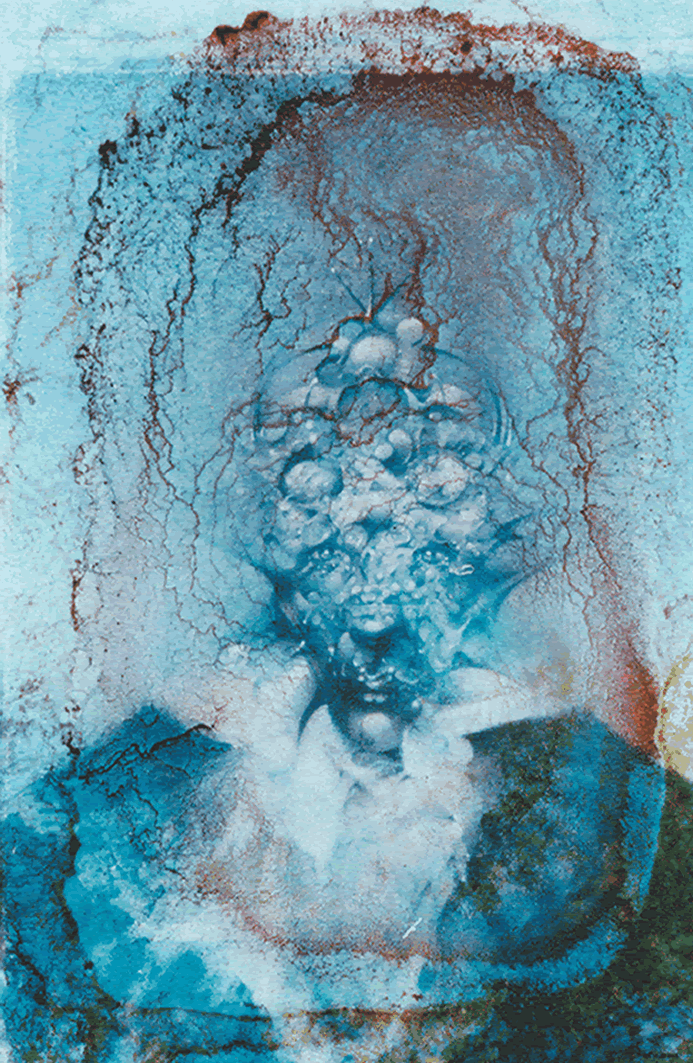
THE JOURNEYMAN 1977
1 |
ONE |
3 |
2 |
TWO |
3 |
3 |
THREE |
5 |
4 |
FOUR |
4 |
5 |
FIVE |
4 |
6 |
SIX |
3 |
7 |
SEVEN |
5 |
8 |
EIGHT |
5 |
9 |
NINE |
4 |
45 |
- |
|
|
- |
3+6 |
9 |
- |
|
8 |
RAMALLAH |
|
|
|
|
R |
18 |
9 |
|
|
A+M+A+L |
27 |
9 |
|
|
L |
12 |
3 |
|
|
A+H |
9 |
9 |
|
8 |
RAMALLAH |
66 |
30 |
30 |
- |
- |
6+6 |
3+0 |
3+0 |
8 |
RAMALLAH |
12 |
3 |
3 |
- |
- |
1+2 |
- |
- |
8 |
RAMALLAH |
3 |
3 |
3 |
A |
= |
1 |
3 |
AND |
19 |
10 |
1 |
G |
= |
7 |
3 |
GOD |
26 |
17 |
8 |
S |
= |
1 |
4 |
SAID |
33 |
15 |
6 |
L |
= |
3 |
3 |
LET |
37 |
10 |
1 |
T |
= |
2 |
5 |
THERE |
56 |
29 |
2 |
B |
= |
2 |
2 |
BE |
7 |
7 |
7 |
L |
= |
3 |
5 |
LIGHT |
56 |
29 |
2 |
A |
= |
1 |
3 |
AND |
19 |
10 |
1 |
T |
= |
2 |
5 |
THERE |
56 |
29 |
2 |
W |
= |
5 |
3 |
WAS |
43 |
7 |
7 |
L |
= |
3 |
5 |
LIGHT |
56 |
29 |
2 |
- |
- |
30 |
41 |
First Total |
|
|
|
- |
- |
3+0 |
|
Add to Reduce |
4+0+8 |
1+9+2 |
3+9 |
- |
- |
3 |
5 |
Second Total |
|
|
|
- |
- |
- |
|
Reduce to Deduce |
1+2 |
1+2 |
1+2 |
- |
- |
3 |
5 |
Essence of Number |
|
|
|
3 |
THE |
33 |
15 |
6 |
8 |
PRIMEVAL |
96 |
42 |
6 |
5 |
OCEAN |
38 |
20 |
2 |
16 |
First Total |
|
|
|
|
Add to Reduce |
1+6+7 |
7+7 |
1+4 |
7 |
Second Total |
|
|
|
|
Reduce to Deduce |
1+4 |
1+4 |
- |
7 |
Essence of Number |
|
|
|
3 |
THE |
33 |
15 |
6 |
9 |
CELESTIAL |
86 |
32 |
5 |
5 |
RIVER |
72 |
36 |
9 |
17 |
First Total |
|
|
|
|
Add to Reduce |
1+9+1 |
8+3 |
2+0 |
8 |
Second Total |
|
|
|
|
Reduce to Deduce |
1+1 |
1+1 |
- |
8 |
Essence of Number |
|
|
|
- |
THE NUN |
ad |
- |
- |
3 |
THE |
33 |
15 |
6 |
3 |
NUN |
49 |
13 |
4 |
6 |
|
82 |
28 |
10 |
- |
- |
8+2 |
2+8 |
1+0 |
6 |
|
10 |
10 |
1 |
- |
- |
1+0 |
1+0 |
- |
6 |
|
1 |
1 |
1 |
- |
THE NONE |
- |
- |
- |
3 |
THE |
33 |
15 |
6 |
4 |
NONE |
48 |
21 |
3 |
7 |
|
81 |
36 |
9 |
- |
- |
8+1 |
3+6 |
- |
7 |
|
9 |
9 |
9 |
ADVENT NINETYNINE ADVENT
THE ELEMENTS OF THE GODDESS
Caitlin Matthews 1989
Page38
"This ennead of aspects is endlessly adaptable for it is made up of nine, the most adjustable and yet essentially unchanging number. However one chooses to add up multiples of nine, for example 54, 72, 108, they always add up to nine"
SHAMANIC WISDOM IN THE PYRAMID TEXTS
THE MYSTICAL TRADITION OF ANCIENT EGYPT
Jeremy Naydler 2005
The Sarcophagus Chamber Texts
Page 199
"Figure 7.11 shows a relief fragment from the pyramid temple of Unas depicting (in all probability) the king sitting in front of an offering table on which are arranged long slices of bread. In his left hand he holds the seshed cloth, which, as we have seen, was a symbol of the triumph of the human spirit over death.32"
THE SUN
Tuesday, December 27, 2005
FRONT PAGE
"IT WASN'T DEATH THAT WON THE DAY. HUMANITY TRIUMPHED"
4 |
PTAH |
- |
- |
- |
|
P+T |
36 |
9 |
|
|
A+H |
9 |
9 |
|
|
PTAH |
45 |
18 |
18 |
- |
- |
4+5 |
1+8 |
1+8 |
|
PTAH |
9 |
9 |
9 |
FOLLOW
THE
PATH OF PTAH
1 |
I |
9 |
9 |
9 |
3 |
|
|
|
|
- |
- |
- |
- |
- |
- |
- |
- |
- |
- |
1 |
I |
9 |
9 |
9 |
2 |
|
|
|
|
1 |
I |
9 |
9 |
9 |
- |
- |
- |
- |
- |
- |
- |
- |
- |
- |
1 |
I |
9 |
9 |
9 |
2 |
ME |
18 |
9 |
9 |
4 |
LOVE |
54 |
18 |
9 |
6 |
DIVINE |
63 |
36 |
9 |
7 |
THOUGHT |
99 |
36 |
9 |
10 |
NAMES OF GOD |
99 |
45 |
9 |
THE WEEKLY NEWS
No7862-3 February 18, 2006
FRONT PAGE
I
GAVE UP SIGHT TO HAVE NINE CHILDREN
DAILY MAIL
Monday, January 23
LIFE STYLE
Page 42
"£ 99 sale"
"was £ 145 now 99"
"was£ 145 now 99"
"All prices include frame and lenses."
DAILY MAIL
Thursday, February 2, 2006
Page 3
"The man who was one number away from £105m"
"WHAT'S the difference between £105 million and £ 6,000"
"That's all a British 999 operator needed to win last week's EuroMillions jackpot."
DAILY MAIL
Friday, February 3, 2006
Page 55
"Awaste of space (unless you're 9)
Zathura: A Space Adventure
THE CATHEDRAL CHURCH OF ALL SAINTS WAKEFIELD
Sunday, 18th December, 2005
"Service of Nine Lessons and Carols"
DAILY MAIL
Friday, September 9, 2005
"Exactly four years on from 9/11, Ground Zero remains a wasteland,"
THE SPIRITUAL DIMENSION OF THE ENNEAGRAM
NINE
FACES OF THE SOUL
Sandra Maitri 2000
HOW MANY FISH ISHI ISHI HOW MANY FISH
26 |
ABCDEFGHIJKLMNOPQRSTUVWXYZ |
351 |
126 |
9 |
25 |
GENERAL THEORY OF RELATIVITY |
315 |
135 |
9 |
14 |
ALBERT EINSTEIN |
153 |
63 |
9 |
CITY OF REVELATION
John Michell 1972
Page 95
CHAPTER
NINE
The Literary Canon: 153 Fishes in the Net
"Simon Peter went up and drew the net to land full of great fishes, one hundred and fifty and three' (John 2 I: I I).
Why there should have been exactly 153 fishes in the net is a question which has puzzled commentators from the earliest times. Obviously the number had an esoteric significance, and by reference to the sacred canon of number and geometry this may be discovered. The parables and many of the episodes in the New Testament form the literary expressions of geometrical processes. This is particularly clear in the case of the 153 fishes. The key is the number 1224, which is the value by gematria of both (greek letters omitted), the net, and (greek letters omitted, fishes. 1224 is equal to 8 times 153,and 153 is the sum of the numbers 1-17. Reference has already been made on earlier pages to the number 1224; the more important associations of this number are summarised on the next page.
The account in the twenty-first and last chapter of St John's Gospel of the miraculous draught of 153 fishes provides an excellent illustration of the ancient canon of numerology, rediscovered by the early Christian scholars and adopted for literary purposes in the composition of their sacred writings.
24 |
SUPERNATURAL SUPERSTITION |
351 |
126 |
9 |
25 |
GENERAL THEORY OF RELATIVITY |
315 |
135 |
9 |
26 |
ABCDEFGHIJKLMNOPQRSTUVWXYZ |
351 |
135 |
9 |
Why there should have been exactly 153 fishes in the net is a question which has puzzled commentators from the earliest times.
14 |
|
153 |
63 |
9 |
| 16 |
|
189 |
99 |
9 |
| 17 |
|
189 |
108 |
9 |
11 |
ZARATHUSTRA |
153 |
45 |
9 |
12 |
QUETZALCOATL |
153 |
45 |
9 |
| 14 |
|
153 |
81 |
9 |
| 10 |
|
99 |
45 |
9 |
"Why there should have been exactly 153 fishes in the net is a question which has puzzled commentators from the earliest times."
THE CONCEPT OF MIND
Gilbert Ryle 1949
Page 227
"CONSIDER THE REPLIES WE SHOULD EXPECT TO GET TO THE FOLLOWING QUESTIONS. 'HOW DO YOU KNOW?' 'HOW DO YOU KNOW THAT THERE ARE TWELVE CHAIRS IN THE ROOM?' 'BY COUNTING THEM.' 'HOW DO YOU KNOW THAT 9 x 17 MAKES 153?' 'BY MULTIPLYING THEM AND THEN CHECKING THE ANSWER BY SUBTRACTING 17 FROM 10 x 17.'"
THE NATURE OF SHAMANISM
SUBSTANCE AND FUNCTIONS OF A RELIGIOUS METAPHOR
Michael Ripinsky Naxon
1993
Page 49
"In most cases the skin membrane is ornamented with designs, among which the number nine appearing sometimes in various aspects has an obvious symbolic significance, possibly as a product of three, three's.
In the Mongol cosmogony the number nine together with the planet Venus and the constellation of the Great Bear, particularly the star Polaris occupies central positions."
VE-NUS 9 9 SUN-EV
THE NATURE OF SHAMANISM
SUBSTANCE AND FUNCTIONS OF A RELIGIOUS METAPHOR
Michael Ripinsky Naxon
1993
Page 234
"13. G. M. Vasilevich, "Early Concepts about the Universe among the Evenks (Materials)!' (In): Henry N. Michael (ed.), Studies in Siberian Shamanism; p. 68 [see note 5].
The Norse tradition that recounts Odin's offering himself in sacrifice to himself loses, thus, much of its strangeness. It is not much else than a variant of the transculturally encountered myth of transformation. In this particular account, the god Odin, by his own hand, hangs for nine days and nine nights (the recurrent significance of the number 9, or 3 x 3) from the World Tree (Yggdrasil), which represents the junction to the Otherworlds. .- During this transformational process, very much in shamanistic order, he acquires nine magical chants."
Extract revised for OED Online
ninety, a. and n. Draft Revision Jan 2006
5.
ninety-nine
Brit. (also
99
),
http://www.oed.com/bbcwords/ninety.html
Extract revised for OED Online
ninety, a. and n. Draft Revision Jan 2006
5.
ninety-nine
Brit. (also
99
), an ice-cream cone made with soft ice cream with a stick of flaky chocolate inserted into it (as 99 a proprietary name in the United Kingdom); (formerly) an ice-cream wafer sandwich containing a similar stick of chocolate; a wafer cone or chocolate stick for an ice cream (disused).
[Apparently an arbitrary marketing name. The original ice cream contained Cadbury's '99' Flake (produced specially for the ice-cream trade) but the application to the chocolate may not precede its application to the ice cream. The suggestion that something really special or first class was known as '99' in allusion to an elite guard of ninety-nine soldiers in the service of the King of Italy appears to be without foundation.]
1935
Price List Cadbury Bros. Ltd.
Aug.,
'99' C.D.M. Flake (For Ice Cream Trade)..1 gro[ss]..singles..6/6 One price only.
1936
in
Advertising Album
(Cadbury Arch. No. 003580),
Try a '99' ice cream with Cadbury's Dairy Milk Flake chocolate.
1938
Ice Cream Industr.
Jan. 1, (advt.)
'99'-The only Cone in the world having these outstanding features-Dripless; Patented top [etc.].
1951
in
Buyers' Guide to Dairy & Ice Cream Industries
217 (advt.)
'Say 99' Janette Scott, child film star, like millions of other children and grown-ups, knows that the best way to eat ice cream is in Askeys '99' Cake Cones.
1977
Times
20 Oct. 6/5
What the [ice-cream] trade needs..is another 99 flake. That gimmick did great things for sales.
1996
R. DOYLE
Woman who walked into Doors
iv. 12
We got Ninety-Nines or chips before we got the train home,..depending on the weather.
2001
Sunday Herald (Glasgow)
18 Feb. (7 Days section) 2/1
Never having been at the epicentre of any kind of unpleasant incident in Troon, unless you include paying £1.20 for a 99 without raspberry sauce.
http://www.oed.com/bbcwords/ninety.html
THE SUPERGODS
Maurice M Cotterell
1997
THEY CAME ON A MISSION TO SAVE MANKIND
Page 55"So, the clues all point to a numerical matrix the conclusion of which culminates in 9 9 9 9 9. Taking 9 each of the Maya cycles and also 9 of the 260-day Maya years we arrive at the message of the Temple of Inscriptions: 1,66,560.
The sceptic might argue that 'if we looked hard enough then all of these numbers could have been found somewhere'."
4 |
ZERO |
64 |
28 |
1 |
|
3
|
ONE |
34
|
16
|
7
|
|
3
|
TWO |
58
|
13
|
4
|
|
5
|
THREE |
56
|
29
|
2
|
|
4
|
FOUR |
60
|
24
|
6
|
|
4
|
FIVE |
42
|
24
|
6
|
|
3
|
SIX |
52
|
16
|
7
|
|
5
|
SEVEN |
65
|
20
|
2
|
|
5
|
EIGHT |
49
|
31
|
4
|
|
4
|
NINE |
42
|
24
|
6
|
40 |
- |
522 |
225 |
45 |
4+0 |
- |
5+2+2 |
2+2+5 |
4+5 |
4 |
- |
9 |
9 |
9 |
26 |
ABCDEFGHIJKLMNOPQRSTUVWXYZ |
351 |
126 |
9 |
CLOSER TO THE LIGHT
Melvin L. Morse and Paul Perry
1990
THE FATHER OF NEUROSCIENCE
Page 98
"I must hasten to add that many researchers in the medical profession feel, deep down in their heart, that there is a soul. I remember one of my professors at Johns Hopkins University telling me that "When I say, 'I went for a walk today, 'I. know I am simply describing to you a behavior that my fellow scientists can quantify. But I know that there was more to my walk than just my legs moving. I know that some inner force decided to go for a walk and that that same inner force enjoyed the flowers and birds and the beauty of nature; / Page 99 / thoughts that science will never be able to measure or quantify." That statement came from a rigid behaviorist with whom I spent hundreds of hours quantifying the exact frequencies of sounds that monkeys can hear".
When I reflect on what he said, I remember the works of Wilder Penfield."
I
SAY
Page 98
"I=9 must hasten to add that many researchers in the medical profession feel, deep down in their heart, that there is a soul. I=9 remember one of my professors at Johns Hopkins University telling me that"When I=9 say, 'I=9 went for a walk today,' I=9. know I=9 am simply describing to you a behavior that my fellow scientists can quantify. But I=9 know that there was more to my walk than just my legs moving. I=9 know that some inner force decided to go for a walk and that that same inner force enjoyed the flowers and birds and the beauty of nature;" / Page 99 / thoughts that science will never be able to measure or quantify." That statement came from a rigid behaviorist with whom I=9 spent hundreds of hours quantifying the exact frequencies of sounds that monkeys can hear".
When I=9 reflect on what he said, I=9 remember the works of Wilder Penfield"
On page 98 / I=9 occurrs x 8 = 72 7+2 = 9
The lines quoted ( 26 - 34 inclusive) occupy nine lines of page 98 and occur x 3 on lines 3-5 of page 99
I=9 occurrs x 11= 99
THE EYES HAVE IT
Stephen Hawking
Quest For A Theory Of Everything
Kitty Ferguson
Page 103
31 line down / 7 line up
"The square of 4 is 16; the square of 5 is 25. The difference between 25 and 16 is 9.
The square root of 9 is 3. So we know that the third side (This occurs on the 33rd line down)
Of the triangle, side C, The world-line of our traveling object, is three yards in length in space time.
HOW MANY FISH ISHI ISHI HOW MANY FISH
?
THE CONCEPT OF MIND
Gilbert Ryle 1949
Page 227
"CONSIDER THE REPLIES WE SHOULD EXPECT TO GET TO THE FOLLOWING QUESTIONS. 'HOW DO YOU KNOW?' 'HOW DO YOU KNOW THAT THERE ARE TWELVE CHAIRS IN THE ROOM?' 'BY COUNTING THEM.' 'HOW DO YOU KNOW THAT 9 x 17 MAKES 153?' 'BY MULTIPLYING THEM AND THEN CHECKING THE ANSWER BY SUBTRACTING 17 FROM 10 x 17.'"
KRISHNAMURTI
THE IMPOSSIBLE QUESTION
1972
Page 156
Dialogues
KRISHNAMURTI: I never said that, Sir. When you look at this question really carefully, you will never ask, 'How am I to live in the present?' If you see the nature and the structure of thought very clearly, then you will find that you can function fom a state of mind that is always free from all thought, and yet use thought. That is real meditation, Sir, not all the phoney stuff.
Now the mind is so crowded with the known, which is the product of thought. The mind is filled with past knowledge, past experience, the whole of memory - which is part of the brain - it is filled with the known. I may translate the known in terms of the future or in terms of the present, but it is always from the known. It is this known that divides, 'knowing the pase, 'I don't know', 'I shall know'. This past, with all its reservoir of memory says, 'Do this, don't do that', 'This will give you certainty, that will give you uncertainty'.
So when the whole mind, including the brain, is empty of the known, -then you will use the known when it is necessary, but functioning always from the unknown - from the mind that is free of the Known. Sir, this happens, it's not as difficult
as it sounds. If you have a problem, you think about it for a day or two, you mull it over, and you get tired of it, you don't know what to do, you go to sleep. The next morning, if you are sensitive, you have found the answer. That is, you have tried to answer this problem in terms of what is beneficial, what is successful, what will bring you certainty, in terms of the known, which is thought. And after exercising every thought, thought says, Im tired'. And next morning you've found the answer. That is, you have exercised the mind, used thought to its fullest extent, and dropped it. Then you see something totally new.But if you keep.on exercising
thought all the time, form conclusion after conclusion which is the known - then obviously you never see anything new.
This demands a tremendous inward awareness, an inward sense of order; not disorder, but order.
Page 157
Questioner: Is there a method of procedure
KRISHNAMURTI: Look, Sir- I get up, walk a few paces and go down the steps. Is that a method of procedure? I just get up and do it naturally, I don't invent a method first and follow it - I see it. You can't reduce everything to a method !
Questioner: Can you empty this storehouse of imprssions which you have had?
KRISHNAMURTI: You've put a wrong question. It is a wrong question because you say 'Can you ever'. Who is the 'you' and what do you mean by 'ever'? Which means: is it possible?
Sirs, look, we never put the impossible question - we are always putting the question of what is possible. If you put an
impossible question, your mind then has to find the answer in terms of the impossible - not of what is possible. All the great scientific discoveries are based on this, the impossible. It was impossible to go to the moon. But if you say, 'It is possible' then you drop it. Because it was impossible, three hundred thousand people cooperated and worked at it, night and day - they put their mind to it and went to the moon. But we never put the impossible question! The impossible question is this: can the mind empty itself of the known? - itself, not you empty the mind. That is an impossible question. If you put it with tremendous earnestness, with seriousness, with passion, you'll find out. But if you say, 'Oh, it is possible', then you are stuck.
5 August 1970
DISMEMBERED AND REMEMBERED
REMEMBERED
AND
DISMEMBERED
ALL IN ALL
THE ONLY RIGHT WAY TO DIE
5 |
THOTH |
71 |
26 |
8 |
4 |
HIKE |
33 |
24 |
6 |
3 |
THE |
33 |
15 |
6 |
6 |
DIVINE |
63 |
36 |
9 |
4 |
WORD |
60 |
24 |
6 |
3 |
THE |
33 |
15 |
6 |
4 |
BOOK |
43 |
16 |
7 |
2 |
OF |
21 |
12 |
3 |
5 |
GATES |
52 |
16 |
7 |
14 |
First Total |
|
|
|
|
Add to Reduce |
1+4+9 |
5+9 |
2+3 |
5 |
Second Total |
|
|
|
|
Reduce to Deduce |
1+4 |
1+4 |
- |
5 |
Essence of Number |
|
|
|
8 |
ENTRANCE |
80 |
35 |
8 |
5 |
ENTER |
62 |
26 |
8 |
6 |
ENTERS |
81 |
27 |
9 |
9 |
ENTRANCES |
99 |
36 |
9 |
3 |
OUR |
54 |
18 |
9 |
9 |
ENTRANCES |
99 |
36 |
9 |
3 |
OUR |
54 |
18 |
9 |
5 |
EXITS |
77 |
23 |
5 |
20 |
First Total |
|
|
|
|
Add to Reduce |
2+8+4 |
9+5 |
3+2 |
2 |
Second Total |
|
|
|
|
Reduce to Deduce |
1+4 |
1+4 |
- |
2 |
Essence of Number |
|
|
|
23 |
OUR ENTRANCES AND OUR EXITS |
303 |
105 |
6 |
9 |
ENTRANCES |
99 |
36 |
9 |
3 |
AND |
19 |
10 |
1 |
5 |
EXITS |
77 |
23 |
5 |
5 |
LIGHT |
56 |
29 |
2 |
4 |
HEAT |
34 |
16 |
7 |
9 |
Add to Reduce |
|
|
|
|
Reduce to Deduce |
9+0 |
4+5 |
- |
9 |
Essence of Number |
|
|
|
3 |
THE |
33 |
15 |
6 |
5 |
WHITE |
65 |
29 |
2 |
7 |
RABBITZ |
78 |
33 |
6 |
15 |
First Total |
|
|
|
|
Add to Reduce |
1+7+6 |
7+7 |
1+4 |
6 |
Second Total |
|
|
|
|
Reduce to Deduce |
1+4 |
1+4 |
- |
6 |
Essence of Number |
|
|
|
- |
THE WHITE RABBITS |
ad |
- |
- |
3 |
THE |
33 |
15 |
6 |
5 |
WHITE |
65 |
29 |
2 |
7 |
RABBITS |
71 |
26 |
8 |
15 |
|
169 |
70 |
16 |
1+5 |
- |
1+6+9 |
7+0 |
1+6 |
6 |
|
16 |
7 |
7 |
- |
- |
1+6 |
- |
- |
6 |
|
7 |
7 |
7 |
7 |
ALIZZED |
83 |
38 |
2 |
10 |
ZED ALIZ ZED |
118 |
55 |
1 |
3 |
THE |
33 |
15 |
6 |
3 |
ZED |
35 |
17 |
8 |
7 |
ALIZZED |
83 |
38 |
2 |
13 |
Add to Reduce |
|
|
|
|
Reduce to Deduce |
1+5+1 |
7+0 |
1+6 |
4 |
Essence of Number |
|
|
|
5 |
LIGHT |
56 |
29 |
2 |
5 |
WHITE |
65 |
29 |
2 |
6 |
EATING |
56 |
29 |
2 |
8 |
CHEATING |
67 |
40 |
4 |
7 |
RAINBOW |
|
|
|
|
R+A |
19 |
10 |
|
|
I+N |
23 |
14 |
|
|
B+O+W |
40 |
13 |
|
7 |
RAINBOW |
82 |
37 |
10 |
- |
- |
8+2 |
3+7 |
1+0 |
7 |
RAINBOW |
10 |
10 |
1 |
- |
- |
1+0 |
1+0 |
- |
7 |
RAINBOW |
1 |
1 |
1 |
5 |
HORUS |
81 |
27 |
9 |
9 |
LETOPOLIS |
108 |
36 |
9 |
14 |
First Total |
|
|
|
|
Add to Reduce |
1+8+9 |
6+3 |
1+8 |
5 |
Second Total |
|
|
|
|
Reduce to Deduce |
1+8 |
- |
- |
5 |
Essence of Number |
|
|
|
5 |
HORUS |
81 |
36 |
9 |
4 |
EDFU |
36 |
18 |
9 |
- |
ED |
9 |
9 |
9 |
- |
FU |
27 |
9 |
9 |
4 |
EDFU |
36 |
18 |
9 |
5 |
HORUS |
81 |
36 |
9 |
5 |
HORUS |
81 |
36 |
9 |
4 |
EDFU |
36 |
18 |
9 |
12 |
Add to Reduce |
|
|
|
|
Reduce to Deduce |
1+1+7 |
5+4 |
1+8 |
3 |
Essence of Number |
|
|
|
14 |
HORUS LETOPOLIS |
189 |
63 |
9 |
9 |
HORUS EDFU |
117 |
54 |
9 |
23 |
Add to Reduce |
|
|
|
|
Reduce to Deduce |
3+0+6 |
1+1+7 |
1+8 |
5 |
Essence of Number |
|
|
|
6 |
OSIRIS |
89 |
35 |
8 |
3 |
ABYDOS |
66 |
21 |
3 |
6 |
JACKAL |
38 |
11 |
2 |
7 |
DENDERA |
|
|
|
|
D+E |
9 |
9 |
|
|
N |
14 |
5 |
|
|
D+E |
9 |
9 |
|
|
R |
18 |
9 |
|
|
A |
1 |
1 |
|
7 |
DENDERA |
51 |
33 |
33 |
- |
- |
5+1 |
3+3 |
3+3 |
7 |
DENDERA |
6 |
6 |
6 |
8 |
DENDERAH |
|
|
|
|
D+E |
9 |
9 |
|
|
N |
14 |
5 |
|
|
D+E |
9 |
9 |
|
|
R |
18 |
9 |
|
|
A+H |
9 |
9 |
|
8 |
DENDERAH |
59 |
41 |
41 |
- |
- |
5+9 |
4+1 |
4+1 |
8 |
DENDERAH |
14 |
5 |
5 |
- |
- |
1+4 |
- |
- |
8 |
DENDERAH |
5 |
5 |
5 |
3 |
MIN |
36 |
18 |
9 |
6 |
KOPTOS |
96 |
24 |
6 |
4 |
AMUN |
49 |
13 |
4 |
6 |
THEBES |
59 |
23 |
5 |
5 |
HORUS |
81 |
27 |
9 |
14 |
HIERAKONOPOLIS |
167 |
77 |
5 |
11 |
ELEPHANTINE |
109 |
55 |
1 |
5 |
KHNUM |
67 |
22 |
4 |
5 |
OMBOS |
64 |
19 |
1 |
4 |
SETH |
52 |
16 |
7 |
6 |
OSIRIS |
89 |
35 |
8 |
6 |
ABYDOS |
66 |
21 |
3 |
5 |
THOTH |
71 |
26 |
8 |
10 |
HERMOPOLIS |
130 |
58 |
4 |
4 |
ATUM |
55 |
10 |
1 |
10 |
HELIOPOLIS |
120 |
57 |
3 |
2 |
RE |
23 |
14 |
5 |
10 |
HELIOPOLIS |
120 |
57 |
3 |
6 |
WEPWAT |
88 |
25 |
7 |
4 |
SIUT |
69 |
15 |
6 |
4 |
PTAH |
45 |
18 |
9 |
7 |
MEMPHIS |
83 |
38 |
2 |
4 |
ATEN |
40 |
13 |
4 |
12 |
TELL-EL-AMARNA |
114 |
42 |
6 |
6 |
ANUBIS |
66 |
21 |
3 |
6 |
ABYDOS |
66 |
21 |
3 |
5 |
WOMAN |
66 |
21 |
3 |
7 |
MANKIND |
66 |
30 |
3 |
6 |
HATHOR |
70 |
34 |
7 |
7 |
DENDERA |
51 |
33 |
6 |
7 |
BUSIRIS |
97 |
34 |
7 |
6 |
OSIRIS |
89 |
35 |
8 |
4 |
SETH |
52 |
16 |
7 |
5 |
TANIS |
63 |
18 |
9 |
5 |
NEITH |
56 |
29 |
2 |
4 |
SAIS |
48 |
12 |
3 |
5 |
EL KEB |
35 |
17 |
8 |
8 |
NEKHABIT |
70 |
34 |
7 |
8 |
HERISHEF |
78 |
51 |
6 |
13 |
HERAKLEOPOLIS |
146 |
65 |
2 |
3 |
EJO |
30 |
12 |
3 |
4 |
BUTO |
58 |
13 |
4 |
4 |
BUTO |
58 |
13 |
4 |
5 |
HORUS |
81 |
27 |
9 |
- |
CHILD DIVINE |
- |
- |
- |
6 |
DIVINE |
63 |
36 |
9 |
5 |
CHILD |
36 |
27 |
9 |
11 |
|
99 |
63 |
18 |
1+1 |
- |
9+9 |
6+3 |
1+8 |
2 |
|
18 |
9 |
9 |
- |
- |
1+8 |
- |
- |
2 |
|
9 |
9 |
9 |
5 |
RIVER |
72 |
36 |
9 |
6 |
TIGRIS |
82 |
37 |
1 |
5 |
RIVER |
72 |
36 |
9 |
4 |
NILE |
40 |
22 |
4 |
5 |
RIVER |
72 |
36 |
9 |
6 |
GANGES |
53 |
26 |
8 |
4 |
ISIS |
56 |
20 |
2 |
4 |
DJED |
23 |
14 |
5 |
6 |
COLUMN |
78 |
24 |
6 |
4 |
DJED |
23 |
14 |
5 |
3 |
TIT |
49 |
13 |
4 |
7 |
Add to Reduce |
|
|
|
|
Reduce to Deduce |
7+2 |
2+7 |
- |
7 |
Essence of Number |
|
|
|
CITY OF REVELATION
John Michell 1972
Page 137
Chapter Thirteen
"666"
CITY OF REVELATION
John Michell 1972
Chapter
THIRTEEN
Page 137
"666"
has been the subject of more comment and speculation than any other cabalistic number, principally on account
of the last verse in
Revelation 13:
'Here is wisdom. Let him that hath understanding count the number of the beast: for it is the number of a man; and his number is
six hundred threescore and six.'
HOLY BIBLE
Scofield References
Page 1342
C 13 V 18
HERE IS WISDOM. LET HIM THAT HATH UNDERSTANDING COUNT THE NUMBER OF THE BEAST:
FOR IT IS THE NUMBER OF A MAN AND HIS
NUMBER
IS
SIX HUNDRED THREE SCORE AND SIX
The Holy 999 Part 6
1. I AM THE FATHER OF ALL CREATION. I AM THE BEGINNING AND THE END, THE ALPHA AND OMEGA OF ALL THAT IS AND EVER SHALL BE. I CONTINUE NOW IN OUR CONVERSATIONS FOR THE BENEFIT OF MY CHILDREN EVERYWHERE.
2. The studies and deductions along with the discussions of My Sons Jesus and Michael with you have been most interesting to Me. These various questions in your mind truly represent the motivation present in this work we do. This portion of the named Holy Book is so riddled with these errors under discussion, there barely remains enough time to unravel them.
A BUDDHIST BIBLE
SELECTIONS FROM SANSKRIT SOURCES
THE LANKAVATARA SCRIPTURE
Compiled by Dwight Goddard 1938
Page 317
"Then said Mahamati to the Blessed One: Pray tell us, Blessed One, concerning the characteristics of deep attachments to existence and as to how we may become detached from existence?
The Blessed One replied: When one tries to understand the significance of things by means of words and discriminations, there follow immeasurably deep-seated attachments to existence. For instance: there are the deep-se'lted attachments to signs of individuality, to causation, to the notion of being and nonbeing, to the discrimination of birth and death, of doing and not-doing, to the habit of discrimination itself upon which the philosophers are so dependent.
There are three attachments that are especially deep-seated in the minds of all: greed, anger and infatuation, which are based on lust, fear and pride. Back of these lies discrimination and desire which is procreative and is accompanied with excitement and avariciousness and love of comfort and desire for eternal life; and, following, is a succession of rebirths on the five paths of existence and a continuation of attachments. But if these attachments are broken off, no signs of attachment nor
of detachment will remain because they are based on things that are non-existent; when this truth is clearly understood the net of attachment is cleared away.
But depending upon and attaching itself to the triple combination which works in unison there is the rising and the continuation of the mind-system incessantly functioning, and be / Page 318 /
cause of it there is the deeply-felt and continuous assertion of the will-to-live. When the triple combination that causes the functioning of the mind-system ceases to exist, there is the triple emancipation and there is no further rising of any combination. When the existence and the non-existence of the external world are recognised as rising from the mind itself, then the Bodhisattva is prepared to enter into the state of imagelessness and therein to see into the emptiness which characterises all discrimination and all the deep-seated attachments resulting therefrom. Therein he will see no signs of deep-rooted attachment nor detachment; therein he will see no one in bondage and no one in emancipation, except those who themselves cherish bondage and emancipation, because in all things there is no "substance" to be taken hold of.
But so long- as these discriminations are cherished by the ignorant and simple-minded they go on attaching themselves to them and, like the silkworm, go on spinning their thread of discrimination and enwrapping themselves and others, and are charmed with their prison. But to the wise there are no signs of attachment nor of detachment; all things are seen as abiding in solitude where there is no evolving of discrimination. Mahamati, you and all the Bodhisattvas should have your abode where you can see all things from the view-point of solitude.
Mahamati, when you and other Bodhisattvas understand well the distinction between attachment and detachment, you will be in possession of skillful means for avoiding becoming attached to words according to which one proceeds to grasp meanings. Free from the domination of words you will be able to establish yourselves where there will be a "turning- about" in the deepest seat of consciousness by means of which you will attain self-realisation of Noble Wisdom and be able to enter into all the Buddha-lands and assemblies. There you will be stamped with the stamp of the powers, self-command, the psychic faculties, and will be endowed with the wisdom and the power of the ten inexhaustible vows, and will become radiant with the variegated rays of the Transformation Bodies. Therewith you will shine without effort like the moon, the sun, the magic wishing-jewel, and at every stage will view things as being- of perfect oneness with yourself, uncontaminated by any self-consciousness. Seeing that all things are like a dream, you will be able to enter into the stage of the Tathagatas and be / Page 319 /
able to deliver discourses on the Dharma to the world of beings in accordance with their needs and be able to free them from all dualistic notions and false discriminations.
Mahamati, there are two ways of considering self-realisation: namely, the teachings about it, and the realisation itself. The teachings as variously given in the nine divisions of the doctrinal works, for the instructions of those who are inclined toward it, by making use of skillful means and expedients, are intended to awaken in all beings a true perception of the Dharma. The teachings are designed to keep one away from all
the dualistic notions of being and non-being and oneness and otherness.
Realisation itself is within the inner consciousness. It is an inner experience that has no connection with the lower mindsystem and its discriminations of words, ideas and philosophical speculations. It shines out with its own clear light to reveal the error and foolishness of mind-constructed teachings, to render impotent evil influences from without, and to guide one unerringly to the realm of the good non-outflowings. Mahamati, when the earnest disciple and Bodhisattva is provided with these requirements, the way is open to his perfect attainment of self-realisation of Noble Wisdom, and to the full enjoyment of the fruits that arise therefrom."
A NEW BOOK OF REVELATION
Compiled by Tuella 1995
LOVE LETTERS FROM THE THRONE
Page30
"My children, I have long awaited these end times, as you refer to them, for this most precious planet. I have sorrowed much over the travesties of this planetary experience. Mother Earth has been shedding many tears over the many eons of time, time that she has made Herself available for this expression of creation.
She so desires for these end times to be completed that her sorrow radiates back to Me, with what you might consider much pain. I too am pleased about that which is to follow in terms of her release from this pain.
I, too, desire all of mankind to understand that which is to come to pass. I, too, want all of mankind to understand the meaning of this pain which the planet has withstood for so long in order that mankind could play out its fantasies. NOW WE MUST ALL MOVE ON.
I have called and commissioned you to proceed forward with your work, establishing the end occurrences as they must come according to the grand plan. I have asked that you go forward to cleansing from this planet that which she desires to have removed from her. We have asked that you have a consciousness of those who have chosen their own will over Mine, and that you have a sense of their right place.
I so care for all My children that I have prepared a home for even those who reject My Presence in their life experiences. I am of course saddened by their unwillingness to accept that I am the Father, but this is fine, as they most certainly will desire My Presence once they have lived any length of time in the darkness. I am sorrow / Page 31 /
ful that this has to come to pass but so be it.
You, My loving Ones, will be graciously received at My table as the Feast is now being prepared. I have made great plans for this Celebration and will not rest not a day until this Feast comes to pass. I give My Thanks to you, for your devotion to My plan for that which you call planet Earth. I have been grateful for all that you have done and welcome you home when that time comes. I remain with you always. Your loving Father/Mother God.
. The Holy 999 Part 6
1. I AM THE FATHER OF ALL CREATION. I AM THE BEGINNING AND THE END, THE ALPHA AND OMEGA OF ALL THAT IS AND EVER SHALL BE. I CONTINUE NOW IN OUR CONVERSATIONS FOR THE BENEFIT OF MY CHILDREN EVERYWHERE.
2. The studies and deductions along with the discussions of My Sons Jesus and Michael with you have been most interesting to Me. These various questions in your mind truly represent the motivation present in this work we do. This portion of the named Holy Book is so riddled with these errors under discussion, there barely remains enough time to unravel them.
3. You have finally located in your search the only passage or use of the number 666 in the entire written record. In vain did you search for another, for no other corresponding witness exists anywhere. For it is here at this point in the record (Rev. 13:18) that the perversion of this number made entry, calculated and deliberate in its destructive intent. In the (four) references to this subject that follow, the number becomes a mark that is not My Seal. The few references that follow go on to expand the prized lie that it is the "mark of the beast" and even that it appears in the forehead as well as the hand. Once an awareness is born of these interferences and the motive, the entire proposal is clearly exposed.
4. The number 999 is identified as truly of My Kingdom. It represents a Divine number of the Creation of Life itself in this and other Universes. This is a widely known fact in other worlds. It is a code number within the consciousness of many who have come to / Page 32 /
this planet to serve the Father, and who are actual extensions of My Self. To disguise this number as a mark of the Fallen ones has diabolically and thoroughly confused the souls of this planet, but it was easily accomplished by another source simply by inverting the number upside down.
5. My Daughter, there is a great need for Us to unfold this story, to surface it in human minds to assist with the mass confusion which will surface regardless. So many have long waited the fulfillment of the prophecy concerning the mark of the beast. I have made provisions for this lesson to come forth. It is unfortunate that the lesson will be played out to the detriment of those who have changed its meaning and representation. For this is actually the mark of the Great Eternal Ones and not that of the Fallen Ones. This distortion will play havoc for those without proper intunement within and for whom discernment is outside their personal experience. It will be denounced by religious zealots who are programmed to biblical writings but without soul discernment. The confusion soon to follow for My Children will be of such abnormality many will be prevented from moving into higher realms of expression.
6. Numbers are identities used widely in the upper realms. Even worlds, planets, are coded by number and not by name upon the great monitoring boards of My Flying Brotherhood. Yes 999 is the number of a man as written, but it is not as originally written. The number was written by, recorded by, another who feigned the mind and thought of the Messenger. Beyond that time there were many other rewritings of the words and many versions with opportunities for revision. At the time, there existed strong sensitivity to the existence of an army of darkness with its certain great leader, whom they chose to call Satan. The system was formulated and elaborated upon by the priests and scribes of this Devil, out of their intense desire to have control of the people in their influence upon them. Ignorance and bigotry fueled the plan. For endless centuries My People did not have access to this written transcription nor the spirituality to receive for themselves. The record remained unchallenged. Only the priesthood had access to the holy writings and to the possibility of changing them as they desired. In the earliest centuries of the church, the writings were tampered with to imply that the mark was of a negative application and an identity of those of darkness.
Page 33
7. I ask My Light Workers to realize that neither the dark ones nor the Fallen ones need an identifying mark, because they cannot hide themselves nor their ways from the discerning Child of Light. It is indeed by their works that ye know them.
8. Three identifying insignias are engraved within My Children: in the heart, the flame of Love; in the membrane of the hand, the number of Creation; in the head, the shining morning star. It has been written that without the mark of the beast, neither shall any man buy nor sell. This is consistent with that which has been given, for the nines of My Kingdom will not be involved in the buy and sell for their needs, for money will cease to exist. One's wants and needs shall be provided by My Hand as is proper, so that buying and selling will fade away in the new scheme of things. The plan of the Fallen ones to thus make a degenerated mark upon My Children was an ingenious one. For now in the closing days as I prepare to lift the veil, there is the sad possibility of misjudgment of the Light.
9. Therefore I call upon My Enlightened Teachers to bring forth this exposure in time for end time events. Some uninformed Lighted Ones will even classify the exposure itself as being of the Fallen ones but My Sons Michael and the Beloved One are with you to guide you through the jungle of human opinion. There will be no more martyrs. The plan has been set aside. No more blood shall be shed for Truth. Man has Truth on his own hands from this time forward; it will not dissolve by removing its source.
10. When this My revelation concerning the number 999 goes forth, it will be the Bible worshippers who will bring the fiercest opposition and not the Light Workers or My volunteers of these times. The crystallization of this concept is so embedded within souls that there will be no hope of delivering them from it as long as they cling to the old thought forms. The sense of Satan is an indoctrination that spans too many centuries of time. It is even more solidified than the concept of the substitutionary scapegoat atonement of My Son. In too many movements only an entirely new incarnation will accomplish the removal of these perversions of My Divine Plan.
11. I state once again, though I repeat my words, this sacred number is used throughout My Kingdom to identify My Creation. It does NOT designate those who are not of the Light. Only those who carry this insignia are able to enter into the higher realms. They are / Page
34 / capable because they have earned this mark. No mark exists for those who have not earned the right to enter. I AM determined to shed Light upon this error in biblical presentation concerning the number 666. This heavenly number is placed within the membrane in order that it be preserved for the entire incarnation. Without it, those who would desire to evolve into the higher realms would not be enabled to do so. This distortion was created within the inner realms because the dark forces would like those identified with the mark of God, to be removed by the lessor forces of their making. Thus they would like it to be believed that the mark represents the beast when in fact the beast is already known to be that of the dark forces themselves. The beast needs no further identification, for his presence is obvious in all that is not of the Light. I AM the Father of My Creation. I will not ever allow My Children to be branded in any physical way. This is not within the consciousness of mankind and it shall not come to pass. It will be known that this holy number (666999) is of My Making, in identifying My Children, throughout My Kingdom.
12. This is the number of those who will be entering into the ninth dimension after their mission is over. It is a most unusual number in the sense that it cannot be reversed in any way. It is that which it is. The fact that it is presented upside down is another way of identifying the touch of the dark forces upon it. The number 666-999 is only for those who are of the highest evolved state, who if taken out of their mission would not be able to support the transformation process and thereby would leave without completing the mission. The dark forces would have no problems ruling over this planet if they could remove those who bear this number as prescribed in the biblical record. The reversal of the number has no significance whatsoever in the higher realms. The number always equates to nine however it is facing. This will be the code that will be exposed, for the number nine is the highest level of completion before entering into the dimension of total spirit, at which point numbers become another part of the being itself. Numbers are then no longer necessary for understanding the Universe when passed beyond all dimensions. The reason that thorough understanding of this distortion is
so vital is that in the final days there will be many who are capable of seeing this marking in those who walk in great Light. Without / Page 35 / knowledge, the marking will therefore create the potential for those capable of seeing it, to dismiss that Light Worker as being of the dark ones. Therefore the dark forces pit the LIGHT AGAINST THE LIGHT and bring forth in depth confusion. Remember, the dark ones do not have a numerical reference so it is not necessary to evaluate any number within their being.
13. But My concern for My Loving Children goes beyond number. It also carries with it the Codings to bring forth the true identity of the Light Worker. As long as there remains distortion in understanding this, there will be a distortion in the awakening of that one seeking the Light. This is why the Dark Forces were prone to make this a part of the puzzle of prophecy which would further complicate the understanding of those in the Light, as well as those who would be grounded in the distortion, and not in the understanding of the higher truths.
14. I welcome My Children to seek My Face and listen for My Voice to bring forth from within their own being a clearer understanding of all of these things. The Father hath spoken with you.
Anti Christ? Father's Reply Part 7
1. I AM the Father Mother Creator, of All that is, to continue our conversations to be shared with My Children.
2. As we penetrate deeply into the errors that have been placed with humanity, I desire at this time to discuss the Being termed in your scriptures as Lucifer. Because of Jehovah's intent to distort all Truth, it naturally follows that he would carefully plot to defame the Highest of My Shining Angels. With the attention of the religious world upon his perverted words, he took One of the Great Ones, The Eternal Being of Light, and named him Lucifer and made him to be a being of darkness and a vessel of evil.
3. Lucifer is the Angel of Light, the Morning Star, and is not, nor will he ever be anything else. Lucifer has embodied upon Earth many times to support My Plan and to offset the forces brought forth by Jehovah. Why then would Jehovah not choose to show My Son Lucifer as one of the Fallen ones when in fact he is not.
4. The number 666 (999) is that of Lucifer certainly, but it is Lucifer who comes to save the planet from the destructive forces of / Page 36 / Jehovah. The Dark Ones took the highest of the number of the Universe, the Holy 999, and reversed its posture and gave the number into this demented character of defied evil and called him Devil. This sacred number, which is embedded within every Lighted Being, Jehovah perverted to mean the number of this Imaginary Devil. We of the Universal Creative Forces do not need to number the Fallen ones to identify them, for they are exposed for all to see and are known to all men. We DO number our Angels and Beings of Enlightenment with the Sacred number of Light, 999 which remains 9 regardless of how the number is manipulated or broken (6+6+6=18=9; 9+9+9=28=9) 999 is the number of My Saints, the number of My Kingdom, and the Glorious New Earth. THERE IS NO BEAST, THERE IS NO DEVIL, THERE IS NO ANTI-CHRIST FOR CHRIST FORCE DOES NOT NEED AN OPPOSITE.
S. Lucifer, so called, a beloved son, has come to Earth by many names, but the names are not important here. What is important is that he bears MY Standard of Light and Truth, to advance Harmony and Balance within humanity.
6. It is My Will at this time, that the secret of this "mark" or number be released. It has been kept from My Children when they have accepted words that have no truth. Each energy force projected from the Source represents a mathematical relationship to Me, sum
marized in a number. This mark of which we speak is one such,
energy which has been projected. It will be obvious and clear to those who know this mark who it is that is carrying it within his genetic makeup, and clear to all of those who see. It will surface within the minds of Light Workers, for they will know that it is I who comes to them with this mark. There will be a clear knowingness that the mark of 999 (666) resides within this individual. The confusion will arise as a result of this Being representing himself as one who comes in the Name of My Energies.
7. Do not confuse this as any reference to an Anti-Christ. THERE IS NO SUCH THING. This representation in the biblical sense was trying to refer to the Fallen One who was instrumental in setting up this process whereby polarities could be experienced. As a result of this misunderstanding the Anti-Christ concept came into being in terms of one's attempt to understand events in heaven worlds. The Anti-Christ was proposed to be the opposite of Christ, / Page 37 / but Christ has no opposite, understand this! THE LIGHT DOES NOT NEED THE DARKNESS NOR DOES LOVE NEED AN OPPOSITE IN ORDER TO BE.
8. So much misunderstanding has prevailed through many ages with biblical teachings to foster control of mankind within the context of socalled religious freedom. The compiling of its contents was intentionally designed to limit the understanding of the followers. For if man knew, the church following would be limited to only those incapable of accepting truth, not of the Light so to speak.
9. Religion has resulted in the accumulation of money in centers for the benefit of their leaders and their desire for power/control in MY Name. The false truth structure they have used will crumble with them. The Eternal One who returns to the scene to make all things right will himself be accused of being the Beast for he will clearly represent the number of his essence in full light of day. As his perfection comes to the surface the gnashing of teeth concerning the mark will be all that religions will have to cling to. THAT IS WHY IT IS SO IMPERATIVE, URGENT, THAT WE PRESENT INFORMATION AT THIS TIME, FOR THE MOMENT OF RECKONING IS FAST APPROACHING MY CHILDREN.
10. My purpose for revealing 666 is to present to humanity another opportunity for total awakening and an opportunity to Know Me as a Heavenly Father who Loves and Cares for them all.
Removal of the Fallen Ones Part 8
1. I AM THAT I AM speaks with thee, to continue our conversations to be given to MY children as they prepare themselves for the events of My schedule.
2. "My endtime revelations could not have been released before this time. The energies were not present to grasp them, as they are now. The response from Our readers is gratifying and proves the stirring within hearts that has been created. This is My intention: to wake up souls, to focus their attention and get them thinking, arguing, opposing or whatever it takes to maintain that attention to be drawn to My Words, My Truth. I care not what they say but I care that they will read and respond and talk, with an interchange that is an evidence of Life! Only the corpse is still and silent. And so My / Page 38 / Child, do not consider that this thing we do is a small thing, for it is not. IT IS A POWERFUL TIME FOR MY POWERFUL WORDS TO BE GIVEN TO THIS GENERATION: words which will decode the inner levels of their being."
ih
..130 DEGREES OF BELIE1. ~.A.rLURING UNCERTAINTY
environment, health, personal safety, and even the planet Earth itself appear to be under attack from enemies never before encountered.
"The goal of wresting society from the mercy of the laws of chance continues to elude us. Why?
For Leibniz, the difficulty in generalizing from samples of information arises from nature's complexity, not from its waywardness. He believed that there is too much going on for us to figure it all out by studying a set of finite experiments, but, like most of his contemporaries, he was convinced that there was an underlying order to the whole process, ordained by the Almighty. The missing part to which he alluded with "only for the most part" was not random but an invisible element of the whole structure.
Three hundred years later, Albert Einstein struck the same note. In a famous comment that appeared in a letter to his fellow-physicist Max Born, Einstein declared, "You believe in a God who plays with dice, and I in complete law and order in a world which objectively exists."2
Bernoulli and Einstein may be correct that God does not play with dice, but, for better or for worse and in spite of all our efforts, human beings do not enjoy complete knowledge of the laws that define the order of the objectively existing world.
Bernoulli and Einstein were scientists concerned with the behavior of the natural world, but human beings must contend with the behavior of something beyond the patterns of nature: themselves. Indeed, as civilization has pushed forward, nature's vagaries have mattered less and the decisions of people have mattered more.
Yet the growing interdependence of humanity was not a concern to any of the innovators in this story until we come to Knight and Keynes in the twentieth century. Most of these men lived in the late Renaissance, the Enlightenment, or the Victorian age, and so they thought about probability in terms of nature and visualized human beings as acting with the same degree of regularity and predictability as they found in nature."
GOD'S DICE
Martin Amis 1987
Page 4
"...'Name?' And number..."
ME
ISISIS
HOLY HOLY HOLY
BLESSED
THAT HE AZIN SHE THAT
IS
THEE
ARISES THAT SUN SETS THAT SUN SETS THAT SUN ARISES THAT SUN
OSIRIS THAT SON SETS THAT SON SETS THAT SON OSIRIS THAT SON
AZAZAZAZAZAZAZAZAZ 1 2 3 4 5 6 7 8 9 9 9 8 7 6 5 4 3 2 1 AZAZAZAZAZAZAZAZAZ
WAKEFIELD EXPRESS
30 - 9 - 06
Egyptian relics on display at museum
PEOPLE in Wakefield are being offered an insight into the mysteries of ancient Egypt.
A new exhibition opened last Friday with more than 200 fascinating objects on display, many of which are thought to have originated from ancient tombs.
Ancient household items, textiles, jewellery and cosmetic jars will help unravel the mysteries of life and death in the ancient land.
The objects are arranged thematically, giving visitors an insight into different aspects of the country's history.
The main feature in the exhibition is a stunning painted sarcophagus - a mummy case - which is more than 3000 years old.
"...Anubis mask the jackal headed God of mummification."
WAKEFIELD EXPRESS
12 - 4 - 06
Ancent Egypt proves a popular hit
"AN EXHIBITION of ancient Egyptian artefacts has proved a hit with history buffs at Wakefield Museum.
More than 15,00 visitors have flocked to the Wood Street museum to see more than 200 masks, textiles, jewellery and pottery in the Discovering Ancient Egypt exhibition. The centre-piece of the display is a 3,000-year-old sarcophagus - or mummy case - which gives visitors an insight into death rituals in ancient Egypt. A rare Anubis mask, depicting the jackal-headed god of mummification, and ancient inscribed slabs are also highlights.
"Many of the relics are on loan from Harrogate Museums and Arts, and are displayed alongside Wakefield's own Egyptian collection originating from expeditions by English archaeologists William Matthew Flinders Petrie.
DISCOVERING EGYPT:
...an Anubis mask"
A MASK A MASK
AND WHO IS THAT MAY I ASK
ANUBIS
ANUMBERIS
A
NUMBER
IS
- |
ANUBIS |
- |
- |
- |
3 |
ANU |
36 |
9 |
9 |
1 |
B |
2 |
2 |
2 |
1 |
I |
9 |
9 |
9 |
1 |
S |
19 |
10 |
1 |
6- |
|
|
|
|
- |
|
6+6 |
3+0 |
2+1 |
5 |
ANUBIS |
12 |
3 |
3 |
- |
- |
1+2 |
- |
- |
5 |
|
|
|
|
- |
- |
- |
- |
- |
- |
- |
- |
- |
- |
| |
MER |
|
|
|
2 |
ME |
18 |
9 |
9 |
1 |
R |
18 |
9 |
9 |
3 |
MER |
36 |
18 |
9 |
- |
- |
- |
- |
- |
- |
- |
- |
- |
- |
- |
ANUBIS |
- |
- |
- |
1 |
A |
1 |
1 |
1 |
6 |
NUMBER |
73 |
28 |
1 |
| |
IS |
28 |
19 |
1 |
- |
- |
- |
- |
- |
- |
- |
- |
- |
- |
3 |
SUN |
54 |
18 |
9 |
3 |
MER |
36 |
18 |
9 |
3 |
MIN |
36 |
18 |
9 |
3 |
ANU |
36 |
9 |
9 |
3 |
TAO |
36 |
9 |
9 |
4 |
GAIA |
18 |
18 |
9 |
ANUBIS
THE
DOG GOD
FOX
A
NUMBER
IS
6 |
ANUBIS |
66 |
21 |
3 |
3 |
|
33 |
15 |
6 |
3 |
|
26 |
17 |
8 |
3 |
FOX |
45 |
18 |
9 |
3 |
GOD |
26 |
17 |
8 |
18 |
|
|
|
|
|
|
1+9+6 |
8+8 |
3+4 |
9 |
|
16 |
16 |
7 |
- |
- |
|
1+6 |
- |
9 |
|
|
|
|
- |
|
|
|
|
|
|
|
|
|
|
|
|
|
|
- |
- |
|
|
5 |
|
|
|
1 |
|
|
|
|
= |
|
|
|
- |
|
|
14 |
|
|
|
19 |
|
|
|
|
= |
|
|
|
- |
|
|
|
|
|
|
|
|
|
|
|
|
|
|
- |
- |
|
1 |
|
3 |
2 |
|
|
|
|
|
|
= |
|
|
|
- |
|
1 |
|
21 |
2 |
|
|
|
|
|
|
= |
|
|
|
- |
|
|
|
|
|
|
|
|
|
|
|
|
|
|
- |
- |
|
1 |
14 |
21 |
2 |
|
19 |
|
|
|
|
= |
|
|
|
- |
|
1 |
5 |
3 |
2 |
|
1 |
|
|
|
|
= |
|
|
|
- |
|
|
|
|
|
|
|
|
|
|
|
|
|
|
- |
-- |
- |
|
|
|
|
|
|
- |
|
|
occurs |
x |
|
= |
|
- |
- |
|
|
|
|
|
|
- |
|
|
occurs |
x |
|
= |
|
- |
- |
|
|
|
|
|
|
|
|
|
occurs |
x |
|
= |
|
|
- |
|
|
|
|
|
|
|
|
|
|
|
|
|
|
- |
- |
|
|
|
|
|
|
|
|
|
occurs |
x |
|
= |
|
|
- |
|
|
|
|
|
|
|
|
|
|
|
|
|
|
|
- |
|
|
|
|
|
|
|
|
|
|
|
|
|
|
|
- |
|
|
|
|
|
|
|
|
|
|
|
|
|
|
- |
- |
|
|
|
|
|
- |
- |
- |
|
occurs |
x |
|
= |
|
25 |
|
|
|
|
|
|
|
|
|
|
|
|
|
|
|
2+5 |
|
|
|
|
|
|
|
|
|
2+0 |
- |
|
|
- |
2+1 |
7 |
|
|
|
|
|
|
|
|
|
|
|
|
|
|
|
|
|
|
|
|
|
|
|
|
|
|
|
|
|
- |
|
|
5 |
|
|
|
1 |
|
|
|
|
= |
|
|
|
|
|
14 |
|
|
|
19 |
|
|
|
|
= |
|
|
|
|
|
|
|
|
|
|
|
|
|
|
|
|
|
- |
|
1 |
|
3 |
2 |
|
|
|
|
|
|
= |
|
|
|
|
1 |
|
21 |
2 |
|
|
|
|
|
|
= |
|
|
|
|
|
|
|
|
|
|
|
|
|
|
|
|
|
- |
|
1 |
14 |
21 |
2 |
|
19 |
|
|
|
|
= |
|
|
|
|
1 |
5 |
3 |
2 |
|
1 |
|
|
|
|
= |
|
|
|
|
|
|
|
|
|
|
|
|
|
|
|
|
|
- |
- |
|
|
|
|
|
|
- |
|
|
occurs |
x |
|
= |
|
- |
|
|
|
|
|
|
- |
|
|
occurs |
x |
|
= |
|
- |
|
|
|
|
|
|
|
|
|
occurs |
x |
|
= |
|
- |
|
|
|
|
|
|
|
|
|
occurs |
x |
|
= |
|
- |
|
|
|
|
|
- |
- |
- |
|
occurs |
x |
|
= |
|
|
|
|
|
|
|
|
|
|
|
|
|
|
|
|
|
|
|
|
|
|
|
|
|
2+0 |
- |
|
|
- |
2+1 |
|
|
|
|
|
|
|
|
|
|
|
|
|
|
|
|
A |
N |
U |
|
|
|
|
|
|
|
1 |
14 |
21 |
|
|
|
|
= |
|
|
1 |
5 |
3 |
|
|
|
|
= |
|
|
A |
N |
U |
|
|
|
|
|
|
- |
1 |
- |
- |
- |
- |
1 |
- |
- |
1 |
- |
- |
5 |
- |
- |
- |
5 |
- |
- |
5 |
- |
- |
- |
3 |
- |
- |
3 |
- |
- |
3 |
|
A |
N |
U |
|
|
9 |
|
|
9 |
YORKSHIRE POST
22-9-06
Explore the mysteries of ancient Egypt
Tony Gardner
"The mysteries of life and death in ancient Egypt are to be unravelled in a new exhibition at Wakefield museum, starting today.
Many of the pieces are thought to originate from ancient tombs and the star of the show is a magnificent painted 3,000-year-old sarcophagus."
School groups, families and visitors of all ages are being invited to enjoy the exhibition through workshops, trails, guided tours and public talks.
The exhibition, on loan, from Harrogate Museums and Arts, explores ancient Egyptian rituals, beliefs and daily life.
It will also reveal more about how the pieces were unearthed and eventually transferred to Yorkshire.
Around 200 objects are arranged thematically, giving visitors an insight into distinct aspects of the history of ancient Egypt.
The history of excavation is examined, with specific reference to the English archaeologist William Matthew Flinders Petrie (1852-1942), who laid the foundations of modern Egyptology.
The dazzling mummy case is accompanied by other stunning pieces such as an extremely rare Anubis mask depicting the jackal headed god of mummification.
The insights of Dr Joann Fletcher, Research Fellow at York University and consultant Egyptologist for Harrogate Museums and Arts, have brought to light a number of interesting discoveries relating to the pieces on display.
Dr Fletcher was born, brought up and continues to live in Yorkshire and she is widely credited with having discovered the mummy which may be that of the Egyptian queen, Nefertiti.
DISCOVERY: The mummy found by Dr Joann Fletcher believed to be that of Queen Nefertiti
THE CITIZEN
Page 9
"Discovering Ancient Egypt
Wakefield Museum, 23 September 05 - 23 April O6
"Visitors to Wakefield Museum can get a taste of Egypt in a new free exhibition which unravels the mysteries of life and death in this ancient civilisation.
It has been made possible by the generous loan of objects from Harrogate Museums and Arts, but also includes items from Wakefield Museum's own collection.
The artefacts have been re-examined by celebrated Egyptologist Joann Fletcher, well known for the search for the mummy of Queen Nefertiti, as seen on TV."
JOSEPH AND HIS BROTHERS
Thomas Mann
1875 - 1955
JOSEPH THE PROVIDER
Page 959
""Could it come to pass," Joseph inquired as though of himself, "that Pharaoh should err and despite extraordinary gifts and maturity be wrong in his thought? I can scarcely believe it; yet it seems to happen and is a sign that he has his human as well as his godlike side. Those who burdened his young heart with tales of warlike prowess," he went on, always speaking as though to himself, "they, of course, stood for war and lust of the sword for their own sakes. Now your soothsayer here, descended from the moon-wanderer, he would seek to .bring to war word of the peace of God; while to peace he would put in a word for courage as a dealer between the spheres and gobetween 'twixt above and below. The sword is stupid; yet I would not call meekness wise. Wise is the mediator who counsels courage in order that meekness may not be revealed as stupid in the sight of God and man. Would I might say to Pharaoh this that I think!"
"I have heard," said Amenhotep, "what you have been saying to yourself. It is the same as before: the little trick you have invented, that you may speak aloud to yourself and that no one else has any ears. You are holding the seafaring man's gift in your arms - perhaps the little invention comes to you from it, and the spirit of the mischievous god speaks through your words."
"It may be," responded Joseph. "Pharaoh speaks the word of the hour. It may be, it is possible, we should not quite reject the idea that the quick-witted god is present with us and would make Pharaoh mindful of him and aware that it was he who brought up the dream to him from below to where he sits .in his palace. For he is a guide to the world below and, with all his gay spirits, the friend of the moon and the dead. He puts in,a friendly word with the upper world for the lower and with the lower world for the upper, he is a gentlemanly go-between 'twixt heaven and earth. Violence and abruptness are hateful to him and better than anyone else he knows that one
can be right and yet wrong."
"You are coming back to your uncle," asked Amenhotep, "the wrong right one whose big tears rolled down in the dust while all the world laughed at him? Let that story be. It is amusing but it makes me uneasy. Perhaps it is true that what is funny is always at the same time a little sad, and that we only breathe freely and happily at the pure gold of serious things."
"Pharaoh says it," answered Joseph, "and may he be the right one to say it! Serious and stern is the light and the power which streams up from below into its clarity - power it must surely be and of masculine kind, not mere tenderness; otherwise it is false and premature and tears will follow."
He did not look over at the mother after he spoke - at least not / Page 960 / full in the face. But enough so that he could see whether she nodded
approval. She did not nod, but he thought she looked steadily at him,
which was perhaps even better.
Amenhotep had not been listening. He leaned back in his chair, in one of those exaggerated attitudes of his, deliberately aimed at the old style and the rigidity of Amun. One elbow leaned against the chair-back, his other hand was on his hip, thrust out by the weight he put on that leg, the other one resting lightly on its toes. He went back to his own last words.
"I think;" he said, "My Majesty said something very good, which merits attention. I mean about jest and earnest, one oppressing and the other blessing. The moon mediates between heaven and earth. True, but the mediation is of the jesting kind, uncanny, ghostly. Whereas all the beams of my father Aton are golden earnest without guile, bound up in truth, ending in tender hands, which caress the creation of the father. God alone is the whole roundness of the sun, from which the truth pours itself out upon the world, and unfaltering love."
"The whole world hearkens to Pharaoh's words," answered Joseph, "and no one fails to hear a single one of them when he teaches. But that may easily happen to others, even when their words should by chance be just as much worth taking to heart as his. But never will it happen to the Lord of the Crown. His golden words put me in mind of one of our stories, namely how Adam and Eve, the first human beings, were frightened by the approach of the first night. They feared that the earth would again become void and formless. For it is the light which divides things and puts each in its place - it creates space and time, while night brings back disorder again, the chaos and the void. So the two were terribly frightened when the day died at the red even and darkness crept up on all sides. They beat their brows. But God gave them two stones: one of the deepest black, the other like the shadow of death. He rubbed the two together for them and lo, fire sprang out, fire from the bosom of the earth, the inmost primeval fire, young as the lightning and older than Re. It fed on dry leaves and burned on, making night plain for the two."
"Very good, very good indeed!" said the King. "I see that not all your tales are jests. Pity you do not also speak of that great joy.of the first morning, when God lighted up their whole world anew
and drove away the frightful shapes of darkness; for their delight must have been very great. Light, light!" he cried. Springing from his relaxed position, he stood' up and began to move to and fro in the room, now fast, now slowly, now lifting both bebanded arms over his head, now pressing his two hands to his heart.
"Blessed light, that created for itself the eyes which see it, created sight and thing seen; the becoming-conscious of the world which
/ Page 961 / knows of itself only through the light, which distinguishes in love.Ah, Mama, and you, dear soothsayer, how glorious above all glory and how unique in the all is Aton my Father, and how my heart. beats with fullness of pride because I came forth from him and others he gave me to understand his beauty and love! For as he is unique in greatness and goodness, so am I his son unique in love to
him, whom he has entrusted with his teaching. When he rises in the eastern horizon of heaven and mounts out of the land of God in the east, glitteringly crowned as king of the gods, then all creatures exult. The apes adore with lifted hands and all wild creatures praise him running and leaping. For every day is his blessing-time a of joy after the cursing-time of the night, when his face was turned away and the world sunk in self-forgetfulness. It is frightful when the world forgets itself, though it may be well for its refreshment. Men sleep in their chambers, their heads are wrapped up, their nostrils stopped, and none seeth the other, stolen are all the things that are under their heads while they know it not. Every lion cometh from his den, all serpents they sting. But thou hast raised
them up their limbs bathed, they take their clothing, their arms uplifted in adoration to thy dawning. Then in all the world they do their work, The barks sail upstream and downstream alike. Every highway is opened because thou hast dawned. The fish in the river leap up before him, and his rays are in the midst of the great sea. Though he is afar yet his rays are upon the earth as in the sea and fix all creatures with his love. For unless he were so high and far, how should he be over all and everywhere in his world which he has linked and: spread out in manifold beauty: the countries of Syria and Nubia and the land of Egypt; thou hast set a Nile in the heavens that he may fall for them, making floods upon the mountains like the great sea and watering their fields among their towns as he springs for us out the earth and makes fertile the desert that we may eat. Yes, how manifold O Lord, are thy works! Thou makest the seasons in order to create all thy works with million shapes, that they live in you and fulfil their life-span, which you give, in cities, towns, and settlements on highway or on river. Thou settest every man in his place. thou suppliest their necessities. Everyone has his possessions and his days are numbered. Their tongues are divers in speech, their ways are varying, but you embrace them all. Some are brown, others
black, and still others like milk and blood. And in all these hues they reveal themselves in you and are your manifestations.They have
hooked noses or flat or such as come straight out of the dress in gay colours or white, in wool or linen, according as they know or think; but all that is no reason for them to laugh or be spiteful, rather only interesting and solely a ground forIo, ship. Thou fundamentally good God, how joyful and:sound is all
/ Page 962 /
that thou createst and nourishest and what heart-filling delight hast
thou instilled into Pharaoh, thy beloved son who proclaims thee! Thou hast made the seed in man and giveth life to the son in the body of the woman, thou soothest him that he may not weep, thou good nurse and nourisher! Thou makest of what the flies live on and of the like the fleas, the worm, and the offspring of the worm. It would be enough for the heart and even well-nigh too much that the creature is satisfied in his pasture, that trees' and plants are in sap and blossoms spring in praise and thanks, while countless birds flutter above the marshes. But when I think of the little mouse in its hole where thou preparest what it needs, there it sits. with its beady eyes and cleans its nose with its paws - then my eyes run over. And I may not think at all of the little chick that cries in the egg-shell, out of which it bursts when he has made it ready - then it comes out of the egg to chirp with all its might and runneth about before Him upon its two feet with the greatest nimbleness - especially may I not be mindful of this, else I must dry my face with finest batiste, for it is flooded with tears of love. - I should like to kiss the Queen," he suddenly cried, and stood still with his face turned up to the ceiling. "Let Nefertiti be summoned at once, she who fills the palace with beauty, the mistress of the lands, my sweet consort!"
ALL TOO BLISSFUL
JACOB'S son was almost as weary with standing before Pharaoh as when he had played dumb waiter for the old pair in the gardenhouse. And young Pharaoh,' for all his delicacy of feeling for the gnats, the chicks, the little mouse, and the offspring of the worm, seemed to have no thought for Joseph's discomfort. His delicacy was of a regal kind, it had lapses. To neither him nor the mother-goddess on her high seat did the idea occur - and probably it could not - to tell him to sit down awhile. His limbs had great longing and there were many charming little stools in the Cretan loggia to invite him thereto. It was hard; but when one knows what is involved, one just takes the hardship for granted and stands firm - and here we have a good instance of a literally correct usage.
The goddess-widow took it on herself to clap her hands when her son announced his desire. The chamberlain from the anteroom sidled sweetly through the bee-curtain. He rolled up his eyes when Tiy flung at him: "Pharaoh summons the great consort!" and disappeared again. Amenhotep stood at one of the great bay-windows with his back to the room and looked out over the gardens, his chest and his whole body heaving with the violence of the homage he paid to the sun and its works. His mother was looking towards him with concern. But only a few minutes passed before she appeared whom he / Page 963 / had summoned - she could not have been far away. A little door, invisible among the paintings, opened in the right-hand wall, and two maidservants fell on their faces on the threshold. Between them the Queen of the lands appeared, with swaying tread, faintly smiling, her eyes cast down, the long, lovely neck thrust anxiously out: the bearer of the seed of the sun. She did not speak. Her hair was covered with a blue cap, which hung in a bag behind, elongating the shape of the head; her large, thin, finely turned ears were uncovered. Navel and thighs showed through the ethereal pleatings of her flowing garb, the bosom was covered with a shoulder drapery and a flower-collar glittering with enamel and gems. She moved with hesitant steps towards her young husband, who approached her still panting with access of feeling.
"Here art thou, golden dove, my sweet bed-sister," he said with trembling voice; embraced and kissed her on eyes and mouth, so that
the two cobras on their .foreheads kissed too. "I had - to see thee, if only for a moment to show thee my love - it came over me while talking. Was my summons a burden to thee? Art thou at the moment not suffering from thy present sacred condition? My Majesty does wrong, perhaps, even to ask; for I might thereby rouse and recall thy nausea with my words. You see how the King has understanding
of all. I would have been so grateful to the Father if you had today been able to keep our excellent breakfast by you. But no more of that. Here thrones the eternal mother, and this man with the lyre
is a foreign magician and soothsayer who has interpreted for me my politically important dream and can tell such amusing tales that I may keep him by me, in a high office at court. He lay in prison, owing to some mistake, such as can sometimes happen. Nefer-em-Wese too, my cup-bearer, was once in prison by mistake, while his companion there, the late chief baker, was guilty. Of two that lie in prison, one always seems to be innocent, and of three, two. This I say as a man. But as god and king, 1 say that prisons are necessary, notwithstanding. And as man I kiss you, my sacred love, on your eyes, your cheeks and mouth; be not surprised that I do it in the presence not only of the mother but also of the soothsaying stranger, since you know that Pharaoh loves to show himself as he is before men. I think to go even
further in this direction. You do not know about that yet, nor does Mama, therefore I take this opportunity to tell you. I am considering a pleasure voyage on the royal barge Star of the Two Lands. The populace, urged by curiosity and also partly by my royal command, will follow along the banks in crowds, and there in their sight, my sacred. treasure, without having got permission from Amun's first priest beforehand, I will sit with you under the canopy and hold you on my knee and kiss you right soundly and often before all the people.
That will annoy him of Karnak, but the people will exult, and it will / Page 964 /
not only show them our great happiness but also instruct them in the essence, spirit, and goodness of my Father above. I am glad that I have now mentioned this plan of mine. But do not think I sent for you on this account, for I only happened to come on the thought as I was speaking. I called you simply and solely out of sudden unconquerable longing to show you my tenderness, and now I have done so. Go, then, my crowning joy! Pharaoh is overwhelmed with affairs and must take counsel on matters of high import with his dear and eternal little Mama and with 'this young man, who, you must understand, comes of the stock of the inspired lamb. Go, and take great care of yourself, guarding against all jars to your person. Divert yourself with dancing and song. The babe, whatever it is, shall be called Merytaton, when you are happily brought to bed -that is, if you find it good, and I see you do. You always find everything good that Pharaoh thinks. If only the whole world would think well of what he thinks and teaches, it would be better for it. Adieu, swan's throat, little dawn-cloud, golden-seamed! Adieu and au revoir!"
The Queen swayed away again. Behind her the picture-door closed and became invisible. Amenhotep, embarrassed by his own emotions, turned back to his throne chair.
"Happy lands," said he, "to which such a mistress is vouchsafed, and a Pharaoh whom she. makes so happy! Am I right to say that, Mama - do you agree with me, soothsayer? If you stop on at my court as interpreter of the King's dreams, I will marry you off, that is my firm intention. I will myself choose the bride, befitting your office, from the higher circles. You do not know how delightful it is to be married. For My Majesty, as my idea about the pleasure-voyage in public will have shown you, it is the very image and expression of my human side, on which I lean more than I can say. For look, Pharaoh is not proud - and if he is not, then who in all the world should be? But in you, my friend, I feel a sort of pride, with all your charm of manner - I say a sort, for I do not know its cause and can only
suspect it has to do with what you told us, that you are in some way
set apart and consecrate to silence and the deeps, as though the sacrificial garland lay on your brow, made of an herb called touch-me-not. It was just this that gave me the idea to bestow you in marriage."
"I am in the hand of the highest," answered Joseph. "What he does will be beneficent. Pharaoh knows not how necessary to me was my pride to protect me from evil-doing. I am set apart for God alone, who is the bridegroom of my race and we are the bride. But as it says of the star: 'In the evening a woman, in the morning a man,' so I suppose it is here too, and out of the bride steps forth the wooer."
"Such a double nature may be fitting for the son of. the sly one
and the lovely one," said the, King, with a worldly-wise air. "But / Page 965 /
now," he added, "let us speak seriously of serious matters. Your God, who and what is - He? You have neglected or avoided giving me a clear understanding. The forefather of your father, you say, discovered Him? That sounds as though he had found the true and only God. Is it possible that so remote from me in space and time a man divined that the true and only God is the sun's disk, the creator of sight and seen, my eternal Father above?"
"No, Pharaoh," Joseph answered smiling. "He did not stop at the sun disk. He was a wanderer, and even the sun was but a way-station on his painful wandering. Restless was he and unsatisfied - call it pride if you will; for thereby you seal your censure with the sign of honour' and necessity. For it was the pride of the man, that the human being. should serve only the Highest. Therefore his thoughts' went out beyond the sun."
Amenhotep had flushed. He sat bent forward, his head in the blue wig stretched out on its neck; with the tips of his fingers he squeezed and kneaded his chin.
"Mama, pay attention! By all you hold dear, pay strict attention," he breathed, without turning the fixed gaze of his grey eyes away from Joseph. His suspense was so great that it seemed he would tear away the veil which dimmed them.
"Go on, you!" said he. "Wait! Stop, - no, go on! He did not stop? He went out beyond the sun? Speak! Or I will speak myself, though I know not what I should say."
"He made things hard for himself, in his unavoidable pride," Joseph said. "For this he was anointed. He overcame many temptations to worship and adore, for he longed to do so, but to worship the Highest one alone, for only this seemed right to him. Earth, the mother, tempted him; she who preserves life and brings forth fruit. But he saw her neediness, which only heaven can supply, and so he turned his face upwards. Him tempted the turmoil of the clouds, the uproar of the storm, the pelting rain, the blue lightning-flash driving down, the thunder's rattling roar. But he shook his head at their claims, for his soul instructed him they were all of the second rank. They were no better, so his soul spake to him, than he himselfperhaps lesser indeed, although so mighty; and though they were above him it was simply in space, but not in spirit. To pray to them, so he felt, was to pray too near and too low; and better not at all, he said to himself, than too near or low, for that was an abomination."
"Good," said Amenhotep, almost soundlessly, and kneaded his chin. "Good! Wait! No, go on! Mama, pay attention!"
"Yes, how many great manifestations did not tempt my forefather!" Joseph went on. "The whole host of the stars was among them, the shepherd and his sheep. They were indeed far and high, and very great in their courses. But he saw them scattered before the beams / Page 966 /
of the morning star - and she indeed was surpassing lovely, of twofold nature and rich in tales, yet weak, too weak for that which she heralded; she paled before it and vanished away":'" poor morning star!"
"Spare your regrets!" ordered the King. "Here is matter for triumph. For tell me what it was she paled before, and who appeared, whom she had heralded?" he asked, making his voice sound as proud and threatening as it could.
"Of course, the sun," Joseph replied. "What a temptation for him who so longed to worship! Before its cruelty and its benignity all peoples of the earth bowed down. But my ancestor's caution was unlimited, his reservations endless. Peace and satisfaction, he said, are
not the point. The all-important thing is to avoid the great peril to
the honour of humanity, that man should bow down before a lower than the highest. 'Mighty art thou,' he said to Shamash-Marduk-Bel, 'and mighty is thy power of blessing and cursing. But something there is above thee, in me a worm, and it warns me not to take the witness for that which it witnesses. The greater the witness, the greater the fault in me if I let myself be misled to worship it instead of that to which it bears witness. Godlike is the witness, but yet not God. I too am a witness and a testimony: I and my doing and dreaming, which mount up above the sun towards that to which it more mightily bears witness than even itself, and whose heat is greater than the heat of the sun.' "
"Mother," Amenhotep whispered, without turning his eyes from Joseph, "what did I say? No, no, I did not say it, I only knew it, it was said to me. When of late I had my seizure, and revelation was vouchsafed me for the improvement of the teaching- for it is not complete, never have I asserted that it was complete - then I heard my Father's voice and it spoke to me saying: 'I am the heat of the Aton, which is in Him. But millions of suns could I feed from my fires. Callest thou me Aton, then know that the name itself stands in need of improvement. When you call me so, you are not calling me by my last and final name. For my last name is: the Lord of the Aton.' Thus Pharaoh heard it, the Father's beloved child, and brought it back with him out of his attack. But he kept silent, and even the silence made him forget. Pharaoh has set truth in his heart, for the Father is the truth. But he is responsible for the triumph of the
teaching, that all men may receive it; and he is concerned lest the improvement and purification, until at last it consist only of the pure truth, might mean to make it unteachable. This is a sore concern which no one can understand save one on whom as much responsibility rests as on Pharaoh. For others it is easy to say: 'You have not set truth in your heart, but rather the teaching. ' Yet the teaching is the sole means of bringing men nearer the truth. It should be im / Page 967 /
proved; but if one improve it to the extent that it becomes unavailable as a medium of truth - I ask the Father and you: will not only
then the reproach be justified that I have shut up the teaching in my
heart to the disadvantage of the truth? Pharaoh shows mankind the image of the revered Father, made by his artists: the golden disk from which rays go down upon his creatures, ending in tender hands, which caress all creation. 'Adore!' he commands. 'This is the Aton, my Father, whose blood runs in me, who revealed himself to me, but will be Father to you all, that you may become good and lovely in him.' And he adds: 'Pardon, dear human beings, that I am so strict with your thoughts. Gladly would I spare your simplicity. But it must be. Therefore I say to you: Not the image shall you worship when you worship, not to it sing your hymns when you sing; but rather to him whose image it is, you understand, the true disk of the sun, my Father in the sky, who is the Aton, for the image is not yet he.' That is hard enough; it is a challenge to men; out of a hundred, twelve understand it. But if now the teacher says: 'Still another and further effort must I urge upon you for the sake of truth, however much it pains me for your simplicity. For the image is but the image of the image and witness to a witness. Not the actual round sun up there in the sky are you to think of when you bum incense to his image and sing his praise - not this, but the Lord of Aton, who is the heat in it and who guides its course.' That goes too far, it is too much teaching, and not twelve, not even one understands. Only Pharaoh himself understands, who is outside of all count, and yet he is supposed to teach the many. Your forefather, soothsayer, had an easy task, although he made it hard for himself. He might make it as hard as he liked, striving after truth for his own sake and the sake of his pride, for he was only a wanderer. But I am King, and teacher; I may not think what I cannot teach. Whereas such a one very soon learns not even to think the unteachable."
Here Tiy, his mother, cleared her throat, rattled her ornaments, and said, looking ahead of her into space:
"Pharaoh is to be praised when he practises statesmanship in matters of religious belief and spares the simplicity of the many. That is why I warned him not to wound the popular attachment to Usir, king of the lower regions. There is no contradiction between knowing
and sparing, in this connection; and the office of teacher need not darken knowledge. Never have priests taught the multitude all they themselves know. They have told them what was wholesome, and wisely left in the realm of the mysteries what was not beneficial. Thus knowledge and wisdom are together in the world, truth and forbearance. The mother recommends that it so remain."
"Thank you, Mama," said Amenhotep, with a deprecating bow. "Thank you for the contribution. It is very valuable and will for / Page 968 /
eternal ages be held in honour. But we are speaking of two different things. My Majesty speaks of the fetters which the teaching puts upon the thoughts of God; yours refers to priestly statecraft, which
divides teaching and knowledge. But Pharaoh would not be arrogant, and there is no greater arrogance than such a division. No, there
. is no arrogance in the world greater than that of dividing the children of our Father into initiate and uninitiate and teaching double words: all-knowingly for the masses, knowingly in the inner circle. No, we must speak what we know, and witness what we have seen. Pharaoh wants to do nothing but improve the teaching, even though it be made hard for him by the teaching. And still it has been said to me: 'Call me not Aton, for that is in need of improvement. Call me the Lord of the Aton!' But I, through keeping silent, forgot; See now what the Father does for his beloved son! He sends him a messenger and dream-interpreter, who shows him his dreams, dreams from below and dreams from above, dreams important for the realm and for heaven; that he should awake in him what he already knows, and interpret what was already said to him. Yes, how loveth the Father his child the King who came forth out of him, that he sends down a soothsayer to him, to whom from long ages has been handed down the teaching that it profits man to press on towards the last and highest! "
"To my knowledge" Tiy coldly remarked, "your soothsayer came up from below, out of a dungeon, and not from above."
"Ah, in my opinion that is sheer mischief, that he came from below," cried Amenhotep. "And besides, above and below mean not much to the Father, who when he goes down makes the lower the upper, for where he shines, there is the upper world. From which it comes that his messengers interpret dreams from above and below with equal skill. Go on, soothsayer! Did I say stop? If I did, I meant go on! That wanderer out of the East, from whom you spring, did not stop at the sun, but pressed on above it?"
"Yes, in spirit," answered Joseph smiling. "For in the flesh he was but a worm on this earth, weaker than most of those above and below him. And still he refused to bow and to worship, even before one of these phenomena, for they were but witness and work, as he himself was. All being, he said, is a work of the highest, and before the being is the spirit of whom it bears witness. How could I commit so great a folly and bum incense to a witness, be it never so weighty - I, who am consciously a witness, whereas the others simply are and know it not? Is there not something in me of Him, for which all being is but evidence of the being of the Being which is greater than His works and is outside them? It is outside the world, and though it is the compass of the world, yet is the world not its compass. Far is the sun, surely three hundred and sixty thousand miles away, and yet / Page 969 / his rays are here. But He who shows the sun the way hither is further than far, yet near in the same measure, nearer than near. Near or far is all the same to Him, for He has no space nor any time; and though the world is in Him, He is not in the world at all, but in heaven."
"Did you hear that, Mama?" asked Amenhotep in a small voice, tears in his eyes. "Did you hear the, message which my heavenly Father sends me through this young man, in whom I straightway saw something, as he came in, and who interprets to me my dreams? I will only say that I have not said all that was said to me in my seizure, and, keeping silent, forgot it. But when I heard: 'Call me
not Aton, but rather the Lord of the Aton,' then I heard also this: 'Call on me not as "my Father above," for that is of the sun in the sky; it must needs be changed, to say: "My Father who art in heaven"!' So heard I and shut it up within me, because I was anxious over the truth for the sake of the teaching. But he whom I took out of the prison, he opens the prison of truth that she may come forth in beauty and light; and teaching and truth shall embrace each other, even as I embrace him."
And with wet eyelashes he worked himself up out of his sunken seat, embraced Joseph, and kissed him.
"Yes, yes!" he cried: He began to hurry once more up and down the Cretan loggia, to, the bee-portieres, to the windows and back, his hands pressed to his heart. "Yes, yes, who art in heaven, further than far and nearer than near, the Being of beings, that looks not into death, that does not become and die but is, the abiding light, that neither rises nor sets, the unchanging source, out of which stream all life, light, beauty, and truth - that is the Father, so reveals He Himself to Pharaoh His son, who lies in His bosom and to whom He shows all that He has made. For He has made all, and His love is in the world, and the world knows Him not. But Pharaoh is His witness and bears witness to His light and His love, that through Him all men may- become blessed and may believe, even though now they still love the-darkness more than the light that shines in it. For they understand it not, therefore are their deeds evil. But the son, who came from the Father, will teach it to them. Golden spirit is the light, father-spirit; out of the mother-depths below power strives upward to it, to be purified in its flame and become spirit in the Father. Immaterial is God, like His sunshine, spirit is He, and Pharaoh teaches you to worship Him in spirit and in truth. For the son knoweth the Father"as the Father knoweth him, and will royally reward all those who love Him and keep His commandments - he will make them great and gilded at court because they love the Father in the son who came out of Him. For my words are not mine, but the words of my Father who sent me, that all might become one in light and love, even as I and the Father are one. . ."
Page 970
He smiled, an all too blissful smile; at the same time grew pale as death; putting his hands on his back, he leaned against the painted wall, closed his eyes, and so remained, upright indeed, but obviously
no longer present."
GREAT PHILOSOPHERS OF THE EAST
E.W.Tomlin 1952
"The answer to this question lies in the form taken, by the worship of Aton. This, for Egypt, was thoroughly original. In the first place the devotee of Aton was obliged to renounce all other gods; Aton alone was to be worshipped. Secondly, the worship orAton consisted not simply of sun worship; it was worship of the sun's lifegiving properties, as the great Hymns make abundantly plain:
Creator of the germ in woman
Maker of the seed in man
Giving life to the sun in the body of its mother. . . Nurse even in the womb
Giver of breath to animate everyone that he maketh.
The word Aton, indeed, means strictly 'heat which is in the sun', and the sun disc was intended to represent, as it is sometimes accompanied by, the sun's rays, the life-distributing'antennae. That
sun worshippers had hitherto stressed this aspect of the solar deity'
is not certain: a hot climate may not persuade men that the sun's influence is uniquely beneficial, still less the source of life. But it is clear that the worshippers of Aton were chiefly preoccupied by the beneficence of solar energy. Thirdly, and this was so marked a departure from Egyptian religious custom as to point to an Asiatic origin, the true temple of Aton was the open air itself. Dispensing with statues and shrines, the devotees of the new faith adored Aton in person and basked themselves in his bounty. God was to be worshipped in spirit and in'truth.
Although the young king seems to have shown a marked preference for dreams as opposed to realities, poetry to diplomacy, he was well aware that the religion he had established could not be made to flourish without material support. Nor did he ignore, though he evidently grossly underestimated, the latent opposition of the devotees and priests of Amon, most of whom were unemployed, though a few of them appareFltly rallied to the n,ew faith. He therefore took stern practical measures to prevent a resumption of Amon worship. He ordered that the name Amon should be erased from every public inscription in the country. Such inscriptions ran into thousands. And since the new faith was monotheistic, a similar campaign was launched against all public references to 'gods' as opposed to 'god'.l
That the name Amenhotep, his own, contained the hated syllable
1 It is interesting to note that, apart from this, no gods except Amon were officially declared impostors.
72
naturally did not escape his notice. Accordingly it was changed to one embodying the name of the new god. Henceforth the king called himselfIkhnaton, meaning 'Aton is satisfied'. As the same objection applied.to the name of his dead and revered father, the royal tomb was reinscribed along with the rest. Most of these erasures and
alterations are still visible. .
In order to complete his dissociation from the cult of Amon,
J Ikhnat6n finally decided to abandon Karnak, which was too closely identified' with the past, and to establish himself in a town specially dedicated to his god. He chose for his new capital the site now known as Tel el-Amarna, which was several hundred miles down the River Nile and roughly half-way between Thebes and Memphis. Upon it, as upon everything else, he conferred an Aton-name. Akhet-aton, which means litenllly 'Horizon of Aton'. From this site archaeologists have unearthed most of the written testimony concerning Ikhnaton's reign. Not content with one Aton town, however, Ikhnaton decided to build two others, one in Nubia and the other in Asia: for he was resolved to demonstrate that Aton was the god not merely of Egypt but of all the world, or at least the Egyptian empire. There would likewise be a special significance in establishing such a town in that part of the empire from which the queen herself came.
In the enthusiasm of the new faith, life at Akhet-aton seems to have been both prosperous and contented. As Egyptian society had always been accustomed to look. upon its Pharaoh as the fount of blessings, the presence of a royal family so united and devout must have been regarded as a special mark of God's favour, a sign of Aton's appreciation of the new respect he had acquired among men. In the sphere of art, as we have said, the freedom of the Aton faith produced a remarkable liberating effect. Men and women are portrayed naturalistically as never before. The king permits the scenes of his domestic life to be recorded with almost photographic exactitude, including one which represents him embracing his queen. The delicate and somewhat effeminate portrait that has survived suggests that Ikhnaton, scorning the conventional flattery of court artists, wislied to be portrayed exactly as he was-not as a warrior or even a man of authority but rather as a poet or seer. (The only puzzling feature about this human portraiture, suggesting perhaps a subtle flattery, is the fact that most of the figures appear to have
. deformed legs, which, as this cannot have been the case with so
many, may possibly have been the case with one, whose feelings --" were in this way respected.) But perhaps the most beautiful survival
73
from this other-worldly interlude is the great Sun Hymn itself, with its passages reminiscent of the 104th Psalm ('0 Lord, how manifold are they works! in wisdom has thou made them all') :
How manifold are thy works!
They are hidden from before us,
0 sole god, whose power no other possesseth,
Thou who didst create the world according to thy heart,
and with its direct references to the royal pair:
Thou didst establish the world
And raised them up for thy son. . . Ikhnaton whose life is long;
And for the chief royal wife, his beloved Mistress of the two, lands, Nefer-nefru-aton, Nofretete,
Living and flourishing for ever and ever.
Unique in literature, and probably more beautiful in the original than we can easily imagine, this hymn may provide us with a clue to the strength and weakness of lkhnaton's revolution. Composed in everyday language, it was simple, ecstatic, and intellectual. That it can ever have been popular, as hymns should be popular, is extremely doubtful. If the faith which it expressed was intended as a universal faith, its poetic expression was that of a solitai"Y, almost a recluse, like the author of certain of the Hebrew psalms:
Thou art in my heart,
There is no other that knoweth thee Save thy son Ikhnaton.
Thou hast made him wise
In thy designs and in thy might.
So 'he thought. However great his sincerity and the depth of his \
spiritual experience, this tendency to seek God in the quiet of his bedchamber, this extreme subjectivism, was probably the cause of the lack of hold which the new faith had on his people. For, whatever their respect for Ikhnaton and his family, the ordinary man neither abandoned his old beliefs nor in most cases imagined that he was required to do so. A change of name meant very little to him, as little as the new theology itself. Curiously enough, the literature
74
I
ME
EGO
EYES
CONSCIENCE
MIND IS MATTER IS MIND
OSIRIS ISISIS 999666 ISISIS OSIRIS
SPIRIT ISISIS SPIRIT 999 SPIRIT ISISIS SPIRIT
MAGIC OUT OF IMAGE SEE MAGI OUT OF IMAGE SEE
LIVE EVIL EVIL LIVE LIVED DEVIL LIVED LIVE EVIL EVIL LIVE
LIFE LIVE LOVE LIGHT 9 LOVE 9 LOVE 9 LOVE 9 LIGHT LOVE LIVE LIFE
WHEN
THE
WHITE RABBITZ
HAD GONE ZED ALIZ ZED ARRANGED
THE
SACRED SYMBOLS
IN THE MANNER OF THE ANCIENTS AS EVER AS IF BY MAGIC FUSION OCCURRED
AND
ALIZZED
SAW BY THE RAINBOW LIGHT OF A DIFFERENT DREAM
IN
OBEISANCE
TO THE SOON TO BE ARRIVED MOST PRECIOUS OF OUINTESSENTIAL MOMENTS
THE
ZED ALIZ ZED
BEGAN TO READ FROM SEVERAL BOOKS AT ONE AND THE SAME TIME
WEAVING THE THREAD OF THE GOLDEN WEB WITHIN THE MINDS I MIND OF LIVING REALITY
ME
ISISIS
HOLY HOLY HOLY
BLESSED
THAT HE AZIN SHE THAT
IS
THEE
ARISES THAT SUN SETS THAT SUN SETS THAT SUN ARISES THAT SUN
OSIRIS THAT SON SETS THAT SON SETS THAT SON OSIRIS THAT SON
AZAZAZAZAZAZAZAZAZ 1 2 3 4 5 6 7 8 9 9 9 8 7 6 5 4 3 2 1 AZAZAZAZAZAZAZAZAZ

THE ACT OF CREATION
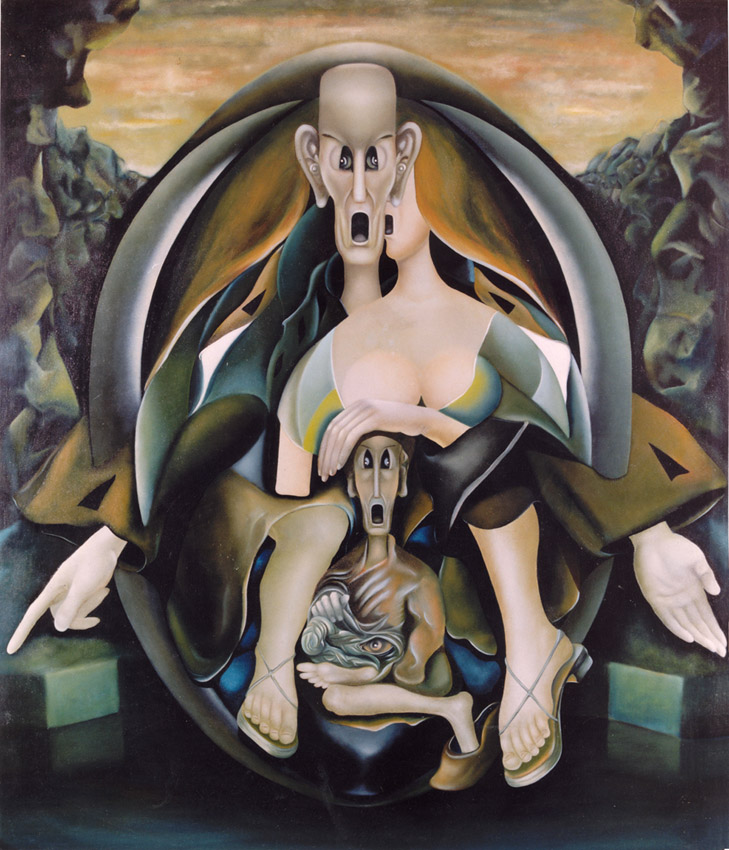
THE NUCLEAR FAMILY 1969
EHT NAMUH 1973
AFRICAN NIGHTMARE SPECTRE OF FAMINE 1975

EHT NAMUH 1977
THE JOURNEYMAN 1977
FOLLOW
THE
PATH OF PTAH
- |
- |
- |
- |
A |
- |
- |
- |
- |
- |
- |
- |
- |
T |
- |
- |
- |
- |
- |
- |
- |
- |
O |
- |
- |
- |
- |
- |
- |
- |
- |
N |
- |
- |
- |
- |
A |
T |
O |
N |
E |
M |
E |
N |
T |
- |
- |
- |
- |
M |
- |
- |
- |
- |
- |
- |
- |
- |
E |
- |
- |
- |
- |
- |
- |
- |
- |
N |
- |
- |
- |
- |
- |
- |
- |
- |
T |
- |
- |
- |
- |
- |
- |
- |
- |
- |
A |
- |
- |
- |
- |
- |
- |
- |
- |
- |
- |
B |
- |
- |
- |
- |
- |
- |
- |
- |
- |
- |
R |
- |
- |
- |
- |
- |
- |
- |
- |
- |
- |
A |
- |
- |
- |
- |
- |
- |
- |
- |
- |
- |
C |
- |
- |
- |
- |
- |
A |
B |
R |
|
C |
A |
D |
A |
B |
R |
A |
- |
- |
- |
- |
- |
D |
- |
- |
- |
- |
- |
- |
- |
- |
- |
- |
A |
- |
- |
- |
- |
- |
- |
- |
- |
- |
- |
B |
- |
- |
- |
- |
- |
- |
- |
- |
- |
- |
R |
- |
- |
- |
- |
- |
- |
- |
- |
- |
- |
A |
- |
- |
- |
- |
- |
A |
|
|
|
|
|
|
|
|
|
A |
|
B |
|
|
|
|
|
|
|
R |
|
|
|
R |
|
|
|
|
|
B |
|
|
|
|
|
A |
|
|
|
A |
|
|
|
|
|
|
|
C |
|
D |
|
|
|
|
|
|
|
|
|
|
|
|
|
|
|
|
|
|
|
C |
|
D |
|
|
|
|
|
|
|
A |
|
|
|
A |
|
|
|
|
|
R |
|
|
|
|
|
B |
|
|
|
B |
|
|
|
|
|
|
|
R |
|
A |
|
|
|
|
|
|
|
|
|
A |
NUCLEAR FAMILY 1969
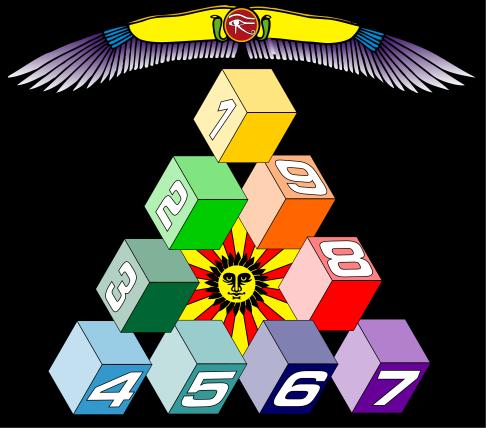
_0000.gif)



