|
TIMELESS
EARTH
Peter
Kolosimo
220
continued
"The Greek historian
Plutarch (c. A.D.50-120 ) refers to the people of the
Canaries as Atlanteans. Homer may have identi-fied the
islands, as later writers did, with Elysium, the mythical
winterless home of the happy dead. This may not have been
due merely to their position in the far west, beyond the
Pillars of Hercules, but the discovery by ancient navigators
of the natives' cult of the dead and their belief in
immortality. They used to embalm dead bodies, reducing them
by some means to a weight of only 7 or 8 pounds,
and, like many American peoples, they believed that the dead
gave their advice to their descendants. When Peruvian
Indians had to appear in a court of law they brought with
them all their mummified ancestors: while among the Guanches
a dead ruler was never buried until his successor died, so
that the living king was, so to speak , assisted at all
times by his
predecessor.
Some believe that the
Guanches learnt the technique of mummification from the
Egyptians, but in fact the methods were completely
different. The Egyptians may have taught the Guanches their
writing system and the custom of brother-sister marriage,
but in other respects the Guanche civilization remains a
mystery. It is only known to us only from ruins that call to
mind those of Sardinia, Jerico and Zimbabwe and from the
underground structures on the island of Grand Canary,which
have much in common with the relics of other ancient
Mediterranean cultures."
Page 224
Beyond the Styx
" Some years ago a
young engineer and amateur archeologist named Kama el Malakh
discovered not far from the Great Pyramid, the funeral
barques of the first Pharaohs. These were some 180
feet long and 10 feet wide, and contained everything
the dead monarch might need on a long voyage. They were not
destined to put to sea, however, but to convey the sovereign
until such time as he should be reincarnated , following the
journey round the earth of the Sun, his
father."
"…This custom
may or may not derive from ancient memories of space-travel.
Until recent times it was thought to be of purely Egyptian
origin, the Greeks having borrowed the myth in a modified
form - that of Charon's barque transporting the souls of the
dead across the Styx. However, it appears that
/ Page 225
/
many peoples of the
remote past buried their dead in boat-shaped coffins, and
some South American tribes do so to this day.As Homet
writes,… "
…We find
examples still current in Oceania, in central Africa and in
the region of the Amazon. These barques served as
transitional vessels from one point to another, and most
cultures combine the migration of the soul with the crowning
of its rebirth. And always - as we have found in numerous
documents in Africa-the soul travelled towards the Sun God.
But it always travelled in "something" which could also
accommodate the body before it was resurrected, hence a
"death barque"
'The facts suggest,'
Homet continues, that their may have been a place of common
origin, an earlier culture that was the primordial home of
the death barque and the fountain-head uniting all the
ancient cultures: Celtic, ancient Egyptian, north-west
European and South American. This we call Atlantis, the
mother civilization of all
"children of the
sun"
In Greek mythology
the entrance to Hades was guarded by the three-headed
dog Cerberus. Among the Aztecs the
abode of the dead was surrounded by a
sevenfold river, and the god who presided
over the departed spirits was the dog-headed
Xolotl (like Anubis, the Egyptian god of the dead ). A thin
leaf of copper has been found in the mouth of certain
mummies, apparently to pay for their passage to the shades
below, in the same way as the obol which was Charon's fee.
In the roof of the
funeral crypt at Tiahuanaco there is a round hole exactly
like the one found in Egyptian tombs, where its purpose is
to allow the 'bird of death' to
escape."
The belief in
reincarnation was common to many parts of
/
Page 226 /
ancient America, and this
is why mummies and skeletons are often found in the foetal
position: the bodies were bound in this fashion with ropes,
even while there owners were still alive, so that they might
be ready for rebirth. A similar custom prevailed in ancient
Gaul, Mecklemburg, Britain, Sweden and southern Russia,and
also the Tonga islands. It is still in force in the Amazon
region, and so is the practice of 'double burial'which was
also once known in Ireland, Crete and various parts of
Europe. The bodies were first buried in damp ground to
accelerate decomposition (the Indians of Brazil have a
different method-they suspend them in nets in running water,
where the piranhas soon pick them dry ); then the skeleton
is removed, cleaned and painted red-the colour of blood or
placenta, as Homet remarks-after which it is
re-interred. We have already mentioned symbols of life after
death, such as yokes (among the Olmecs and Egyptians), knots
and butterflies,which are common to ancient America and the
Mediterranean peoples. The lotus which in India is the
symbol of birth , is common in pre-Columbian temples and
burial-places, especially in the Mayan capital of Chichen
Itza. Here it is represented complete with flowers, leaves
and root-stock, in motifs similar to those of India,
Cambodia and Indonesia, and with the same accompanment of
dragons, sea-monsters and fierce animals of the cat
tribe.
We do not know the
age of the lotus as a symbol, but in Europe it is found
amongst the Celts who brought it from Asia as long ago as
2000B.C.,and whose rulers later trans-formed it into the
fleur de lys. It is usually thought to have spread from
India to south east Asia, but Homet believes it to be of
much earlier, Atlantean origin. His view finds some support
in the enigmatic 'Phaistos disc'- a round terracotta tablet,
six inches in diameter and about an inch thick, discovered
in 1908 in a Cretan palace in a stratum belonging to
the sixteenth century B.C.
"
"…The disc is
inscribed on both sides with ideograms, quite different from
Cretan writing in a left hand
spiral.
In the
centre
Page 227/
of one side is a lotus
flower, and of the signs which follow it 15 are
identical to those found in Brazilian inscriptions, while
19 resemble them closely. Also depicted on the disc
are heads adorned with feathers, constellations - the
Plaides, Serpens and Pisces - a kind of fire bird and the
quaz, the Egyptian symbol of physical strength. The
disc remains undeciphered "
Around and about
this time both the scribe and Zed Ali
Zed remembered their visit to the there and back
of
the blessed "…half-mythical land
of ultima
Thule…"
Page 235
" Ptolemy's map of the
world (second century A.D. ) shows Thule as an island to the
north-east of britain, but by the late middle ages it had
disappeared from the ken of geographers. Ultima Thule - our
last hope, perhaps, of gazing beyond the point where
ferocious savages block the extension of our knowledge and
prevent us from journeying back through time' following a
trail more fascinating and less obscure than we have been
able to indicate in these
pages.
But the past is not
wholly lost. As Ivar Lissner puts it: 'History is
imperishable. Unseen and unrecognized, the past lives on in
its quiet, imperceptible way. Whether lying dormant in the
unfathomable sea of the millennia or buried beneath the
ground and swathed in a vast winding sheet of earth and
stone, "past civilizations" are still with us even though
their tangible remains lie hidden and still un-discovered.
All civilizations that have ever been live on in us, and our
lives are rooted deep in the remote, mysterious and ancient
civilizations of the past. It is our task again and again to
rediscover these civilizations, which have a strange way of
falling silent as if they no longer lived in us and
/ Page 236 /
we in them. But once a
civilization has existed on earth, its effects are
permanent. A memory, a new discovery, a visit to an
exibition - any one of these may suddenly alert us to their
mute presence. And when this happens we feel a strange
desire to weep for something that is near us, yet cannot be
recalled
The ZedAlizZed
thanked the venerable brother Kolosimo for his most
invaluable past, present, and future gifts, then after
entering into a three way goodbye, along with the poor sad
blind ass of serendip, they continued on their not too weary
way.
Alizzed cast around,
and although not seeking, nevertheless finding,
other hidden pieces of the jigsaw that never was,
These, the, well, would you believe it scribe, used to make
corkwool soup for the evening repast.
They said their
goodbyes to Brother Kolosimo thanking him with just the
right amount of humble pi for all that he had so freely
given and promised to return at just the right
time.
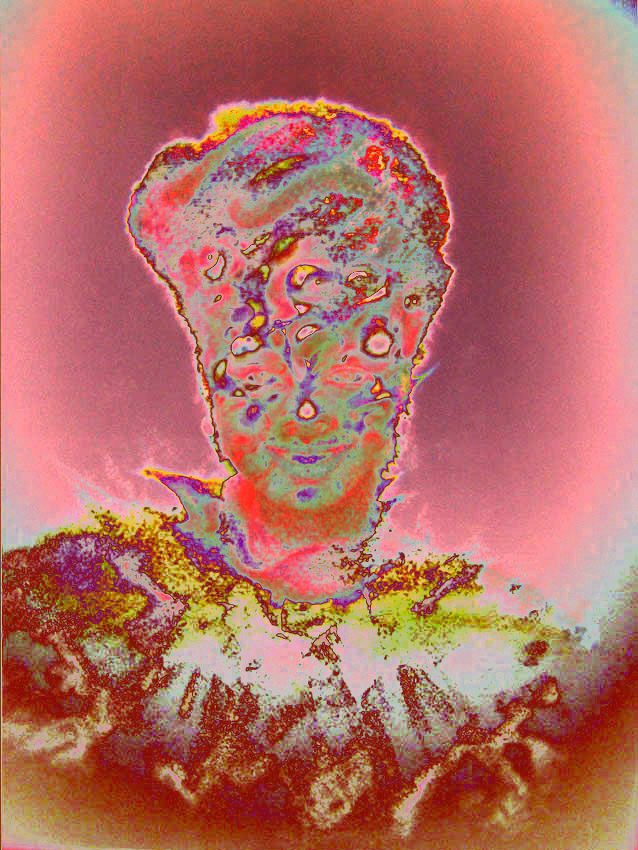
The Magic
Mountain
Page 511 /
512
"The learner must be
of daunt-less courage and athirst for knowledge, to speak in
the style of our theme. The grave, the sepulchre, has always
been the emblem of initiation into the society. The neophyte
coveting admission to the mysteries must always preserve
undaunted courage in the face of their terrors; it is the
purpose of the order that he should be tested in them ,led
down into and made to linger among them,and later fetched up
from them by the hand of an unknown Brother. Hence the
winding passages, the dark vaults , through which the novice
is made to wander; the black cloth with which the Hall of
Strict Observance was hung , the cult of the sarcophagus ,
which played so important a role in the ceremonial of
meetings and initia-tions. The path of mysteries and
purification was encompassed by /dangers, it led through the
pangs of death , through the kingdom of dissolution; and the
learner, the neophyte, is youth itself, thirsting after the
miracles of life, clamouring to be quickened to a demonic
capacity of experience, and led by shrouded forms which are
the shadowing forth of the mystery."
The Magic
Mountain
" The Making Of
"
Page726 /
727
"…in the course
of his experiences, overcomes his inborn attraction to death
and arrives at an
understanding of
a humanity that does not, indeed, rationalistically ignore
death , nor scorn the dark mysterious side of
life, but takes account of it, without letting it get
control over his mind.
What he comes to
understand is that one must go through the deep experience
of sickness and death
To arrive at a
higher sanity and health; in just the same way that one must
have knowledge of sin in order to find redemption."
"There are"
"…two ways
to life:one is the regular, direct and good way ; the other
is bad , it leads through death, and that is the way of
genius" It is this notion of disease and death as
a necessary route to knowledge, health, and life that makes
The Magic Mountain a novel of initiation."
Page 727 "
"... The Quester legend
"
"… Faust the
eternal seeker "
"...the eternal seeker, is a group of compositions generally
known as the Sangraal or Holy Grail romances. Their
hero be it Gawain or Galahad or Perceval, is the seeker, the
quester, who ranges heaven and hell , makes terms with them,
and strikes a pact with the unknown, with sickness and evil,
with death and the other world, with the supernatural, the
world that in the Magic Mountain is called
'questionable'. He is forever searching for the
grail - that is to say, the Highest: knowledge, wisdom,
consecration, the philosophers' stone, the aurum
potabile, the elixir of
life."
Page 728
"The Quester of the Grail
Legend, at the beginning of his wanderings, is often called
a fool, a great fool, a guileless fool."
Page728
"The seeker of the Grail,
before he arrives at the Sacred Castle, has to undergo
various frightful and mysterious ordeals in a wayside chapel
called the Atre Perilleux. Probably these ordeals
were originally rites of initiation, conditions of the
permission to approach the esoteric mystery; the idea of
knowledge, wisdom, is always bound up with the 'other
world,' with night and
death."
Page 728
"In The Magic
Mountain there is a great deal said of an alche-mistic,
hermetic pedagogy, of
transubstantiatiation.
And I, myself a guiless fool, was guided by a
mysterious tradition for it is those very words that are
always used in connection with the mysteries of the Grail."
Page728
"...-who voluntarily, all
too voluntarily embraces disease and death, because its very
first contact with them gives promise of extraordinary
enlightenment and adventurous advancement, bound up, of
course, with correspondingly great risks."
Page 728/9
"And perhaps you will
find out what the Grail is; the knowledge and the wisdom,
the consecration the highest reward, for which not only the
foolish hero but the book itself is seeking."
Page 729
"It is the idea of the
human being, the conception of a future humanity that has
passed through and survived the profoundest knowledge of
disease and death. The Grail is a mystery, but
humanity is a mystery too. For man himself is a
mystery, and all humanity rest upon reverence before the
mystery that is man."
This acknowledgement to
the contributions of others within this hymn of praise to
creative intelligent consciousness, is freely and humbly
given. It is indicative of where Eht Namuh stands
on the ladder of
its progress, that at
this quintessential moment of time, each and every
one of us seeks recognition for the this of that,
which all of us as creative entities have been entrusted
with exteriorizing, for and on behalf of, that creative
intelligent consciousness that holds each and every one of
us in thrall. The that of the thou, which is the
initiator, and motivating power of the mysterious process of
life .Oh Namuh, within the this of the that, of the he as in
she, of the thou as in ought, of the ought as in thought,
thou shouldst render only praise and credit to the true
creator. The energy of intelligent living
creativity, abundant and fecund, manifested everywhere and
in everything. For all is living energy, living creative
energy, known variously and collectively as the one
God.
Cast off the
shackles of thy puny ego Oh Namuh, and accord thanks, only
for thine honoured participation in creativity of a kind,
and thank your stars for
that.
There is a
mountain to climb or otherwise a mounting oblivion shall be
your future.
Take heed the notion,
that notion, the notion of an individual unique self. For
that notion is no notion at all.Therefore, if any part of
this, of the that of our own contribution within this work,
can in any way help to free the understanding of thee, Eht
Namuh, from the dark age tyranny of thy thinking. Thy
thinking thoughts as to the he as in she absurdity, that of
the eye of an individual self.Then so be it, publish and be
not damned, but be thou blessed, and give only thy praise,
in wonder to that living essence of the energy within and
without, which is thy true nature. Blessed be the name of
thy true god, which is at one with the thou that
is thee, for thou art of it and it is of
thee.
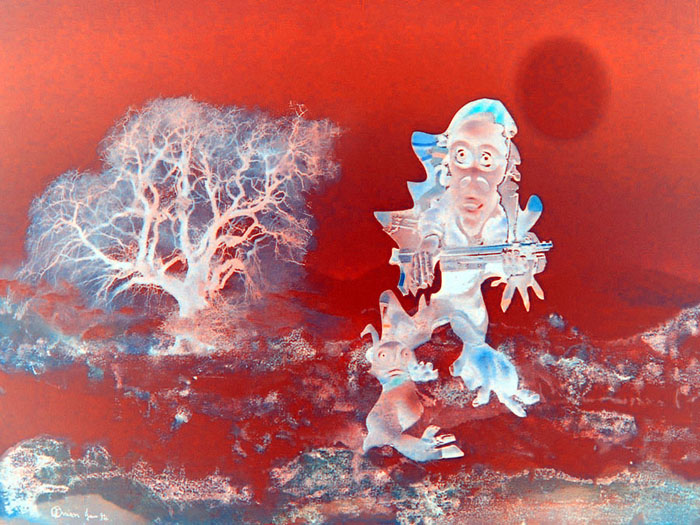
In the Beginning Was
The Word And The Word Was
_________________
Thomas
Wolfe 1900-1938
"The life of a book
can be as mysterious and wonderful as the life of a
man. Its destiny, like that of man, is often
'touched by that dark miracle of chance which makes new
magic in a dusty world."
TheConcise Oxford
Dictionary of Current English 1974
Edition.
'Exoteric Of
doctrines modes of speech, of disciples not admitted to
esoteric teaching; commonplace, ordinary, popular;...'
'Esoteric (Of
philosophical doctrines etc.) meant only for the initiated;
of disciples (initiated; private confidential
within,
" The Making Of
"
The Magic
Mountain
Page711
"These were the moments
when the "Seven Sleeper" not knowing what had
happened was slowly stirring
himself..."
"He saw himself
released, freed from enchantment - not of his own motion he
was fain to confess, but by the operation of exterior
powers, of whose activities his own liberation was a minor
incident indeed!"
Page713
"And we are shrinking
shadows by the way side shamed by the security of our
shadowdom,"
TheBeginning of
the Journey into the Heretofore
The White Rabbitz had
said unto the Zed Aliz Zed, Zed AlizZed, the time of thy
calling is at hand. Within the creative wherewithall of
the this and that, of where thou art now at, thou
hast been summoned for trial. Thou art
a being aware as any, to the this a'
that nature of the coming ordeal, and
know, that if you succeed in this for which thou hast been
born ,and which it is your bounden duty, and sacred task to
fulfill, that you will only be able to return to the Land of
the Living minus that with which you first set
out.
The preparation of
the years is over, you must leave at once and attempt the
crossing of The Great Divide.You will be allowed to take
nothing with you, other than the compass of thine own minds
eye and such karmic unfortunates as may choose in
ignorance to accompany thee. Go now and may thy God be with
thee.
And so it was with
fearful trepidation that the Zed Aliz Zed, was made to
realise at long last that the quitessential moment of the
quintessential moment of a long awaited fate was upon
them.
Alizzed
understood full well the import of the White Rabbitz words,
and felt the spirit within tremble in mortal anguish, at the
thoughts of the trials to come. Then and only then did The
Zed Aliz Zed, within that total aloneness demanded of the
voyager, descend into the perfect fit of the Osiris box and
disappear into the void.
|


